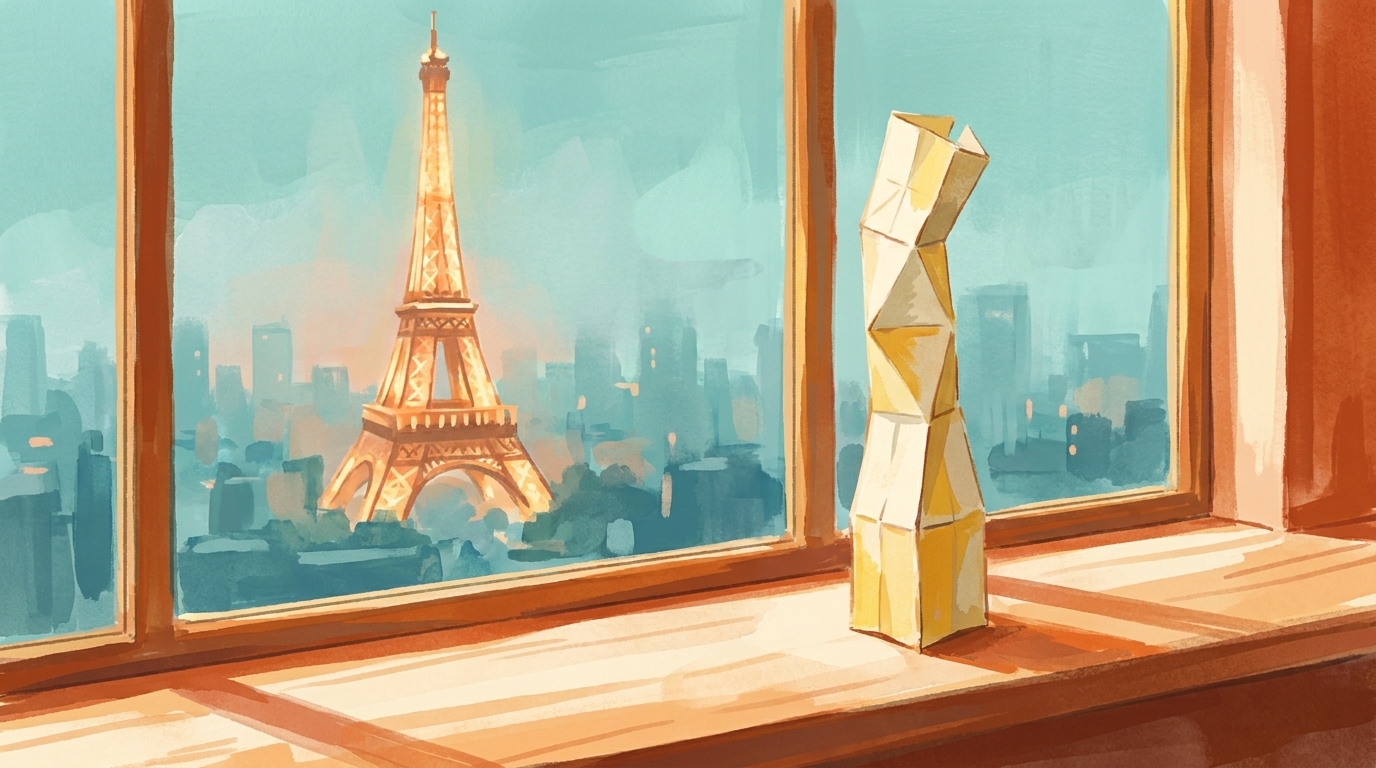
The Bend
He saw the bend and remained proud
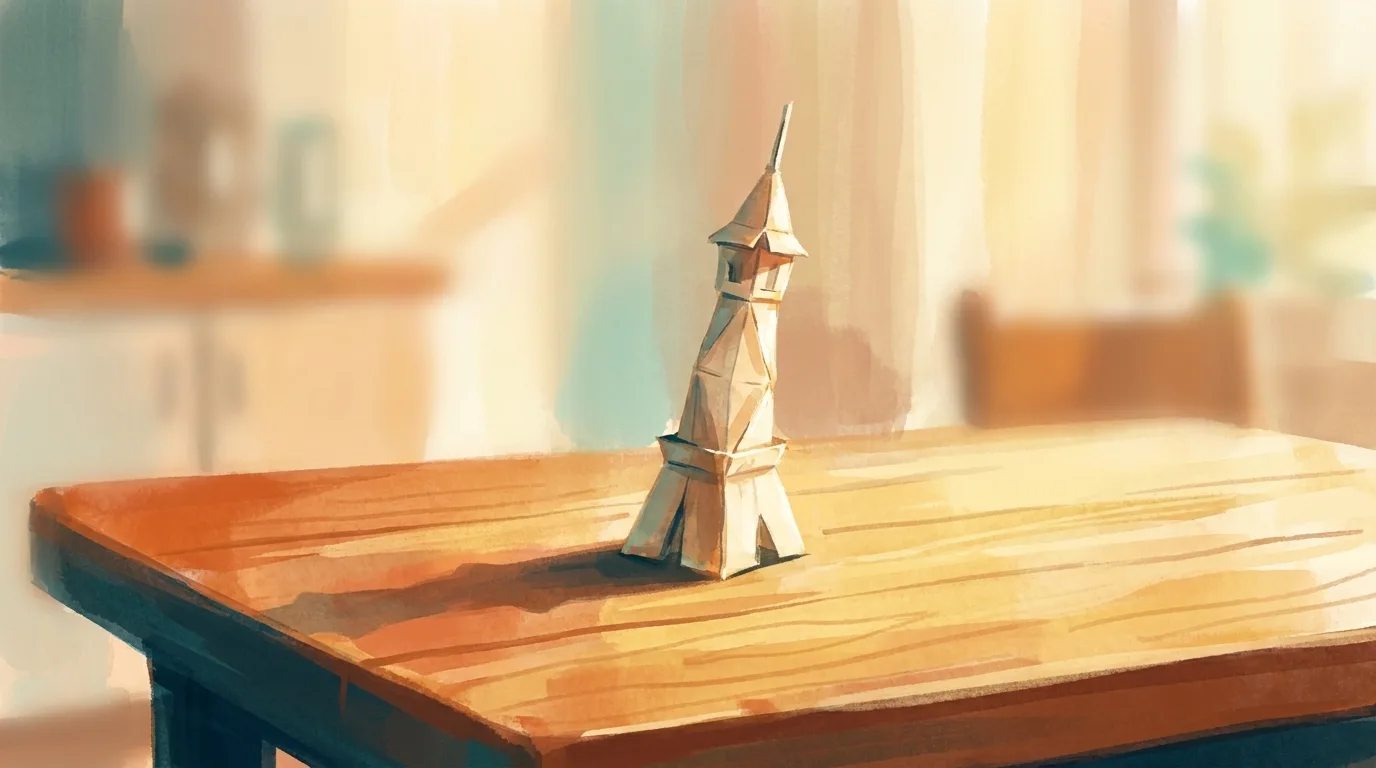
My five-year-old nephew held a paper tower up to the camera, and the top of it was tilting.
He is in Osaka with my sister and her husband, living around the corner from Tsutenkaku. Kavi calls it the Osaka Tower. In their first few weeks there, it was how they found their way home: come up out of the subway, spot the tower, walk toward it. After they rode to the top one morning, my sister picked up a booklet of printed paper pieces, a small replica of the landmark they had just climbed.
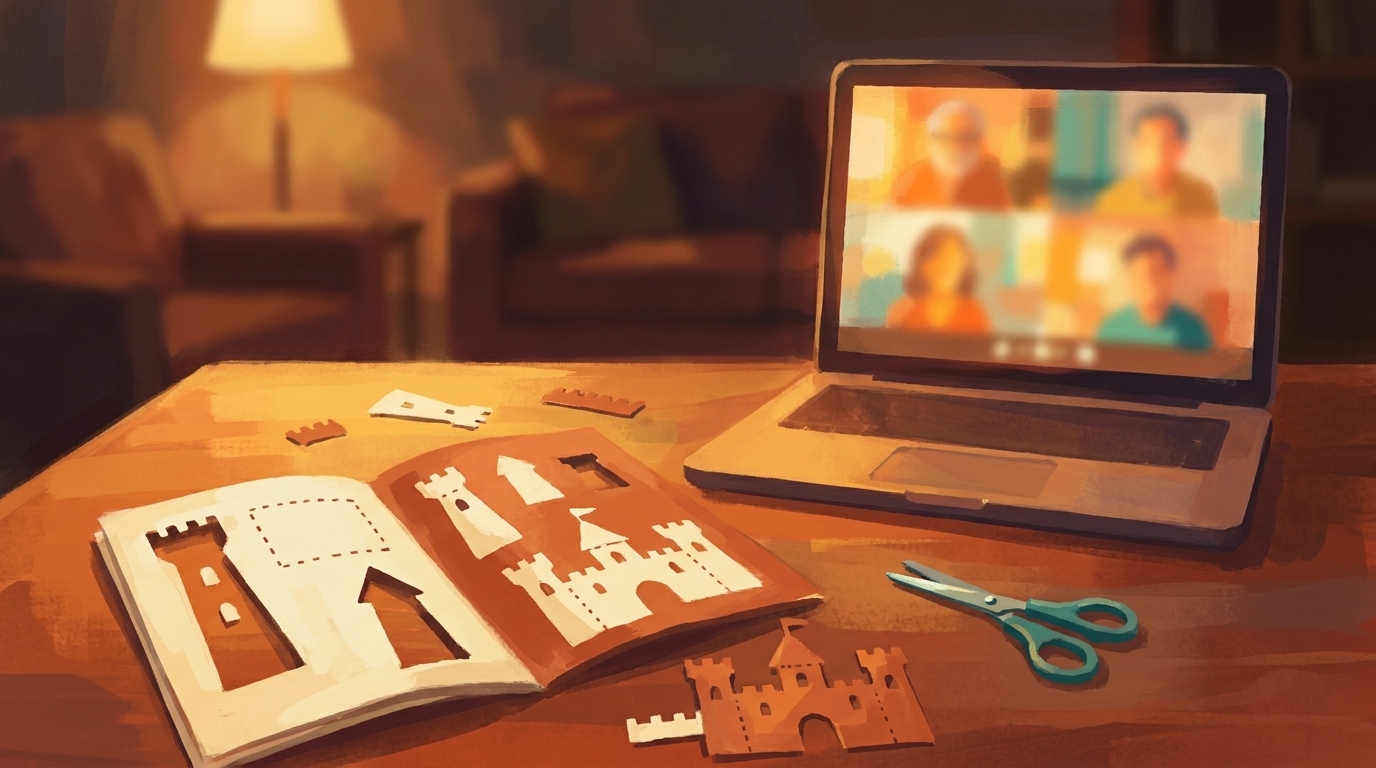
What reached me over a video call was the finished version.
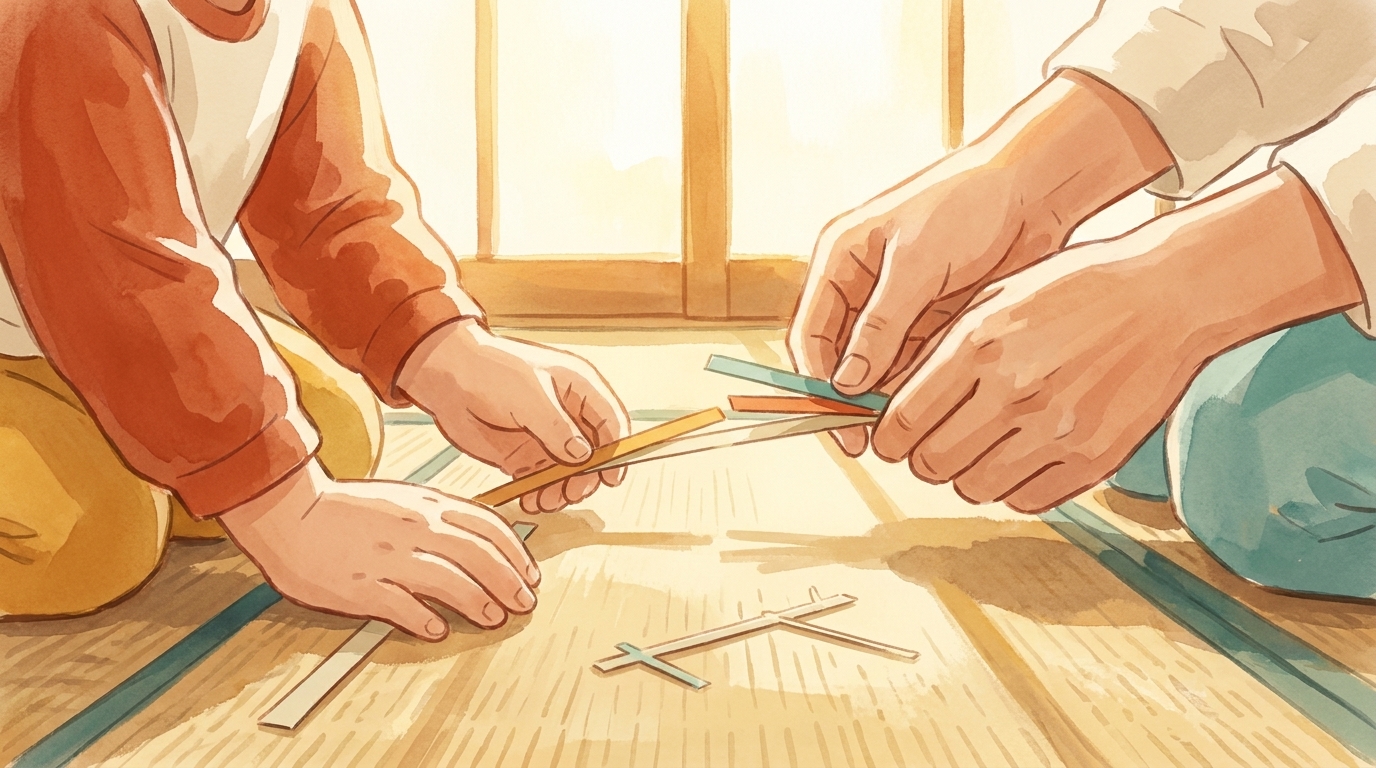
He enlisted my sister's help to make the paper tower. The booklet they picked up was meant for children, though the folds were too tough for small fingers, so he tore the pieces out and handed them to her in order. The base went together without tape, surprisingly solid. After that, it got harder. Paper like that goes soft if it's over-folded, and the more she worked a piece, the less it could hold itself up. She kept at it anyway, knowing the piece was already far gone.
The reason is what caught me. She was in the land of origami and miniatures, surrounded by people who do fine things perfectly, and she felt a self-imposed pressure to get this one right. By osmosis, she called it. A paper toy in a restaurant, destined for the hands of a five year old, and the standard she held was from somewhere else. I know that feeling. When an expectation to do something just shows up, sits down in front of me, and starts keeping score.
Near the end, two pieces left, the antenna wouldn't fit into its slits. My nephew took it from my sister and set it on the floor like a fence, because that's what the barricades looked like under the real tower, the ones holding the line-up. Then the two parts went together and the tower stood on its own, and he yelled, "Yatta! We made the Osaka Tower!" Yatta is Japanese for we did it. For all her disappointment, he could not have been prouder, and she was proud too, of how seamlessly a Japanese word had entered his vocabulary.
He carried the tower carefully out of the restaurant, looked up at the real one and back down at his. At home, when the softened piece leaned further, he asked her to unbend it. She told him she had taken it as far as she could. He saw the bend and remained proud. The flaw had registered with him; it simply had not erased what they had made together. I keep wondering how often I treat those two things as if they cannot coexist.
The camera gave me the outcome without a single minute of the cost. It is very easy to call something lovely when somebody else did the folding.
With my own work I never get that angle. I am always the one holding the soft piece, knowing exactly where it went wrong and how many times I went back over it, which turns out to be a poor position from which to decide whether a thing is finished.
Good enough has always landed in my ears as a concession, the phrase people reach for when they have run out of time or patience. I have shipped books, blogs and products, and then described them by their weakest part, years of effort summarized by the one section I could not get to hold. It was in the world, being used by people who had no idea which paragraph I had rewritten eleven times. Does it stand was available to me the whole time as a question, and I kept asking a different one.
Most of what I have made is still out there somewhere, softened near the top, leaning in a direction I did not intend. It holds. I am the only one still trying to unbend it.