The Crossing
They ran because the ones beside them were running
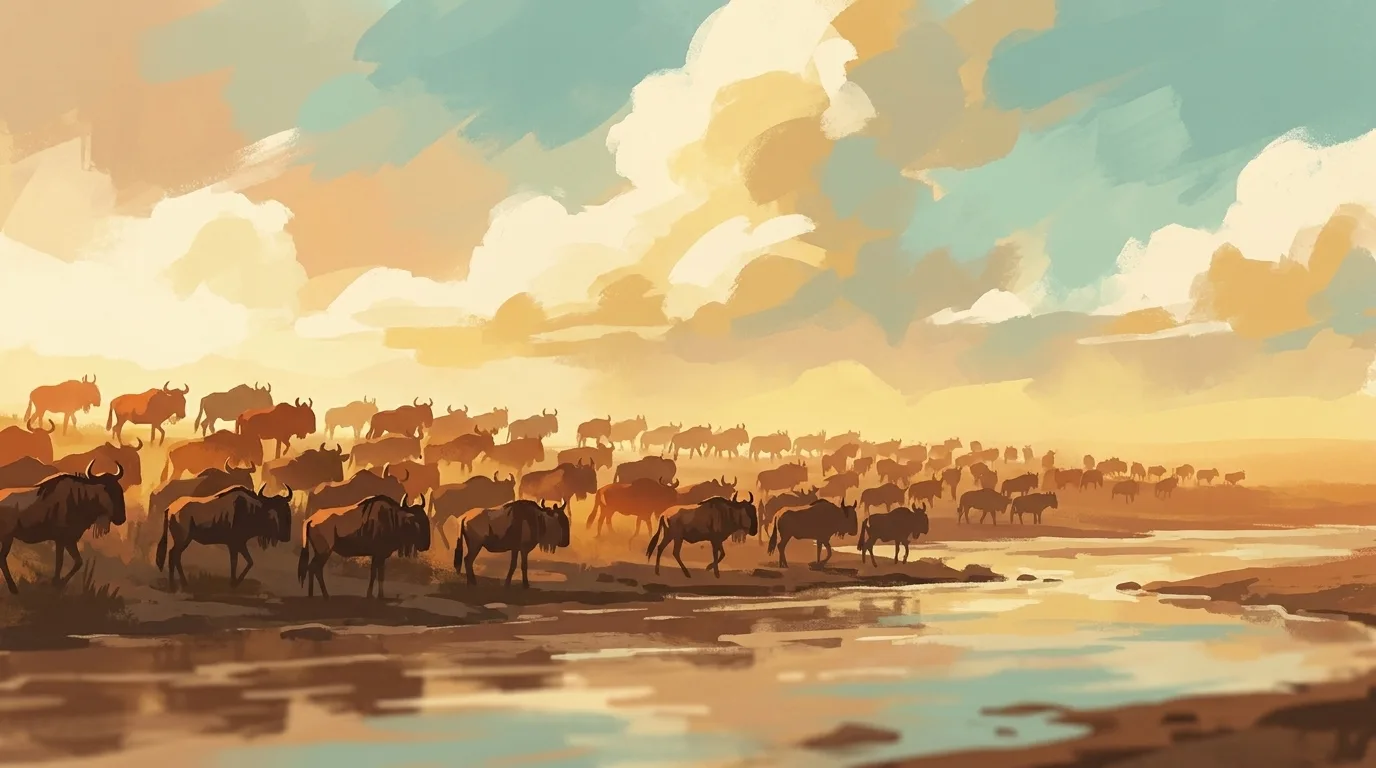
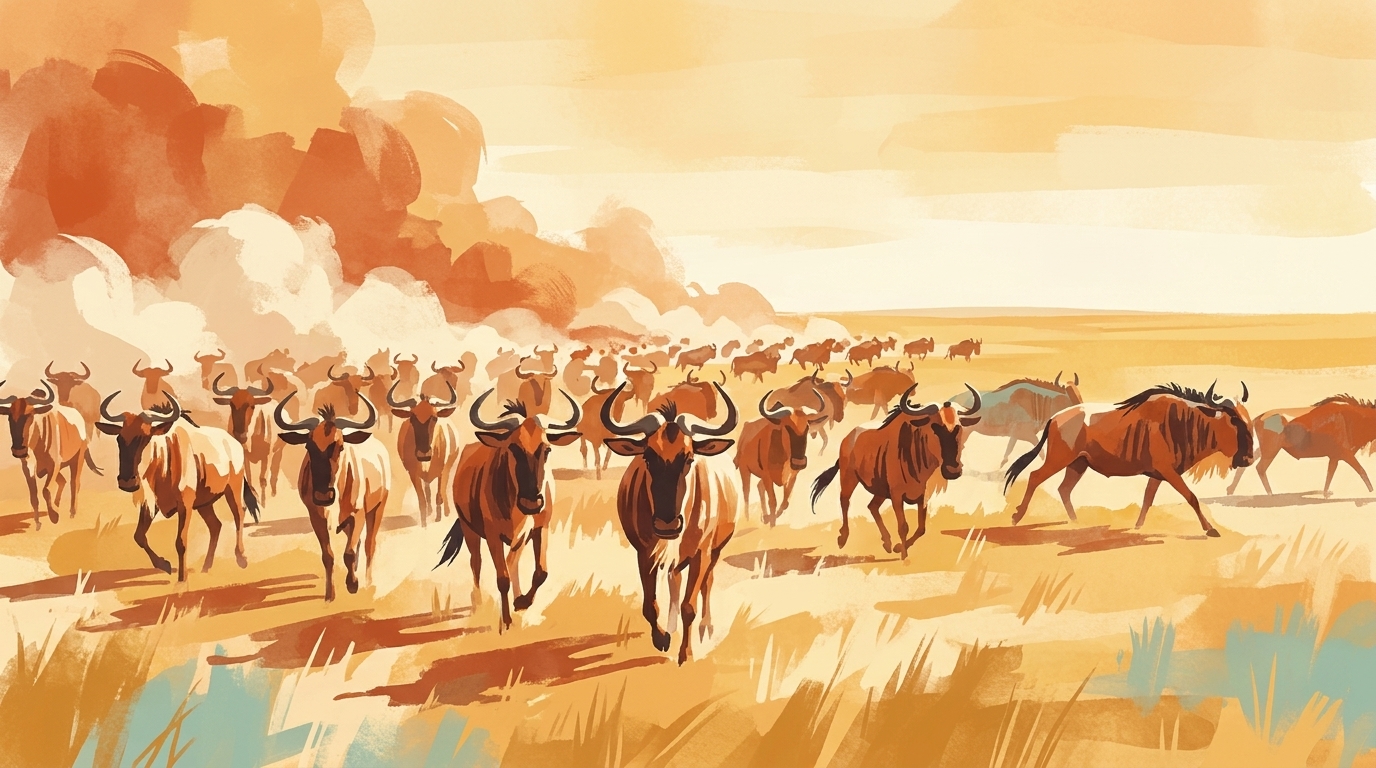
The Mara River was low that morning, brown and slow moving, and on the near bank there were about a hundred thousand wildebeest standing still. Our guide cut the engine. My wife handed me the binoculars. He told us they had been standing there for three days.
They weren't resting. They were waiting. Massed along the edge in a line that ran further than I could see, heads dipping toward the water and lifting again, a low grunting moving through the herd. Every so often a few would step into the shallows, hooves in the mud, and then stop and turn back. The whole front row would fold in on itself and the waiting would begin again.
What are they waiting for? Our guide said they were deciding whether it was safe. Then he pointed at a shape in the water I had taken for a log.
The crocodiles were real. That changed how the three days looked to me. From the truck it had seemed like indecision, a hundred thousand animals too dumb to commit, and it took the sight of that shape in the current to understand the herd was reading the situation accurately. The grass on the far side was better. The water in between would take some of them. Both things were true, and standing at the edge was an honest response to both.
There are edges I have stood at for years. My health, mostly, where I knew exactly what needed to change and circled the water for a long time before entering it. Investments where the thesis was clear and my money stayed where it was. Business risks I studied so thoroughly that the studying became its own activity. And marrying my wife, the biggest crossing of my life, which I approached the way the herd approaches the Mara, wanting the other side and not knowing what might happen.
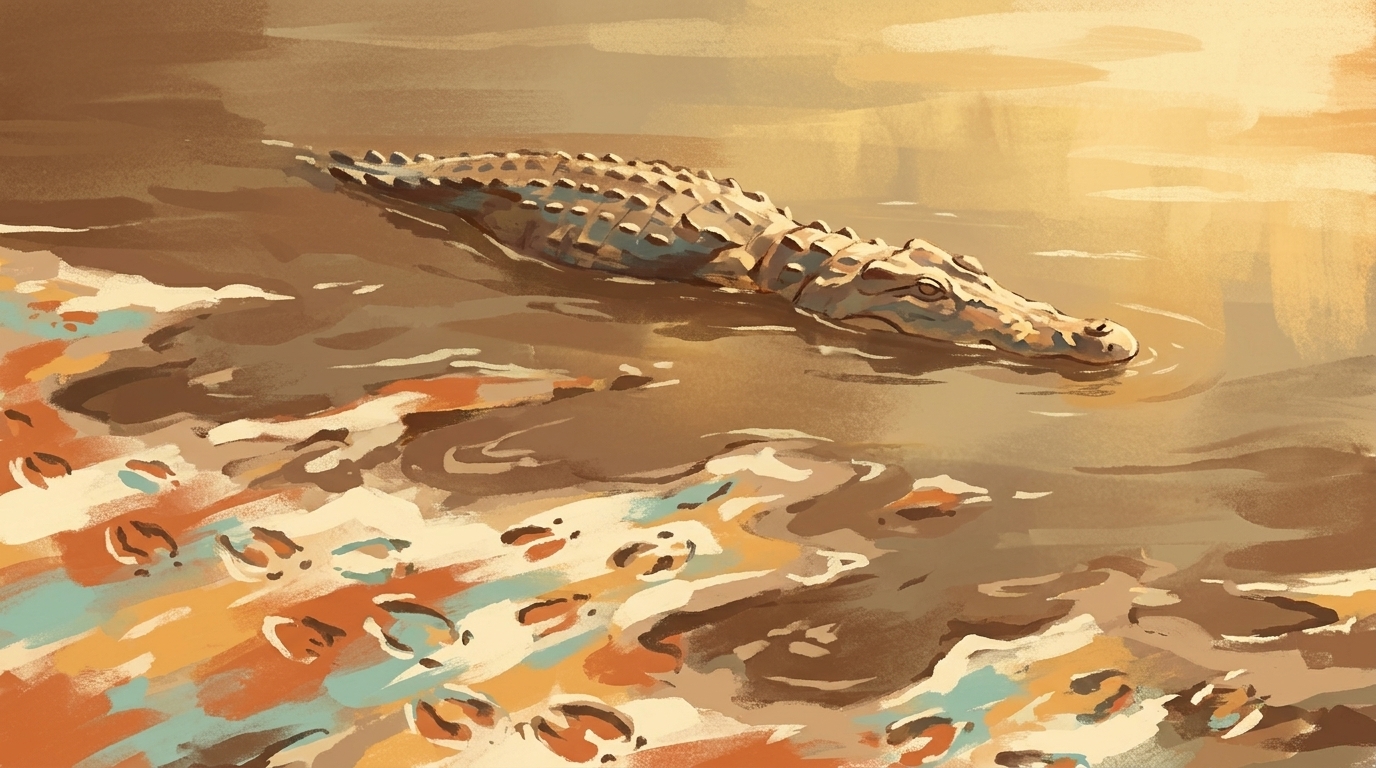
From the outside, those years looked like hesitation. I used to be embarrassed by them. Sitting in that truck, watching a hundred thousand animals refuse to move while a predator floated ten meters away, I stopped reading the pause as weakness. The herd wasn't frozen. It was gathering enough of itself at the edge that the crossing would work.
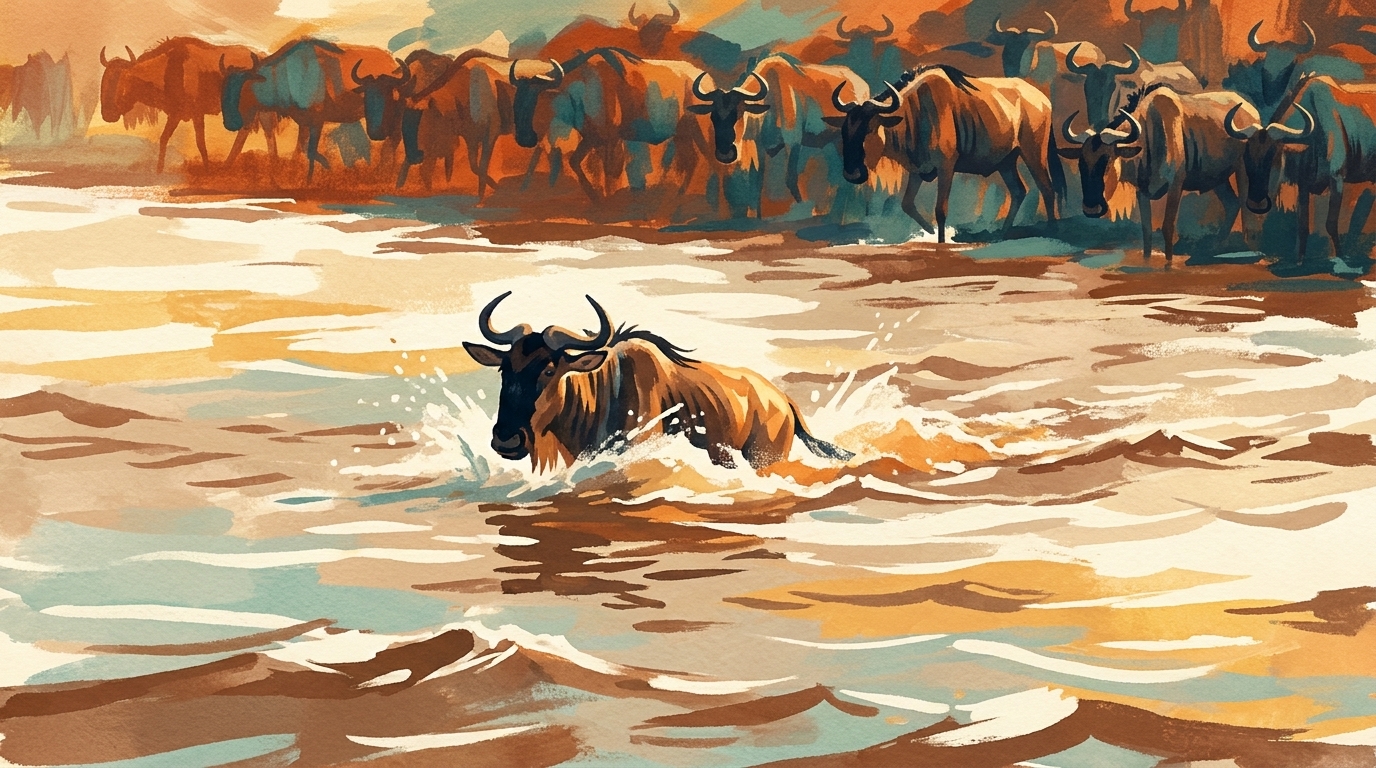
Then one of them went in. There was no signal I could detect, no shift in the light or the wind. A single wildebeest, somewhere in the middle of the line, walked into the river and started swimming. Nothing about it looked exceptional. Our guide said it might have been brave, or foolish, or simply pushed. The second one followed within seconds. The third didn't hesitate at all. And then the whole bank was moving, thousands of hooves on wet stone, water churning white, dust rising off the ridge behind them and hanging in the air for an hour.
I have been the first one in the water a few times. Building mobile apps before the iPhone existed, when the phone in my pocket could barely load a webpage. Starting a company at twenty-one in Canada, where nobody I knew thought that was a reasonable thing for a young person to do at the time. Meditating every day and then talking about it in boardrooms, teaching it to executives who had come for the quarterly numbers. Moving to Portugal on three days' notice.
People have called those decisions leadership. The first wildebeest into the river is making the identical movement as the ten-thousandth. Only the timing separates them. I didn't cross my Mara because I had solved my crocodile problem. I crossed because I couldn't stand at the edge one more day, and it worked out, and everyone decided afterwards what it meant.
What stayed with me longer than the crossing was what came after. Later that week, on open grass with no river anywhere near, we watched a group of maybe five hundred wildebeest running flat out across the plain. No predator. No water. Our guide shrugged when I asked. They ran because the animal beside them was running, and that one ran because of the one beside it, and somewhere at the origin of it all there may have been a reason that had long since stopped mattering.
I know that run. Fifteen years of it, moving at a pace nobody had asked me to keep, certain the speed itself was producing something. There are still mornings when I reach for my phone before I get out of bed. Weeks where I follow the stock market with an intensity that has nothing to do with my actual portfolio, watching numbers move because they are moving. Whole evenings on feeds built out of other people running, each of us convinced the herd knows something.
The wildebeest at least end up somewhere with better grass. Our guide mentioned, almost as an aside, that they often cross back a few weeks later. The grass on this side becomes the grass on that side. Some of them drown going each direction.
We stayed at the river until the light went orange and the last stragglers were still coming through, the small ones swimming badly, the current pulling them downstream toward the shape in the water. Watching the middle of that herd, I tried to work out which ones were choosing and which ones were being carried. Through binoculars, at two hundred meters, I couldn't tell the difference.
It isn't much clearer from inside my own life.