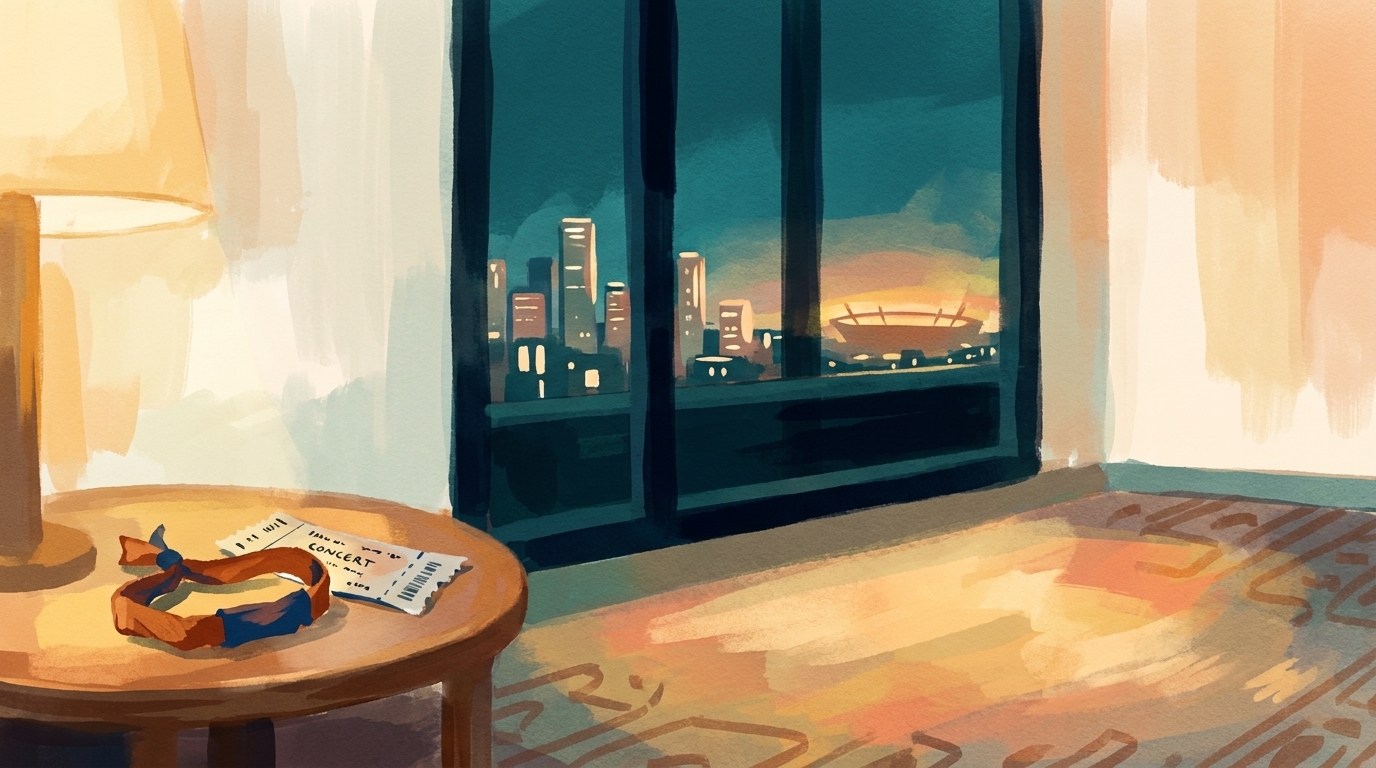
The Routine
Performing for an audience of one
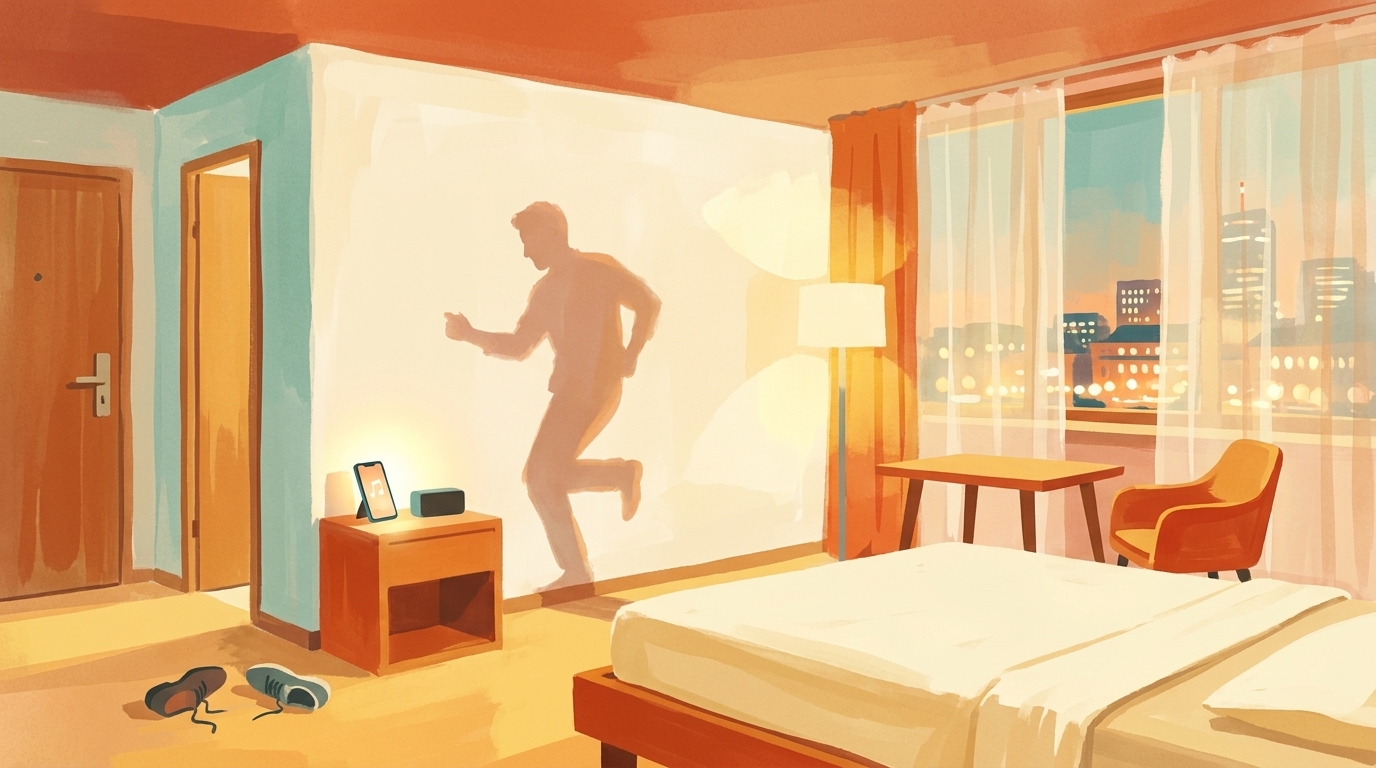
A few minutes after we got back from the stadium, I put the song on in our hotel room in Düsseldorf and started doing the choreography. I did all ninety seconds of it, every step our dance teacher had taught us earlier this year, performed for an audience of one. My wife gave me the biggest eye-turned-head roll, the long kind I have learned to take as quiet encouragement. I kept going. This might be my favourite moment of the whole trip, I thought, halfway through.
That routine is the reason we were in Germany last week. My wife and I have been taking dance classes together for the past year, and at some point we picked a Backstreet Boys song to learn a choreography. We learned it the way most adults learn anything new with their bodies, carefully and a little self-consciously, until the steps stopped needing thought. About six months ago, we saw the band was touring Europe, and we bought tickets.
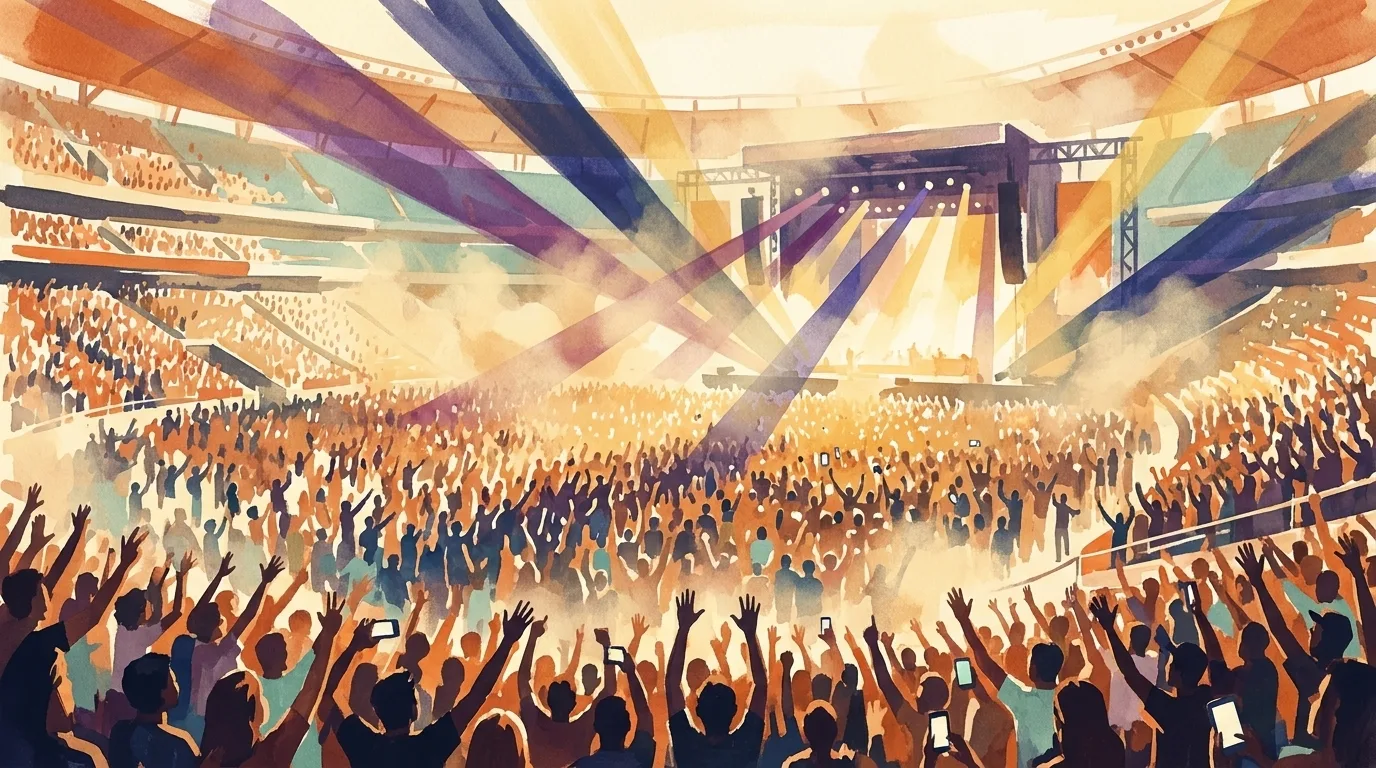
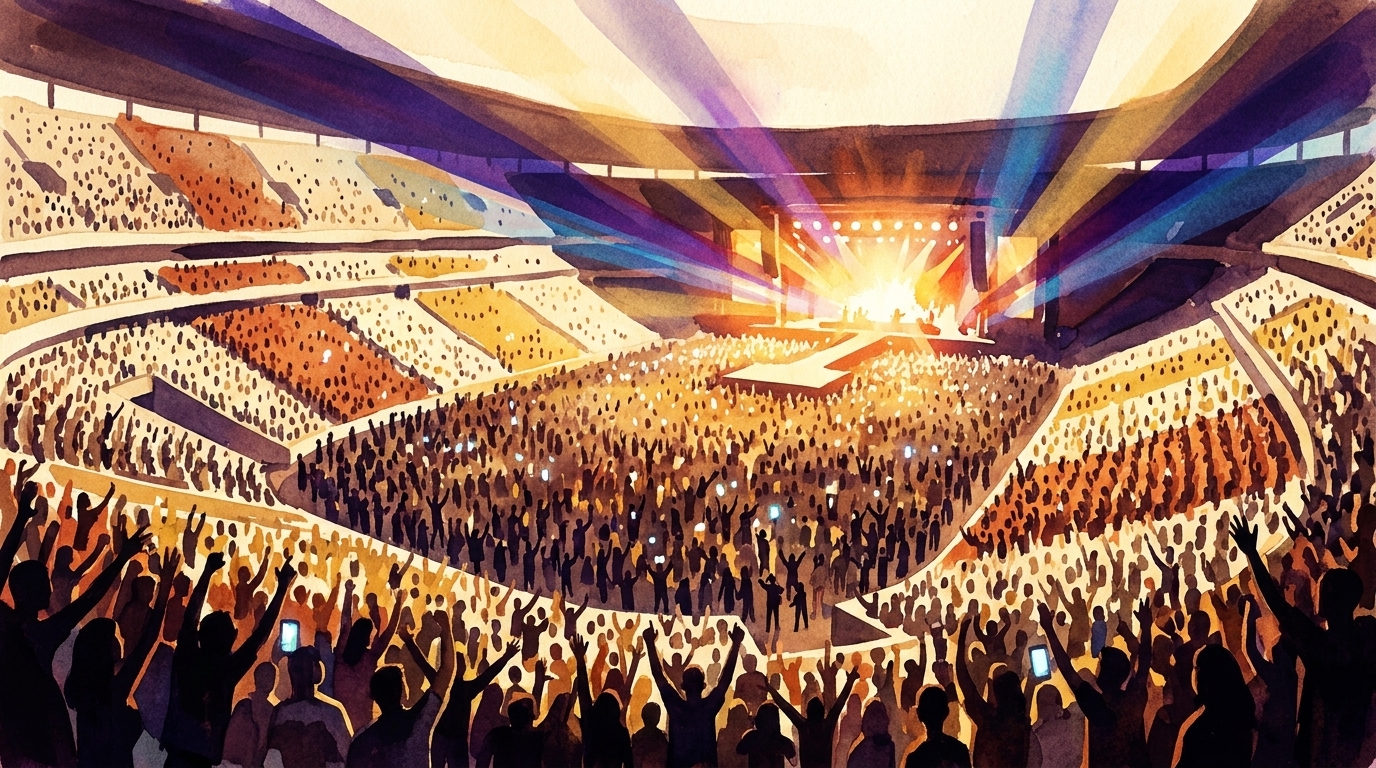
There was a dress code for the concert. Everyone was asked to wear white with a hint of blue, and when we arrived, forty thousand people had followed it. Everywhere I looked, the stadium was white and blue. When the first songs started, the last twenty five years of my life went quiet for a while, and my wife and I were back in high school, teenagers again for a couple of hours. When was the last time I felt this young?
The music was loud, louder than I would ever choose, and the bass and the lights and the smell of forty thousand people packed together was a lot. None of it was comfortable, yet all of it was part of why the night felt so good. There's a kind of enjoyment I've become very skilled at arranging for myself, quiet and controlled and on my own terms. This was something else entirely, and it reminded me of something I keep forgetting: I don't need to be comfortable to enjoy myself.
Between songs, I noticed people pulling out their phones for a photo or a short video, and then the phones went back into pockets. Nobody was staring down into a screen.
Two months ago, on safari in East Africa, my wife and I saw the opposite. Everywhere we looked, people were absorbed in their phones, surrounded by the wild life and barely looking up from their screens. Since then I've been noticing it everywhere, on planes and trains, in restaurants and shopping malls. A crowd that large, looking up, has become one of the rarest sights of my year.
By most estimates, the average person picks up their phone more than a hundred times a day and spends somewhere between four and eight hours on it daily. That sets a high bar for real life. Most of what happens in an ordinary day doesn't clear it, and watching forty thousand people decide, all at once, that something in front of them was more interesting than their screens is something I noticed immediately. What in my own day passes that test?
The concert took me back to high school for a couple of hours, and later, in our hotel room, that teenager came even closer. There's a lightness in doing something slightly ridiculous for no reason, in front of the person who knows me best, with nothing riding on it, and it reached somewhere the stadium hadn't quite reached on its own. The dance classes had been building toward that minute all year, one lesson at a time, and I hadn't noticed. Maybe this is what all that practice was for.
Of everything in Düsseldorf, the moment I keep returning to is that minute and a half in our hotel room, dancing to the Backstreet Boys while my wife rolled her eyes, and feeling more like my teenage self than I had at any point in the past decade.
It's good to get our heads out of our phones once in a while, smile, laugh, sing and dance. And it shouldn't involve having to fly across Europe and spend a few hours with tens of thousands of people to feel this way.
And I think that just might be the real routine that I'm craving these days.