Visitor Pass
That has now expired
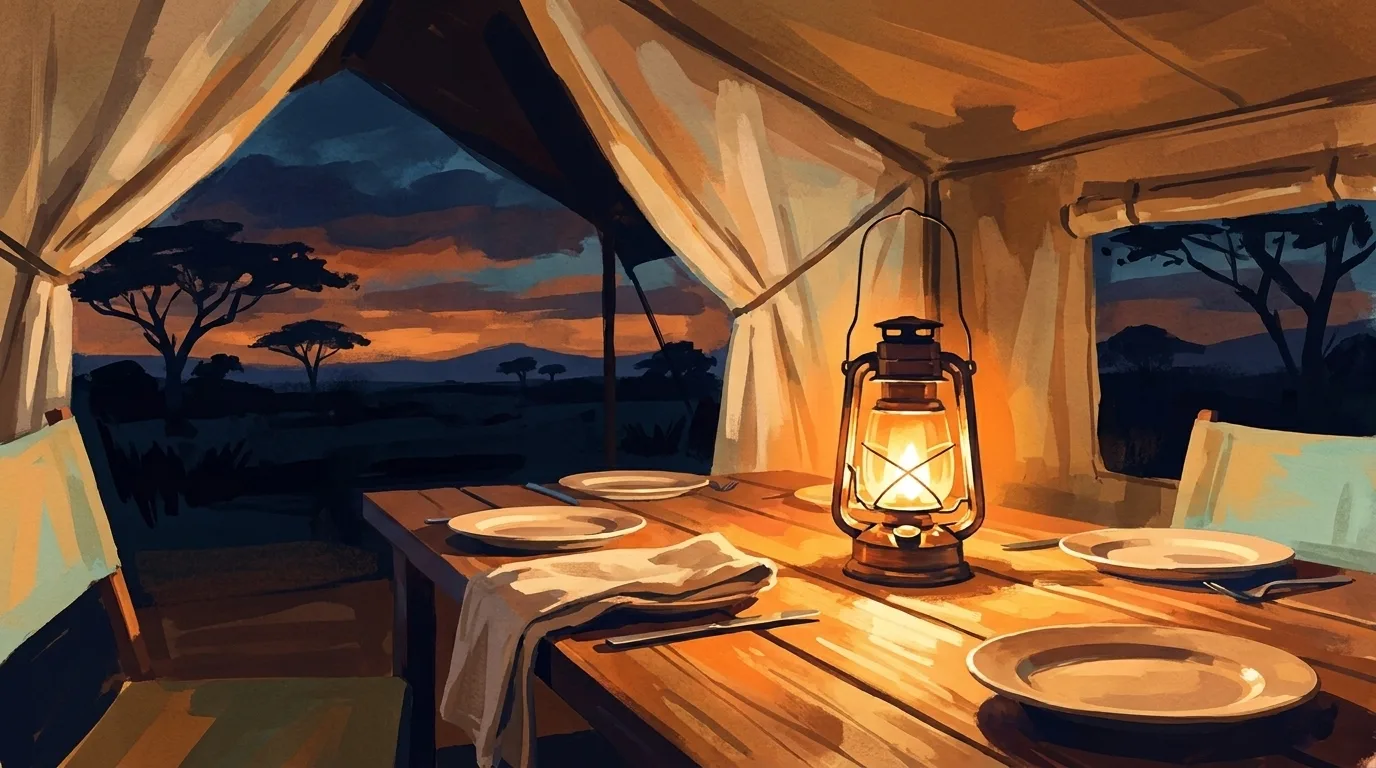
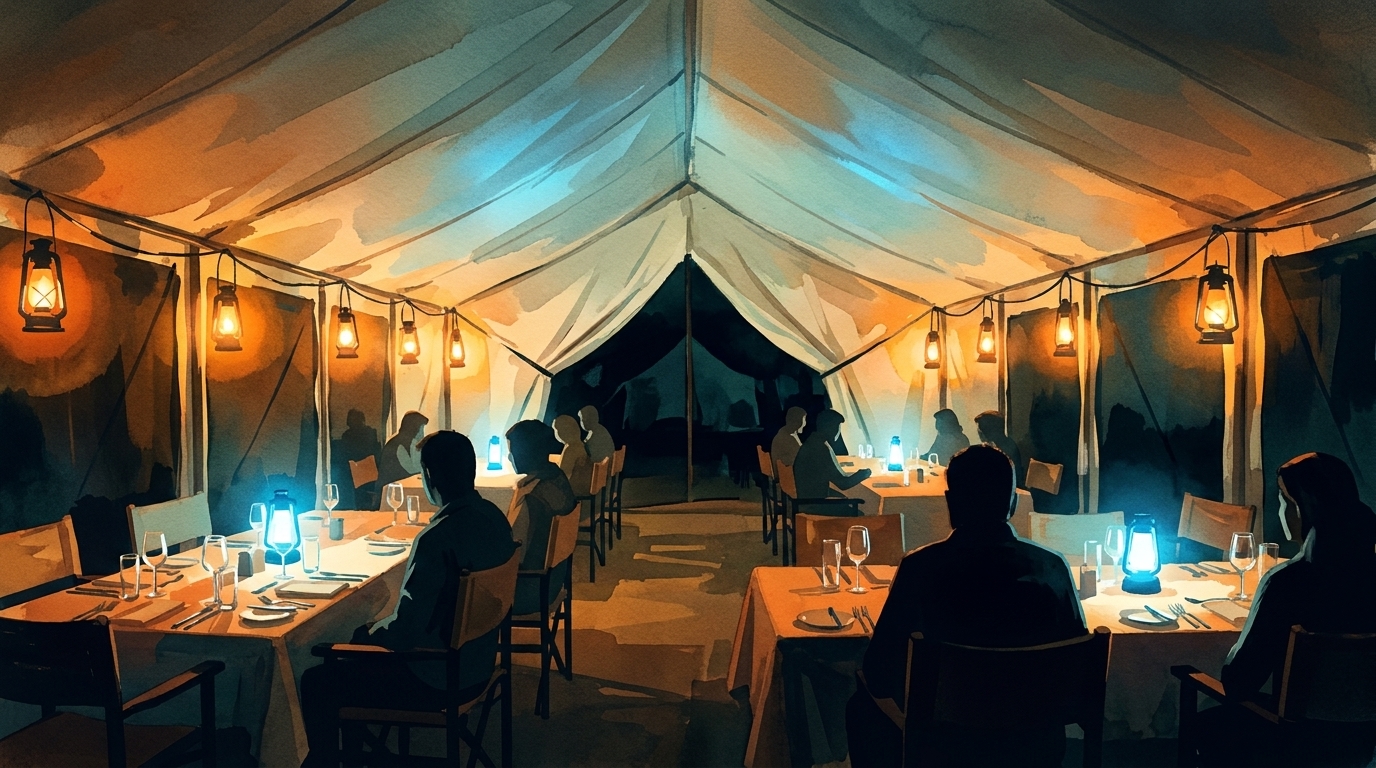
The safari dining tent was lit by lanterns strung along the canvas, and outside a fire burned in a ring of stones while something large moved through the dark past the edge of it. We had been told not to walk back to our tent alone after dinner. My wife and I sat down, ordered, and while we waited I found myself counting the tables.
Nine of eleven had a face lit from below. A honeymoon couple, both of them scrolling. A family with two young kids, all four of them scrolling. An older pair who had probably been saving for this trip for years. The lanterns threw an orange light that moved a little with the air, and the phones cut through it with that other light, the blue one, which doesn't exist anywhere in nature. We flew across the world to be here and most were somewhere else.
What I felt first was sadness. It sat with me through dinner, through the walk back with a guide and a flashlight, and by morning it had hardened into something closer to conviction. I don't want to live like that.
There's a line from Tuesdays with Morrie I've carried for years, a book I've read and reread and still return to. "If the culture doesn't work for you, don't buy it". I've been thinking about digital distraction for more than a decade, writing about it, running small experiments against it. That dining tent was the tipping point for me.
While my wife and I were in East Africa for fifteen days last month, we kept our phones offline the entire time. No roaming plan, no Wi-Fi, no checking anything. We told our families in advance, although it wasn't the first time, so they were not surprised.
Our phones became cameras and nothing else. My blog posts that went up here during those weeks were written before we left and scheduled, which meant that nobody could reach me and I couldn't reach for anything either.
It took about three days for my mind to follow my body across the ocean. I wasn't consuming anything digitally, wasn't speaking to anyone except my wife and the people we met, and still I was mentally back in Portugal, turning over conversations from the week before, rehearsing work that wasn't happening. Then it loosened.
What rushed into the space was curiosity about the people right in front of me. I interviewed our guides for hours, their histories, their families, the history of their country. That led us to restaurants we wouldn't have found and to the National Museum of Kenya in Nairobi, where we walked for hours through rooms of history with no way to look anything up. No context to fill in, no second screen. Whatever I understood, I understood from standing there.
The days felt longer. Not slower, but longer, the way days felt when I was a kid.
We've been home for two weeks now, and what I expected was the usual snapback. It hasn't come. My interest in messages, email, the news, the markets, has dropped in a way that surprises me. I'm not restraining myself. I've just stopped finding it interesting.
Our apartment in Lisbon has three bedrooms. Ours, then the one we converted into a wellness room with the workout equipment and the sauna and the red light panels, where I meditate and do yoga every morning, and then the home office, where the big screen lives along with every charging cable we own. Everything productive mostly happens in that third room.
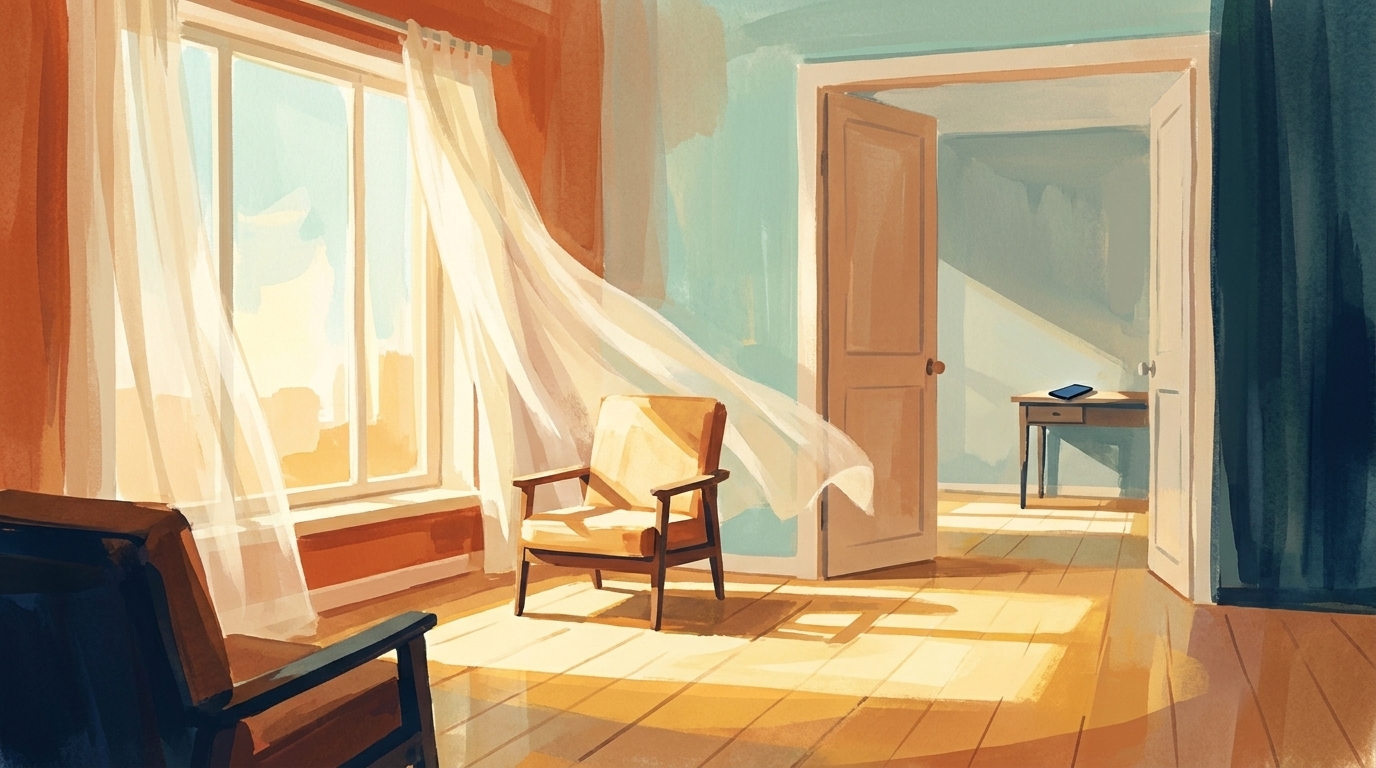
Somewhere in the last two weeks, my phone stopped leaving the home office. Previously, it had a visitor pass for the whole apartment, the kitchen, the dining table, the couch, the balcony.. That visitor pass has now been revoked. Nobody announced it. I simply noticed one evening that it had been in the study since lunch and that I hadn't wondered about it once.
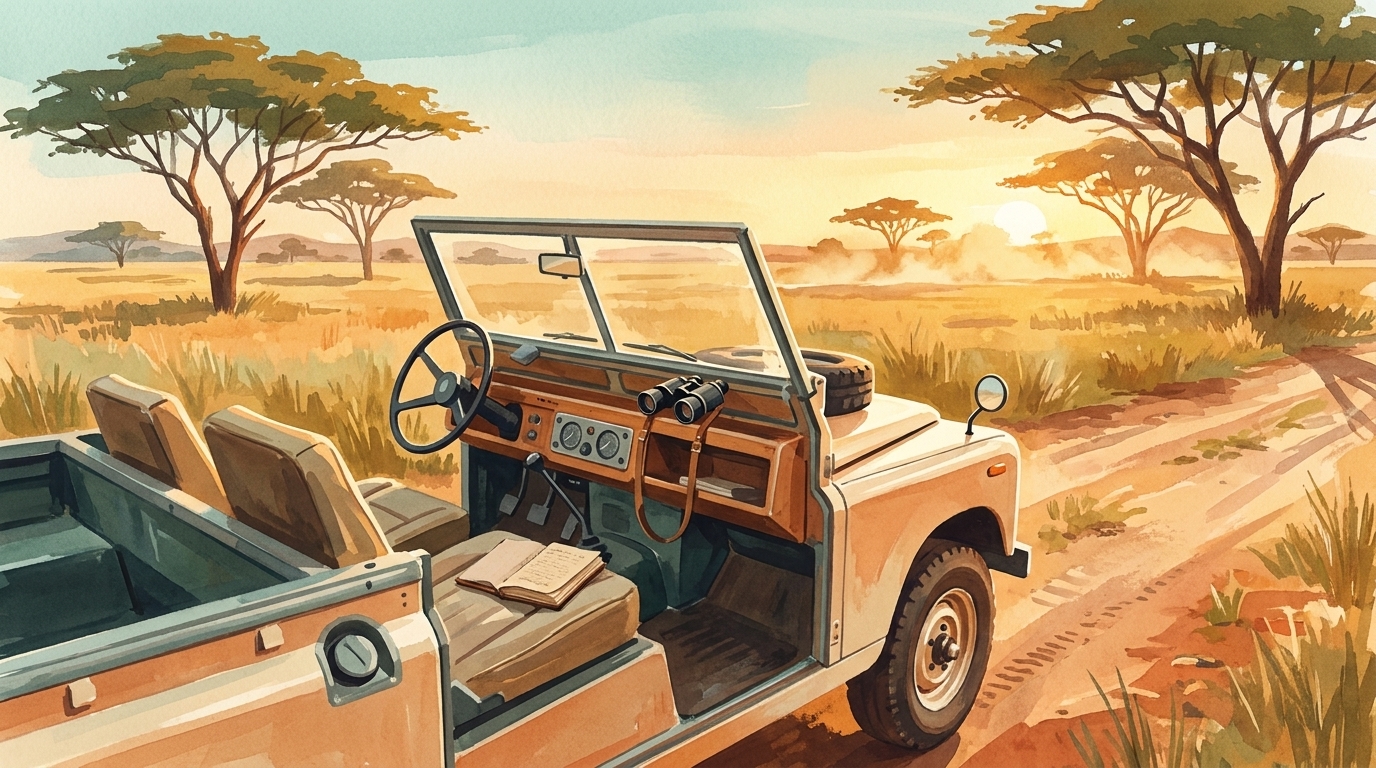
The difference in our home is not subtle. I'm more present when we cook, when we eat, when friends are over. I keep catching the view from our living room window, which I've had for years and had stopped seeing, and I'm noticing things outside the apartment that were always there. Looking up instead of down.
The bigger change is inside my own head, where there's more room now, more empty space to actually observe what I'm thinking and feeling, more silence between one thought and the next.
My gym routine has changed too. Four mornings a week, and now it's only music. No voice notes from friends, no podcasts, nothing that asks my mind to process language while my body works. Just the weight and the breath and the physical sensation of trying to life a weight.
I brought this to my therapist a few days ago and we ended up somewhere I didn't expect. The reconditioning I'm experiencing isn't about willpower and discipline. Fifteen days away retrained my appetite for dopamine spikes, the small hits that arrive with each new piece of information, the checking, the scrolling, the refresh. The technology was never the thing I was addicted to. The dopamine spike was. This is chemistry, not character. Reading that sentence is easy. Feeling the difference in my body took two weeks in a place with no signal.
What's left, now that the spikes have flattened, is a steadier line. Less volatility in a day. More calm in the gaps.
And more clarity, which is the part I keep noticing. I can see my own environment again, the room I'm standing in, the person across the table, the light on the wall in the late afternoon. The lanterns are gone and the fire is out, and the seeing came home with me.