Unwritten Rules
A blank wall invites chaos.
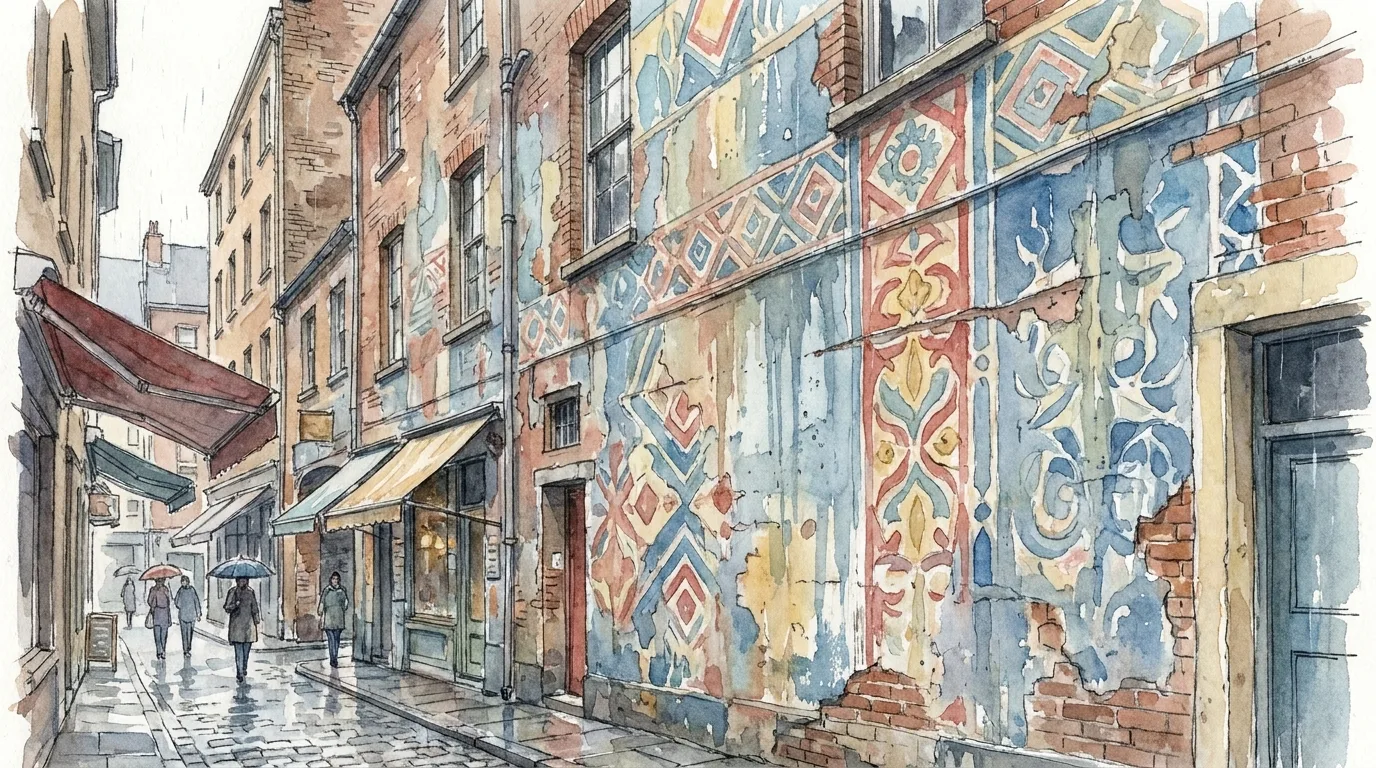
Last week, my wife and I took a street art walking tour in a part of Lisbon I almost never visit. A friend had gifted it to us, and it was nothing either of us would have signed up for on our own. The neighbourhood was a fifteen-minute drive from our apartment, close enough to feel familiar, far enough that I realized I'd been there maybe once in five years.
The guide walked us through narrow streets lined with murals, explaining the difference between street art and graffiti. Street art is invited, the property owner has asked the artist to paint. Graffiti is uninvited. What struck me first was impermanence. These murals, some of them enormous, might last a year. Maybe five years at max. Weather erodes them. Construction tears them down. Other artists paint over them. I kept thinking about how few things I pour myself into with that kind of acceptance.
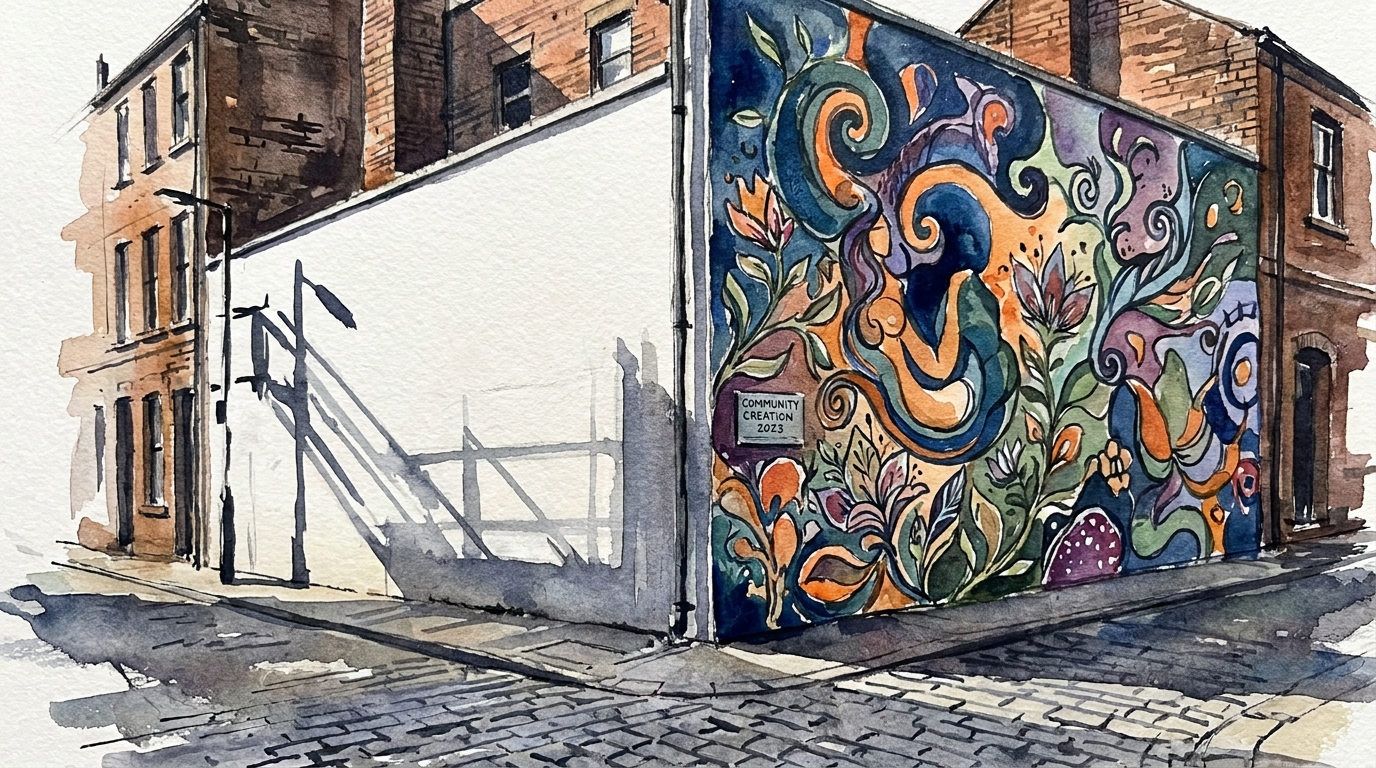
The story that stayed with me though was about a school. There was a preschool in the neighbourhood with a large wall facing a busy intersection. For years, it had been a target for graffiti, and families started feeling uneasy about bringing their children there. The school tried the obvious approach, repainting the wall a fresh coat of plain color, but within weeks the graffiti would return. A blank wall in that neighbourhood was essentially an invitation.
Then someone had a different idea. Instead of leaving the wall blank, they invited artists to paint a mural. Bright, bold, enormous. Children, animals, parks, a whole story sprawling across the facade. That was over five years ago. Nobody has touched it.
The guide explained that this is one of the unwritten rules of the street art and graffiti community: only paint over something if you can do better. Nobody enforces this rule. Nobody wrote it down. And yet an entire community of artists, many of whom operate outside the law in every other respect, honours it consistently. It emerged from within, from a shared sense of what matters. It works precisely because it was chosen, not enforced.
Walking back to our car that afternoon, I started thinking about rules in my own life. Not the legal kind. The invisible ones that operate so quietly they feel like facts rather than choices.
For most of my adult life, there was an inherited rule I never questioned: I need to live in North America. Nobody said it to me directly. It was absorbed. My family was in Toronto. My business took me to New York, my friends spread across the context, my cultural context clearly Western, everything was there. The rule wasn't written on any wall, but it was painted across every decision I made about where to live, where to build.
Moving to Lisbon five years ago meant clearing that wall. And clearing a wall, I learned, is its own kind of vulnerable. The school discovered this: a blank surface invites whatever comes along. When I stepped away from the inherited rules about where home should be, about what success is supposed to feel like, there was a period where anything could have shown up. Old patterns, new anxieties, the restless energy of someone who has torn something down without knowing what comes next.
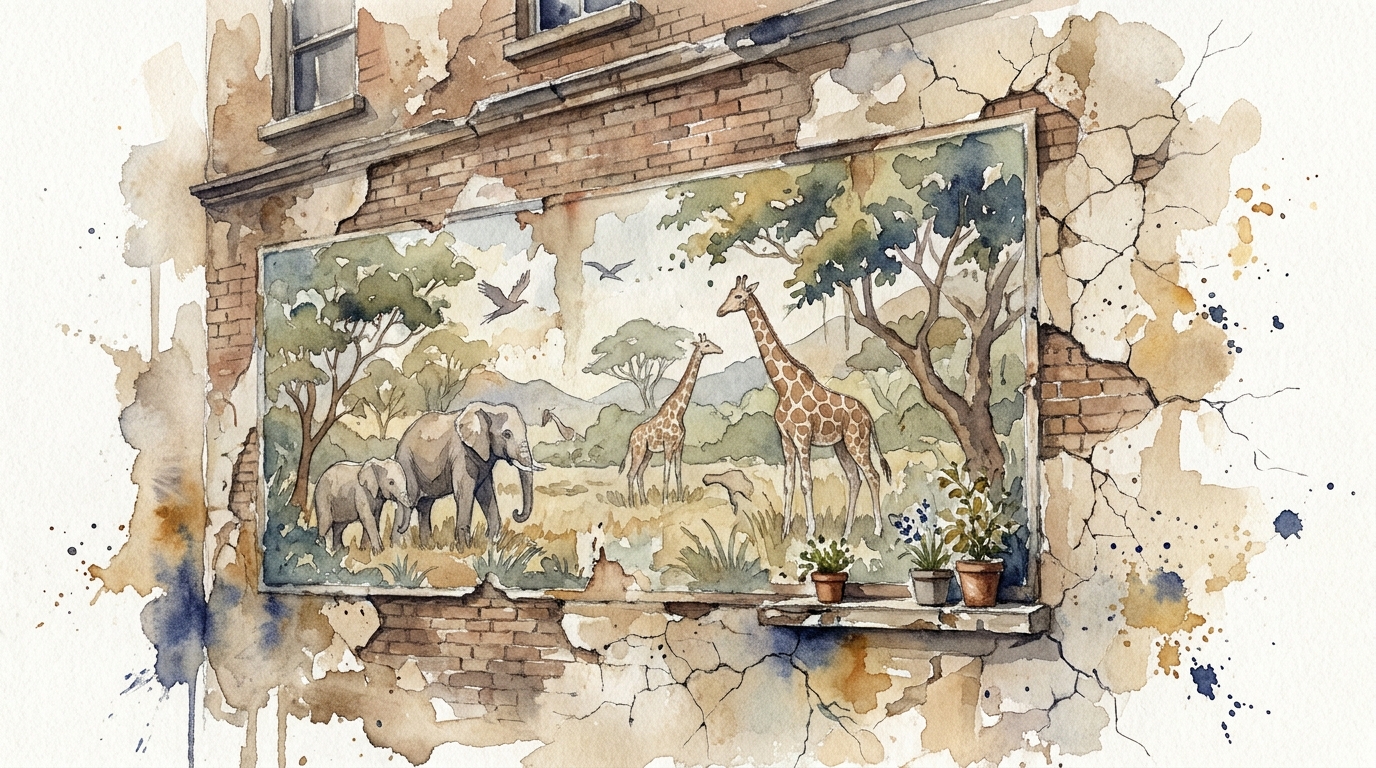
A blank wall invites chaos. A wall filled with something intentional, something chosen, earns its own protection.
In my book Unlearning, I wrote about the sponge, how we spend our early decades absorbing the values and expectations of our parents, culture, teachers, society. The work of unlearning is wringing out that sponge. But what the mural taught me is that wringing out isn't enough. A blank wall is just an invitation for the next thing that comes along. The real work is filling the space with something you chose.
The morning rhythm my wife and I have settled into, where I slip out of bed quietly while she sleeps, move to the study, sit with myself before the day begins. We never discussed this. It just became ours, the way a mural becomes part of a neighbourhood. The community I've found here, the writing practice, the willingness to be a beginner in a country where I have no history. None of it was inherited. And because of that, it holds in a way the inherited stuff never quite did.
There is a quiet authority in a rule you chose. It doesn't need enforcement. It doesn't need repetition. The painted-over school wall needed constant maintenance. The mural just stands.