My Window Is Now A Mirror
There was always someone or something between me and the thing I wanted to build
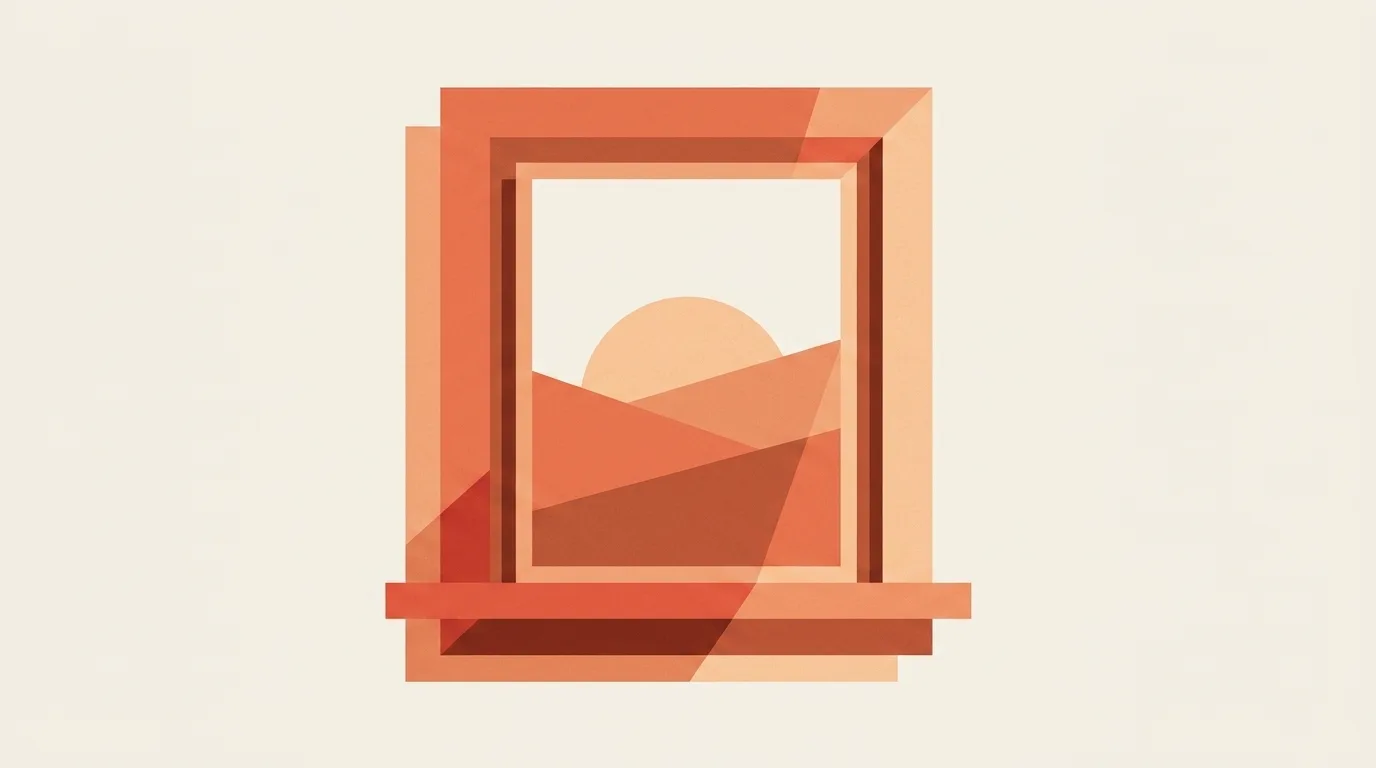
For twenty-five years I had a window to point at. Now it's a mirror.
Last week I hit the usage limit on Claude Code for the third time in a single day. Not the monthly limit, the daily one. I switched to Cursor. Maxed out. Switched to Codex. Already burning through the ceiling there too. At some point in the last six months, I've been cycling through AI tools like a gambler who's been cut off at one table and walks to the next. My wife has watched this build for months, the late nights bleeding into early mornings, the laptop open before coffee, the conversations where I'm physically present but mentally still inside whatever I was building an hour ago. She doesn't say much about it anymore. The pattern speaks for itself.
For fifteen years as CEO of a technology company, and ten years in student leadership before that, there was always someone or something between me and the thing I wanted to build. Engineers who would tell me the thing I wanted would take six months. Clients who moved at their own pace. Investors with their own timelines. The friction was the terrain, and in a way I never appreciated at the time, it performed a function I didn't know I needed. It gave me something to point at. The team is still ramping up. The client hasn't responded. The funding round isn't closed. A window I could look through and say: that's why this isn't done yet. If the bottleneck is out there, then the bottleneck isn't me.
Every excuse I relied on for a quarter century has evaporated in what feels like a single season. I need a team? Agents run overnight without complaining. I need money? The tools cost a fraction of a single junior developer. I need knowledge I don't have? I can learn anything in an afternoon with a model that never gets tired of my questions. Market research, a logo, a database schema, all of it is a conversation away. There's no one left to blame, no friction to absorb the impatience, and what I'm discovering is that me, without the convenient structure of external limitations, is a person who doesn't know when to stop.
The strange thing is that I have enough. Enough professional satisfaction, enough financial security. This isn't the hunger of someone with something to prove. I did that for fifteen years and wrote a book about why the summit was empty. This is the curiosity of someone who spent most of his career imagining things he couldn't make, and who now can make almost anything he imagines. The creative impulse finally has no gatekeeper, and it turns out the creative impulse without a gatekeeper is a flood. Every problem I notice becomes a potential project. The gap between what if and let me try has collapsed to nearly zero, and the result isn't the liberation I expected. It's a kind of overwhelm I have no practice managing.
A friend of mine, another builder here in Lisbon, told me something over dinner last month that I haven't been able to shake. He said he'd realized that for years he thought his problem was access, that if he could just get the right tools and resources, he'd finally build what he saw in his head. Now he has all of that. And the thing he's confronting is that the vision was always slightly ahead of his ability to execute it, and the external friction was masking that gap. Take away the friction, and the gap is just you. I recognized that immediately. The mirror again.
There's a version of this realization that's terrifying, the moment you understand that the excuses were load-bearing walls, and without them the whole structure of how you understood yourself starts to shift. For twenty-five years, being a leader meant navigating constraints. Remove the constraints, and what's left of the identity? But there's another version I keep circling back to in the quieter moments, usually after my wife has gently reminded me that the laptop can close. Maybe the mirror isn't showing me a bottleneck. Maybe it's showing me something I haven't had to look at before because there was always a window in the way. The real shape of my own creativity, my own limits, my own relationship with the difference between building because I can and building because it matters.
The skill I suspect matters more than any prompting technique or tool selection is the one I've never had to develop: patience with myself as the only variable. Knowing which of the eleven projects deserves this week, and being at peace with the ten that don't. Knowing that maxing out every AI plan every day is not a sign of productivity. It might be a sign of someone who hasn't yet learned to sit with the mirror.
I spent fifteen years wishing the window would disappear. Now it has, and the view is only me, and I'm still learning what to do with that.