Empty Spaces
Taking time to think
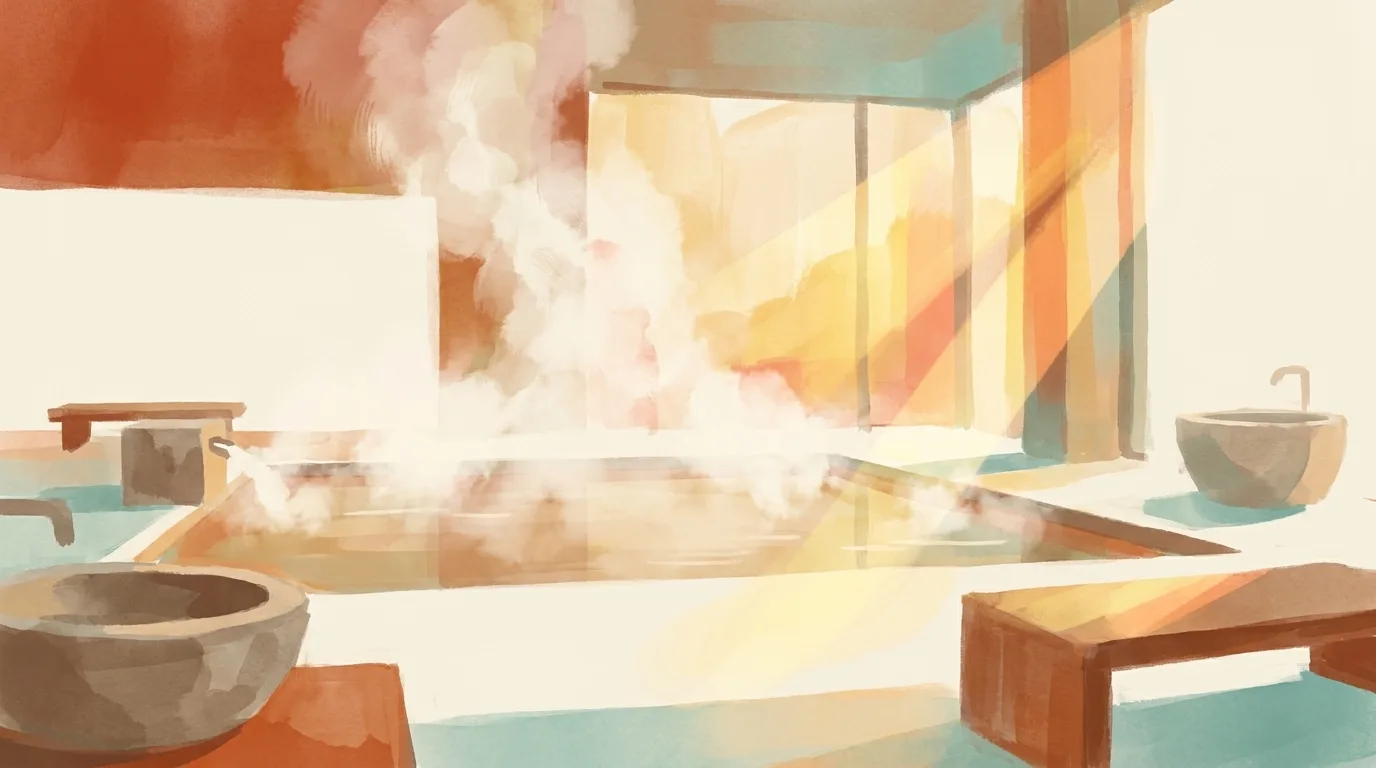
Yesterday my wife and I drove twelve minutes to a hotel spa in our own city, the kind of indulgence we'd normally save for a vacation somewhere far from home. We treated ourselves to a full spa circuit, including hot baths, sauna, steam room, cold plunge, and then ninety-minute massages to finish.
The hotel had been starred on our shared Google Maps for over two years, recommended by a friend and then quietly forgotten, sitting there unused every time we saw it. While she was reading about it online yesterday morning, I called on impulse, and when they said they had availability, we were in the car thirty minutes later.
We used to do a spa circuit more often when we lived in Sydney, and something about moving between the heat and the cold always opened us up. As we drifted through the circuit yesterday, we started talking, about what a future house might look like, about where we might travel this winter, about places in the world we still haven't seen. The conversation kept climbing toward things that felt expansive and alive, and as we were called in for the massages, I made a joke to her. "Well, we clearly both have plenty of fun things to think about for the next ninety minutes." She smiled.
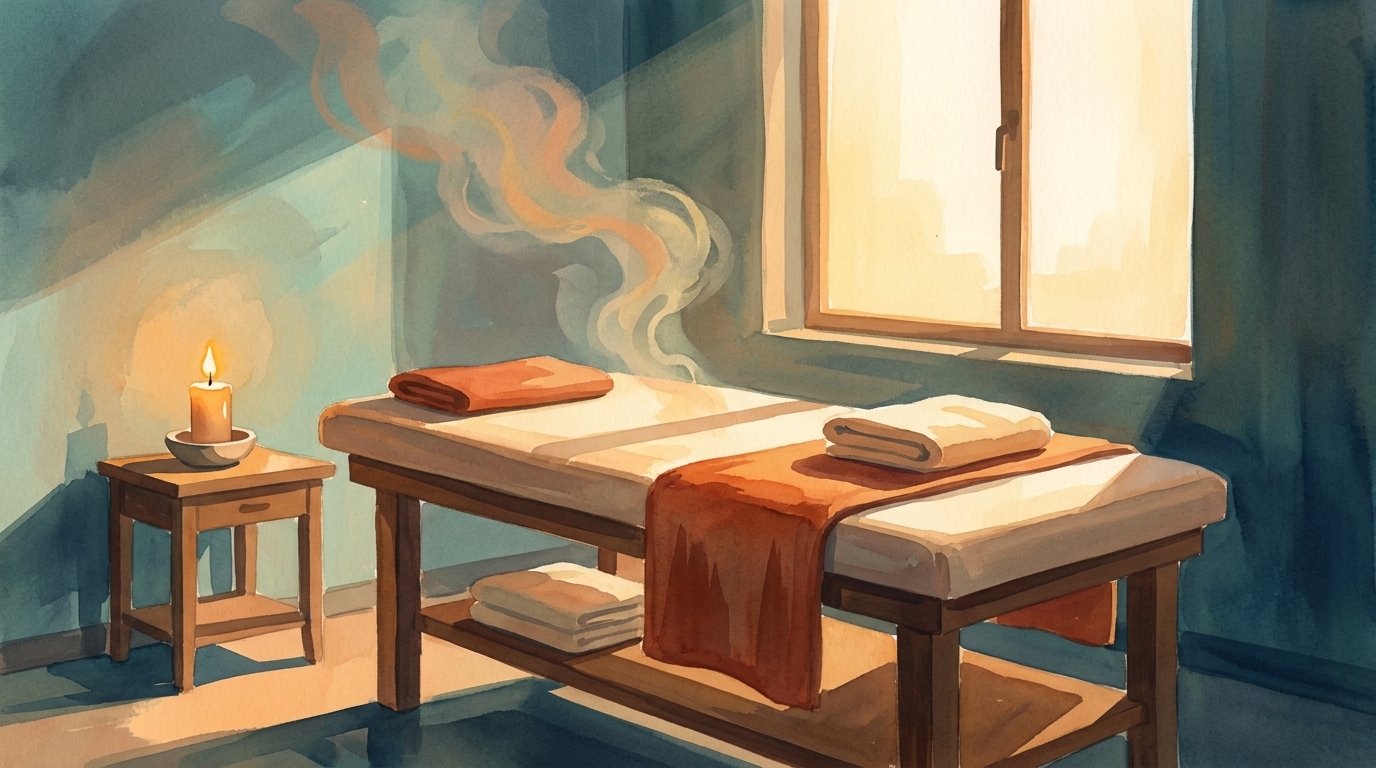
Then I lay down on the table, and my mind went somewhere else entirely.
It didn't drift toward a future home or the winter travels or any of the inspiring things we'd been dreaming about together a minute earlier. It went straight to the boring backlog of my week, replaying people I'd seen and messages I still hadn't answered and something I'd read on a website days ago, running through the quiet tally of my to-do list as if it had been waiting all week for the chance. A few times I tried to steer it back toward the exciting conversation, and each time it drifted right back to the mundane residue of recent days.

Afterward, in the relaxation room, I turned to her eagerly and asked what she had thought about while on the massage table. She looked at me almost blankly, as if nothing worth mentioning had happened, and when she asked me the same question, I gave her the same answer. Nothing worth reporting. The massage had been wonderful, and yet my inner experience had been strangely dull.
It took me a while to understand what had actually happened on that table. This was an empty space, and my mind, handed ninety uninterrupted minutes, had chosen not to compose symphonies but to do the quiet, unglamorous work of processing whatever had piled up. It wasn't wandering aimlessly so much as clearing a backlog I hadn't realized was there. My mornings that week had been rushed, the meditations shorter, the journaling almost nonexistent, so it made sense that my mind had a queue of unprocessed days waiting for the first real opening it could find, and the massage table was the first opening in a while.
There's a rhythm to my days that leaves almost no room for this. When I'm not engaging with my wife, I'm engaging with someone else, in person or through a screen, and when I'm not talking to a human I'm often talking to one of my AI agents. When I'm not doing either of those, I'm consuming something, a podcast or music or some piece of information I've convinced myself I need, and when I'm not consuming, I'm deep in a task that demands all of me, chopping vegetables finely or carrying something heavy or fixed on the next small thing in front of me. There's always an input, and there's never a gap.
For a long time I thought zoning out counted as rest, disappearing into a movie or losing myself in music at the gym, but I've come to see that isn't the same thing at all. In those moments my mind is unengaged and yet it isn't resting, because something is still coming in, the screen still lit, the sound still playing. What the rest my mind actually needs looks more like the massage table, where nothing comes in and the backlog finally gets to move.
Years ago I read a few books about sleep, and one idea has stayed with me ever since is that much of memory forms overnight, that sleep is partly the brain's way of filing the day away, sorting through what happened and making sense of it. I've started to think the mind needs a version of that during the waking hours too, some way of processing what just happened before it accumulates into a backlog that ambushes me on a massage table. Making peace with the past, even the past few days, is what clears space for the future to arrive. Space for ideas. Space for possibilities.
The rest of that day, we decided to stay off our phones entirely, no messages and no email and no feeds, and something in that decision felt lighter than it should have. We napped and walked through the city and ate a long tasting menu dinner and did an escape room, letting the hours stretch without checking anything, and by the time we got home I felt full in every sense, a little too full from dinner and ready for some space after a whole day together.
We both reached for our phones then, but instead of scrolling through my messages I opened ChatGPT and started chasing an idea that had surfaced during the massage. Many thoughts had drifted through my mind on that table, but this one had lodged itself and wouldn't let go, and I spent the next hour deep inside it, turning it over and following it further than I expected to. It's something I'm building a prototype of today, and I know I never would have found it if my mind hadn't been given those empty minutes to dig it up.
This morning I was at the grocery store with my wife, standing in line at the register while she was off grabbing a few last things, with nothing to do and nowhere to be. In the past that would have been an automatic reach for my phone, a reflex to fill the pause before it could even register as one, but today I just stood there and looked around at the people and the shelves and the ordinary hum of the place, letting my mind drift toward whatever random, useless, boring thing it wanted. I didn't try to make it productive. I just let the space be empty, and I was okay standing inside it.