Stubborn
I often forget how much my physical environment shapes my
I often forget how much my physical environment shapes my mental environment. This past weekend, I was reminded of this.
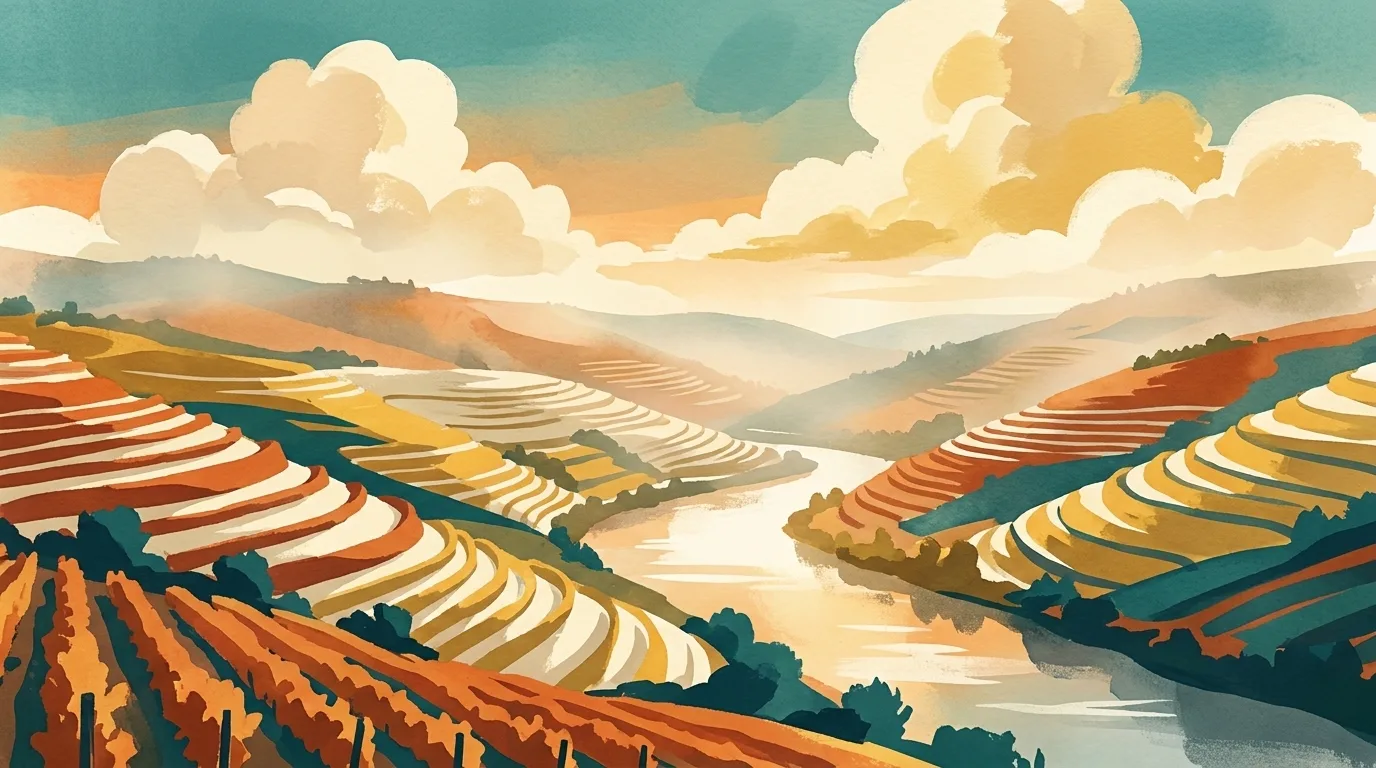
My sister and her family were visiting my wife and I in Portugal, and we took the opportunity to drive up to the Douro Valley. Surrounded by gorgeous hills, a quiet river and a generous landscape that extended beyond the eye could see, I noticed how the environment helped us go deeper in our conversations and me in my reflections.
After lunch one day, when the rest of the family had left the hotel restaurant, my sister and I were sitting alone together for the first time.
"I'm surprised with how much you've changed since getting married", she remarked, seemingly out of the blue for me. Clearly, she had been pondering this for some time. "You seem to have learned how to accept things more easily now", referring casually to my stubbornness that she undoubtedly had become accustomed to since childhood.
I felt the comment land somewhere in my chest before my mind caught up.
I still see myself as quite stubborn. The word fits me the way a familiar coat fits. I've worn it for decades. My family knows this version of me, the one who digs in, the one who decides what he believes and then pursues it relentlessly. But sitting there at the table, hearing her describe someone else, I realized she might be seeing something I hadn't yet seen in myself.
The conversation stayed with me for the rest of the weekend. I kept turning it over while walking the vineyards, while playing with my nephew, while watching the river move slowly past us. What had actually changed in me? And why?
I started to think about my beliefs. How I form them. How I hold them. How rarely I question them once they're in place. So much of what I believe was handed to me before I could choose. By my parents, my teachers, the culture I grew up in. I absorbed it all the way a sponge absorbs water, without asking about what was coming in.
The trouble is that beliefs rarely get questioned. They settle in. They become part of the furniture of my mind. And when my reality starts to diverge from what I believe, I have a choice I rarely notice I'm making. I can accept what's happening in my reality, or I can stay loyal to the belief and resist what's in front of me.
For most of my life, I chose loyalty to the belief. That's what stubbornness really is. A preference for the inherited story over my lived experience.
What's shifted, I think, is that I've started asking a different question. Not whether the belief is true, but whether it's still serving its purpose. Most beliefs were built to serve something, to protect me, to guide me, to keep me connected. The question is whether that purpose is still being met.
A simple example: I grew up vegetarian. It became identity as much as diet. About one year ago, I started experimenting with eating chicken. Not because I wanted to abandon something, but because I'd been strength training for over five years and wasn't seeing the muscle growth I'd been expecting. Intellectually, I understood the need of more protein. Emotionally, the idea of eating chicken felt like a betrayal to who I was.
The first few times were uncomfortable. The belief had purpose once. It connected me to my family, to my culture, to a way of moving through the world. But sitting in a Lisbon restaurant a year later, ordering chicken without flinching, I had to admit something. The belief wasn't serving me anymore. It was getting in the way of a goal that mattered to me now.
Now I eat chicken almost daily. My body has started to shift in ways my wife notices, my trainer notices, my massage therapist notices. I haven't changed my workouts. I haven't added more hours at the gym. The nutrition changed, and my body responded positively. A belief I'd carried my entire life, one I would have defended fiercely at twenty, turned out to be more flexible than I'd assumed.
The lesson is not about eating chicken. The lesson is about the courage to look at a belief and ask whether it's still achieving its purpose. It is much easier to keep believing and struggling than to challenge the belief and accept what's might now be true.
Living in Portugal for over five years has done something similar on a wider scale. The way I believed a society, government and economy should function has been challenged. Almost all of it has been quietly disassembled by daily life here. The shops close in the afternoon. People take their time. Bureaucracy moves at a pace I would have found unbearable a decade ago. Some of my old beliefs about efficiency, productivity, the right way to live, have not survived the move from New York to Lisbon. The ones that have, I now hold by choice rather than inheritance.
My sister's observation, I think, was about this. She wasn't saying I'd become less of myself. She was saying I'd stopped clinging to ideas that no longer served me. That likely haven't for a while but I needed time to finally let some of them go. Acceptance, from the outside, can look like softening. From the inside, it feels more like clarity. Like putting down something heavy I'd been carrying without realizing the weight.
I'm still stubborn about plenty of things. The list is long and unflattering. But the practice I'm learning, slowly, is to ask the deeper question before defending the position. Why do I believe this? Is is practical for me to still believe this? Does this serve the life I'm actually living, the family I'm actually building, the world I'm actually in?
If it does, I keep it. If it doesn't, I try to let it go.
I don't need to be right about everything. I'd rather live in harmony with reality, the environment and the people around me. That's often the most practical choice I can make.