The Table
Chasing the best view
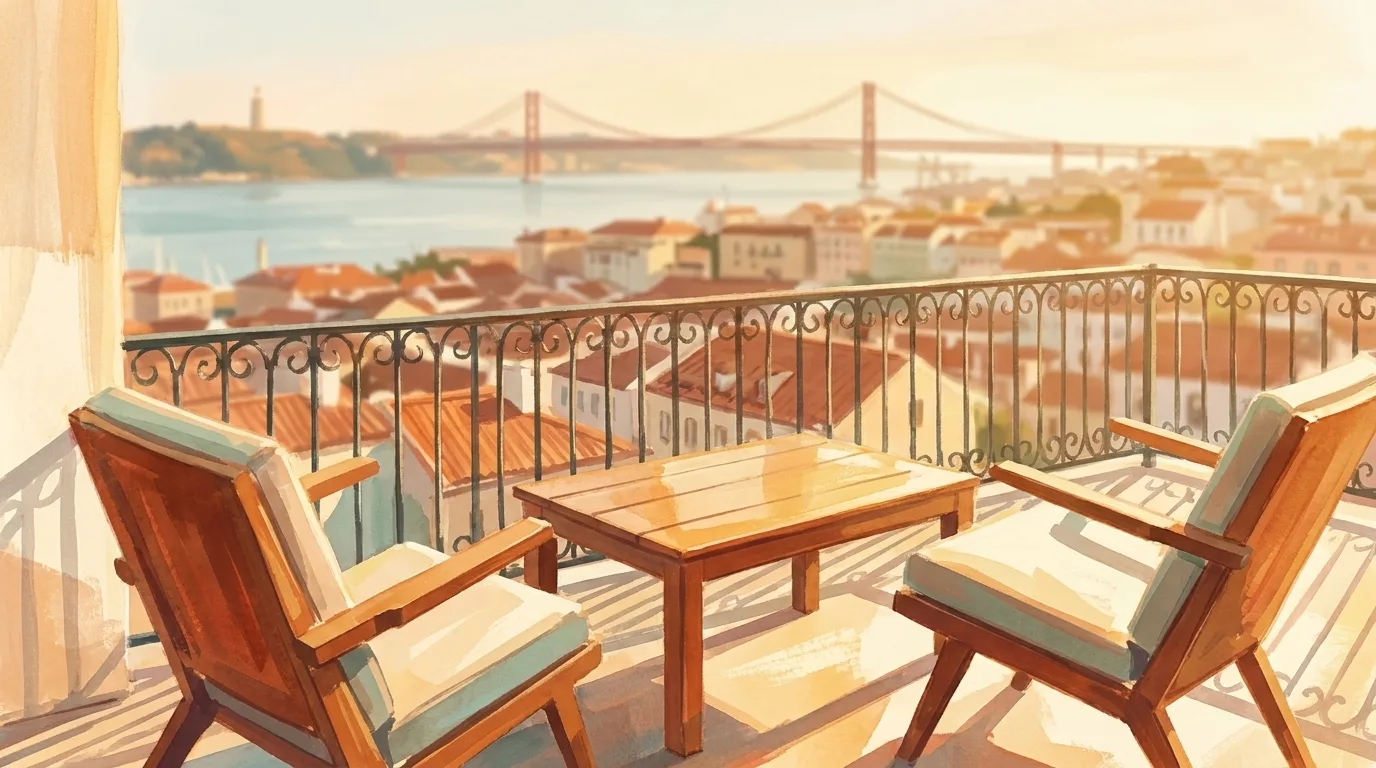
The new patio furniture arrived last week, and I spent most of that morning quietly grieving something I hadn't lost yet. For the past few summers our balcony in Lisbon held a high top bar table pushed right to the edge, two stools side-by-side, facing out over one of the most inspiring views I've ever had.
Thousands of rooftops, the river, the bridge, the hills behind it. My wife and I had spent many dinners on those stools, shoulder to shoulder, facing the city the way an audience faces a stage. The new outdoor table was lower though. Normal chairs, normal height. Which meant more banister and less city.
I made my case over and over. From inside the apartment, the tall silhouette of the bar height table had always disappeared into the window; this new one would sit across the middle of it, a horizontal line drawn through the best thing we own. My wife listened to more of this than the argument deserved.
Then the table came, and I sat down at it.
The first thing I noticed was my feet. I felt grounded. My feet were flat on the fake grass we laid across the balcony floor, fifty meters above the street, which is a strange definition of ground and still works exactly like one. On the bar stools before my feet had hovered, hooked on a metal rung or swinging free, and I had never once thought about it. Sitting there with both heels pressed into that plastic turf, something in my lower half relaxed. The second thing was my back. The stools had low backs, so all those evenings I'd been holding myself upright with back muscles I never asked for volunteers from. Now there was a chair behind me doing the work. My body had been maintaining a posture I mistook for a preference.
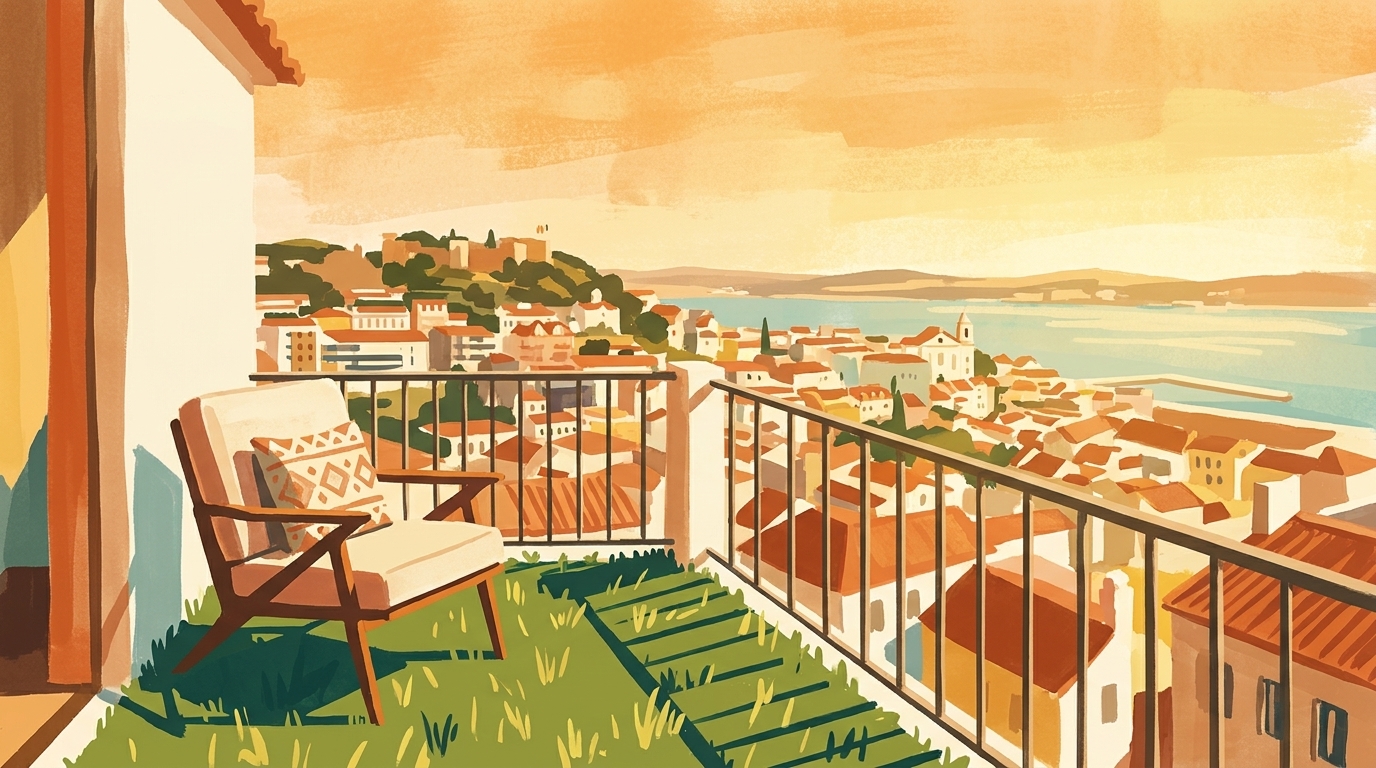
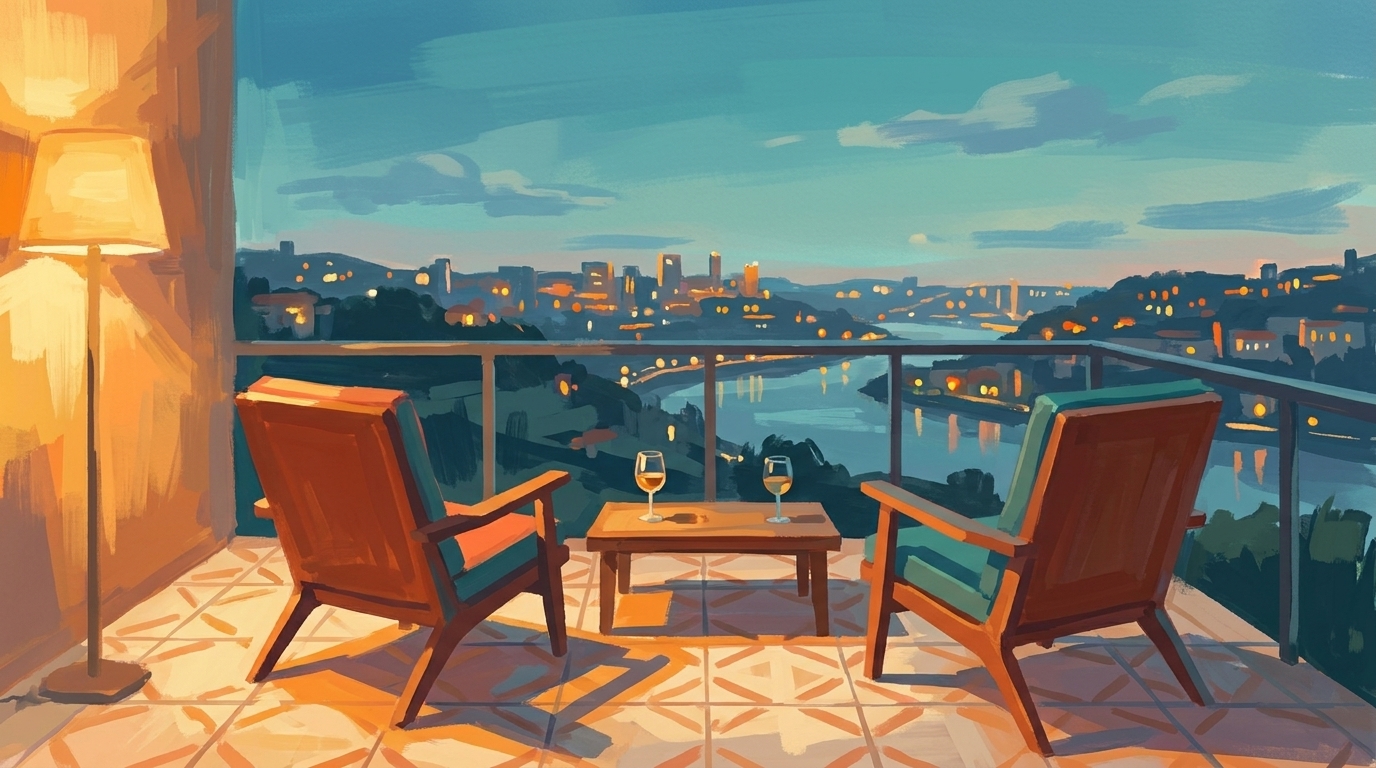
The third change took a few minutes longer to notice. Our chairs were now angled slightly toward each other rather than lined up in a row, so my wife and I could still see the city and also see each other. On the stools we had spent years talking to Lisbon with our voices pointed at the horizon. Now her face was in the conversation. The talking changed that first evening, went slower and further, and we stayed out there past the point where we usually went inside to find something to do.
Nothing about the view had changed. The bridge was where I left it.
Many years ago I read a small book called Slim by Design, and I still remember more of it than most books I've read since. The argument was that our kitchens, our grocery aisles, our restaurants and school cafeterias were all built in ways that quietly encourage us to eat more and eat worse, and that redesigning the room does more than lecturing the person in it.
Smaller plates and smaller forks. Fresh food at eye level instead of buried in a drawer. A table by the window. I have no idea how much of the research held up, and it hardly matters to me now, because the idea moved into my kitchen and never left. The room makes suggestions. The body takes them.
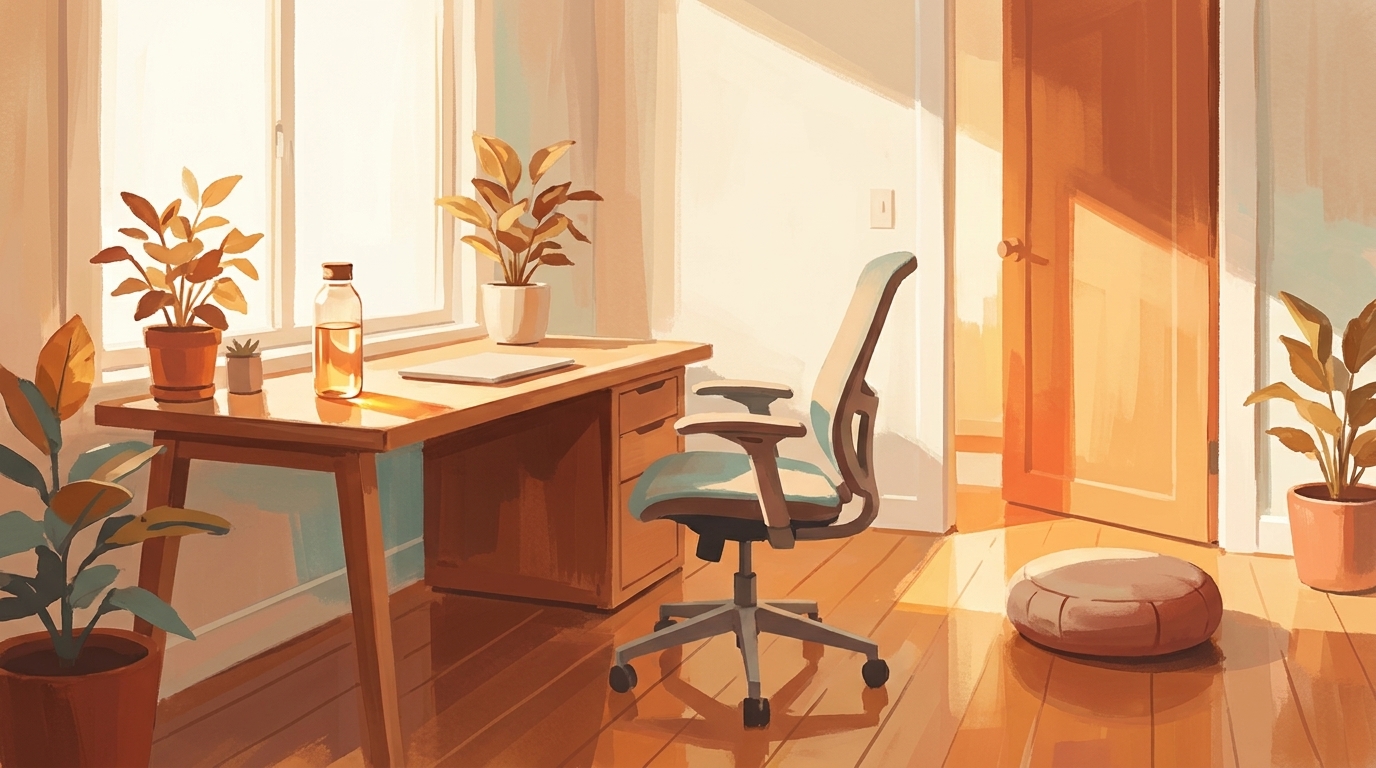
There's a version of this running everywhere in my life once I started looking. My yoga blocks live on the floor next to the mat instead of in the closet, and I use them. When they were in the closet, I did not. A water bottle sits on my desk within arm's reach, and I drink from it without deciding to. Notifications, sounds, the size of the monitor, whether the chair at my desk supports my back the way the new balcony chair does. Where the meditation cushion sits when I walk out of the bedroom in the morning. Every one of these was a choice, and almost none of them felt like one at the time.
Most of my environment was assembled by momentum. Things landed where they landed, and then I built habits around them and called the habits my personality. I don't want to bring full attention to every object in every room all the time; there's a cognitive weight to that which would cost more than it returns. But noticing even a few of them feels different from how I used to move through my days. It gives me a little more agency. A little more sense that my experience of life is something I shape rather than something that arrives and gets absorbed.
That's most of what I want, in the end. To feel like my life is mine. Not conquered, not optimized, just authored in small ways. The furniture, the phone settings, the height of a chair, the angle between two people who love each other. I do get to make those choices, everyday.
I had been guarding the view from our balcony because the view was the reason I had bought the apartment years ago. What makes evenings with my wife on the balcony good though was never the panorama. It is feeling grounded, supported and connected.
The city looks a little smaller from the new table and chairs. And we stay out there twice as long.