AI, cognitive load and the things we no longer have to do

Chapters
Quotes
Host
Ross Dawson
Futurist, keynote speaker and founder of Humans + AI, a community and podcast on how AI can amplify human thinking.
Podcasts, talks and interviews where someone else held the microphone.
PodcastHumans + AI Futurist, keynote speaker and founder of Humans + AI, a community and podcast on how AI can amplify human thinking.
 Video podcastIn The Blink of AI
Georgie Healy hosts In The Blink of AI on the Day One network, talking to people shaping how we live with AI.
 Video podcastThe Seen
Kaia Tham’s show about people building unusual lives and companies.
 Video podcastThe Seen
Kaia Tham’s show about people building unusual lives and companies.
 TalkBetter Societies
Adrien Harrison’s Better Societies: a how-to guide for building better societies.
 Video podcastA Success of Our Own
Natalie Ruskin’s show for anyone ready to create their own authentic version of success.
 Video podcastTheStevePodcast
Conversations with the authentic unprofessionals who are changing industries.
 InterviewSander Recommends
For people thinking about moving abroad, buying property, starting a business or investing internationally.
Jon Davids talks to entrepreneurs and creators about how they made it.
 Video podcastThe Red Chair
Índico Capital Partners, a Lisbon venture firm, hosts a monthly close-up conversation in two big red chairs.
 Video podcastThe Business Leadership Podcast
Edwin Frondozo interviews business leaders on how they lead and grow.
 PodcastThe Growth Suite Leadership Podcast
Jonathan Spiess on leadership and building high-growth teams.
 PodcastStigma Podcast
Stephen Hays on mental health, and the people working to remove its stigma.
 PodcastSober Company
Nik and Lacey on living alcohol-free, with guests on the habits that replace drinking.
 PodcastAdExchanger Talks
The podcast of AdExchanger, the trade publication for advertising and marketing technology.
Speaker This episode is sponsored by SpotX, the leading video advertising and monetization platform shaping digital video and the future of TV globally. SpotX's best-in-class video advertising technology is helping media owners to monetize content while connecting advertisers to premium inventory.
AdExchanger Hey, everyone. You're listening to Social Distancing with Friends, which until now has been an Ad Exchanger Talks series. But next week, on May 28th, Social Distancing will be distancing just a little more with its very own feed within the Ad Exchanger Audio Network. Be on the lookout for it, and don't forget to subscribe so we can keep the conversation going. This is Allison Schiff, one of the editors with Ad Exchanger, reporting from my kitchen table next to, if I'm being honest, last night's dinner dishes. Today, we have a special episode planned. It's not your usual fare. I have Kunal Gupta, CEO and founder of Polar with me, and we're going to have a discussion about mindfulness and mental health. May, for those who don't know, is Mental Health Month.
AdExchanger People are afraid and they're stressed out right now. The, uh, the FUD, fear, uncertainty, and doubt, isn't just a buzzword. It's, it's a real thing. In addition to running an ad tech company, Kunal is a board member at a mental health organization in Canada, where he's from originally, and he's a mindfulness teacher. We're gonna take advantage of that fact. The second half of this podcast will be a 10-minute live meditation session led by Kunal. Kunal, welcome.
Kunal Thank you for having me.
AdExchanger So you're usually based in New York, but you've been in Toronto for the last few months or just since this whole situation started. Is that right?
Kunal Yeah, I escaped back home to Canada, and very grateful and thankful to be Canadian right now.
AdExchanger And, uh, wh- why so?
Kunal Uh, you know, during a, during a health pandemic, uh, you wanna be somewhere with a strong healthcare system, uh, where there's a lot of space, and, uh, where people follow the rules.
AdExchanger That would be nice, yeah. So, so tell me a little bit about when and how you first got interested in meditation. I know it's been, it's been about 10 years, I think.
Kunal So it's been over 10 years since I've been running Polar across a variety of, um, product lines and segments of our industry. It's a business I started right out of school. And my interest in mindfulness really grew about six years ago. And I got to a point professionally and, and personally as well, I was in my late 20s, where everything that I said was important to me at that stage in life, I was there, thanks to a lot of hard work, a lot of support, and a bit of luck. And I got to this point where I realized, like, I think I've, I've made it to, in perspective of what I was looking for. But when I got there, I noticed I didn't feel any different, uh, and I expected to. Um, so it was a real turning point for me to start to look within versus to look outside, um, for answers.
Kunal And then meditation is something I quickly picked up as I found it to be a very effective, a very efficient tool for me to understand myself and my inner world. And it's been, it's been a journey, one that continues, but it's been an illuminating journey to say the least since then.
AdExchanger What kind of meditation do you practice?
Kunal I've been practicing for a long time. I've done a lot of retreat. I've read a lot of books, and, uh, I've started teaching in the last probably three years now. And what I'll say now is that pretty much all meditation is, is the same. Um, especially for anybody newer to meditation, my guidance is to not get too hung up on what technique or style. Uh, really, you either meditate or you don't meditate. There's no such thing as, as good or bad. You do it or you don't do it. Very simply, you know, there's four categories that I've experienced and observed, uh, in meditation techniques. There's observation techniques, which is where mindfulness falls under, and that's observing reality, something in reality as it is right now. Could be breath, body, sound, space, et cetera.
Kunal Uh, there's verbalization techniques. That's where chanting, transcendental, uh, mantra would come in. Um, there's visualization techniques. You could say forms of prayer fall under visualizations, um, picturing lights or gods or other symbols. And then contemplation techniques, where a specific topic is the, the focus for the mind, where you give yourself the space to go deep into it. Um, so I'd say observation techniques grounded in mindfulness are what I, I teach the most and, and recommend as they're... I love it 'cause it's, it's connecting with reality as it is in this moment.
AdExchanger Maybe we can talk a little bit more about the, the term mindfulness, because I, I think people toss it around a lot. But what does it really mean, and, like, how does it become applicable? Like, how would, say, leader of a company apply it to, you know, his or her life and then help their employees also become, you know, more mindful, especially right now when everything, uh, everything kind of sucks?
Kunal I, uh... It's a big, it's a big important question. So the first thing that I'd like to share is that under mindfulness techniques which fall under meditation, the, the objective is really to cultivate a skill, and it's a skill of awareness. So, like, we know how to drive a car, uh, or cook a meal or speak a language. Those are all skills that are applicable in certain domains or times of the day or the week. Awareness is a skill that cuts through it all. It's applicable in every single moment. There are many ways to cultivate the skill of awareness. I find mindfulness-based techniques very, very practical and very useful for that. So awareness is really what we're going for here, and mindfulness is really a path to get there, a vehicle to get there and learn the skill.
Kunal And then it applies, uh, in all contexts as, you know, as the skill of awareness Strengthens, and it is like strength training for the mind, then it's like living with the lights on. Uh, and for me personally, I realized I was living with the lights off before that. So in a business context, that's bringing more awareness to how do I feel? It's awareness to, uh, what's happening with, with my team. It's bringing awareness to what's happening with, with clients. Uh, it's completely changed the way that I run the business. It's changed the way that I make decisions. It's helped us evolve our culture significantly, and one that I think is, is fairly unique and one that I'm, I'm really proud of. And I really hope, and I'm an advocate in the mental health space, that other companies start to really cultivate, uh, this quality of awareness, this quality of mindfulness within a work context.
AdExchanger What would be an example of, of how mindfulness has helped you in a business context? Like you were, you know, describing applying it to, um, you know, to your day-to-day. What would be an example of that?
Kunal As a CEO and entrepreneur, there's lots of opportunities for me to get frustrated, impatient and annoyed. And, uh, in those moments of realizing something is happening that's different than what I expected, like that space between reality and my idea of what reality should be, mindfulness helps me become very aware of that and really helps me understand and accept, uh, a situation, be it the way a project was completed, be it a customer situation, something with our product, with more openness and, and really acceptance. And once I can accept here's, here's the reality of the situation, then I can take the right action based on that. Whereas I think before I would struggle with accepting, um, different things that would happen in business that, uh, were different than my expectations.
AdExchanger What would be a few practical tips for a novice like myself to achieve mindfulness? I mean, w- we're gonna be doing a little meditation session in, in a few minutes, but more like, um, in a day-to-day way. Like I'm walking down the street, what is a, something I should have on my mind? Or I'm brushing my teeth.
Kunal Yeah. Yeah, so it's, it's bringing awareness to what's happening in this moment. Uh, there's kind of three dimensions, and we'll go through this in the meditation. There's the physical space that I'm in, so it's, it could be awareness of the light, the sounds, the temperature, the furniture, parts of the space that come into contact with my body. So if you're walking down the streets, it's the, it's the, the movement, it's the, it's the wind, it's the noises, even if you're in your own space. So that's, that's one opportunity to, to connect with reality, is looking at the space that we're in and the spaces that we're in and seeing it for what it is. Uh, the second opportunity is our body, and that's, it's always with us. There's always gonna be something up with the body, areas of comfort and discomfort.
Kunal And we don't have to change anything. It's really an opportunity to become aware. And then the third one, which is the most subtle, uh, but also always with us, is our breath, and to become aware of the qualities of the breath. Is it deep? Is it shallow? Is it warm? Is it cool? Uh, is it, is it coming in through one nostril more than the other? None of... There's no magical or mystical quality to our space, to our body, or to our breath. Uh, they really are an object that allows us to bring some focus, some concentration. And then in terms of how to apply this, um, so we at, at Polar have really integrated this idea of like mindful moments into a lot of our internal workings. Um, so most team meetings, town halls, all start with a short meditation.
Kunal Uh, my board meetings start with meditation. That's been happening for probably four years now. Uh, when I'm running workshops or on stage with clients, I'll always start with a mindful moment. And I've noticed the quality of all of these sessions changes because I've given people the space to, uh, they might be physically in one space, but mentally arrive as well, let go of what was, and then be fully present. So it's this idea of, of slowing down to, to speed up. Things become more focused, more clear, um, by creating some space. I can add some specific things we've done in a distributed model in lockdown-
AdExchanger Mm-hmm
Kunal ... building on this theme. So after a couple weeks, I realized that everybody was working like a lot more than I wanted them to, and I didn't think that was required. Um, the lack of physical separation of workspace and home space was, was not a good thing if there are no bounds and, and guidelines. So we did a couple of things. So the first thing we did was we looked at the data of how often we use Slack, how many messages are sent per day. Uh, I published that to the team, and I challenged the team to, for us to reduce our Slack usage by 50%. Most leaders you would expect when your team has moved to a distributed model, they would say like increase co- communication and collaboration. I wanted to, to decrease it by 50%.
Kunal Uh, we decreased it by 30% within a week. Um, so it didn't take that long to cut usage on Slack. Um, the second thing we did is after Zoom fatigue kicked in for all of us, we said no meetings longer than 30 minutes, uh, as a guideline. And I think there's only one meeting in the whole company now that's a, a regular meeting that's longer than 30 minutes. Um, so that 30 minutes become the norm instead of 60 minutes, and that includes with clients as well. And the third thing we did was we said no internal meetings after 1:00 PM, and that's a big deal 'cause that really gives everybody time, including myself, to spend time with clients and equally important, to spend time on our individual tasks and work. So all of these things, I, I bring them up in the context of a mindfulness talk because they're all about mindfulness They're not us sitting and meditating together, although we do do that.
Kunal It's really about the theme of mindfulness to bring space, to allow for focus, uh, to remove distraction. Um, so that's been some of what we've, what we've done historically and then in this time.
AdExchanger To take it back for a sec to the, um, the sessions that you do with clients and opening board meetings, um, I know it changes the tenor of that particular interaction, but how receptive are people to, you know, meditating, say, um, you know, again? Um, or, you know, do you ever-- do you come across people who are a little bit uncomfortable when, um, you know, they, they have to close their eyes around a boardroom table because they're used to coming in and putting down their briefcase and opening up their laptop and, you know, starting a meeting har-hardcore style?
Kunal Yeah. Yeah, for sure. Yeah. I, I mean, I didn't, I didn't, I didn't mention, we've, we've had a no, uh, a tech-free meeting policy for probably like five years. So in our, in our meetings, like no phones, no laptops unless you're presenting. So complete opposite probably of most cultures as well. So there's always been this underlying piece. To your question, I present it and I, I, I offer it w- from a place that's very authentic and very real, and I think that helps. It is, it is a big ask to sit physically in a room with s- people, with strangers, and close your eyes. There's an animal instinct around fear and trust that gets triggered, for sure. When I think of doing business with somebody, whether somebody on my team or a client or a partner, uh, trust is a key ingredient. I f- find by connecting in a way that's like authentic and accessible, it can help expedite that building of trust.
Kunal Uh, that's not why I do it. I'd say that's like a positive side effect. Uh, I genuinely believe and I, I teach the practices because I think they're useful for all of us. They've been very useful for me. But in a business context, it does accelerate, uh, building of trust between, uh, between people.
AdExchanger Well, who are some of the media and ad tech CEOs you've meditated with?
Kunal Quite a few. Quite a few. I, uh, I won't, I won't name the names, but it's definitely, in terms of people in the industry, uh, across all roles and responsibilities, it's definitely in the thousands now globally.
AdExchanger So they can have a little I've meditated with Kunal button.
Kunal Yeah. Yeah. I've been, I've been hosting daily live meditations during lockdown. It started 10 weeks ago, and it started for my team. People were receptive and interested. I started to invite some family members and then some friends, and then now it's turned into a, a really nice community, and several of my clients come to the live meditations. Uh, something I'm, I'm glad to provide as a, as an act of service, uh, but really it's become an act of service for me in terms of connecting with people, and meditating with, with each other is a very powerful experience. It's a different quality to meditate in a group than to meditate on your own, so I, I highly, highly encourage it, whatever form that takes.
AdExchanger Well, you, you allowed me to sit in on one and, um, one thing that I, I noticed and, uh, somebody commented at the end of the session, a 30-minute session of you just basically saying, you know, "Feel your breath and be aware of your ribs and know that your feet are on the floor," and somehow 30 minutes went by. It went by extremely quickly. Um, it was a strange sensation of time.
Kunal Yeah. For some, you know, a 20-minute meditation will feel like two minutes, and for some it'll feel like two hours, and for others it'll feel like 20 minutes. Uh, but really, like the focus is not on time when we're in a meditation. It's on the experience. Um, it's not about thinking. It's about observing, you know, what is happening in this moment.
AdExchanger Okay. I think it's time for us to start our guided meditation session. So, uh, Kunal, the f- the floor is yours. Do what you do.
Kunal Great. For everybody listening, sit up, sit up tall. If you're sitting on a chair, try and sit halfway up on the chair, so about half of your weight is in your legs and the other half in your seat. Probably the biggest tip I can give around meditation posture is to avoid back support. It helps keep the spine more straight and the mind more alert. Bring your eyes to a gentle close. I'm gonna play some soft music in the background. And begin to settle into your body.
Kunal Notice the floor under your feet.
Kunal Notice a chair under your seat.
Kunal Just visualize where you are, maybe the, the city or neighborhood,
Kunal the building,
Kunal the home,
Kunal the floor,
Kunal the room.
Kunal Notice the sounds,
Kunal the temperature,
Kunal and the light.
Kunal Now that you know where you are, begin to check in with your body.
Kunal Bring your attention to your feet.
Kunal And as you scan different parts of your body, notice any strong sensations, tingling Areas of comfort, discomfort.
Kunal Notice your feet.
Kunal Any sensation.
Kunal Maybe the temperature or your toes.
Kunal Become aware of your ankles,
Kunal and your calves,
Kunal your knees,
Kunal and thighs,
Kunal your glutes.
Kunal Begin to work up your back. Begin with your lower back.
Kunal Notice your spine.
Kunal Your upper back.
Kunal Shoulder blades.
Kunal Your lungs.
Kunal Your chest.
Kunal Abdomen.
Kunal And stomach.
Kunal Become aware of your hands,
Kunal including your fingertips.
Kunal Notice your wrists.
Kunal Your forearms.
Kunal And elbows.
Kunal Upper arms.
Kunal And shoulders.
Kunal Become aware of your neck, both the back and the front.
Kunal Your chin and cheeks.
Kunal Your jaw and teeth.
Kunal Eyes.
Kunal Ears.
Kunal Forehead.
Kunal And the top of your head.
Kunal Take a moment now to become aware of your entire body from the top of your head to the tips of your toes.
Kunal Gently bring your attention now to your breath.
Kunal If helpful, you can pick a part of the body where you can visibly feel the sensations of breathing.
Kunal Maybe your nostrils, your throat, chest, or stomach.
Kunal And your sole responsibility right now is to quietly observe each inhale and each exhale
Kunal as if you're not gonna let a single one escape your attention.
Kunal If your mind begins to wander, know that's completely natural and expected. You can gently bring your attention back to your breath.
Kunal Begin to connect back to your breath.
Kunal Begin to connect back to your body.
Kunal Notice the weight in your legs,
Kunal in your arms,
Kunal torso,
Kunal and head.
Kunal And begin to visualize where you are. Notice the floor.
Kunal Notice your chair.
Kunal And take a moment to
Kunal quietly reflect on anything that may have changed over practice today, in this 10-minute period. Has anything changed in your physical state,
Kunal your mental state,
Kunal or your emotional state?
Kunal Take a deep inhale
Kunal and a slow exhale.
Kunal Bring some gentle movement to your fingers and toes as you slowly open your eyes and come back to your space.
Kunal Thank you for sharing practice with me today.
Kunal Meditation is something that you can start with two minutes a day. That's a nice way to get started. What we did today was about 10 minutes. Thank you, Allison, for giving me the opportunity to share practice and my passion for these topics.
Speaker Thank you for helping me forget about my deadlines for 10 minutes.
Speaker This episode is sponsored by SpotX, the leading video advertising and monetization platform shaping digital video and the future of TV globally. SpotX's best-in-class video advertising technology is helping media owners to monetize content while connecting advertisers to premium inventory.
 Video podcastThe JOMOcast
Christina Crook, author of The Joy of Missing Out, on living well with technology.
 TalkUniversity of Waterloo
The University of Waterloo’s alumni webinar series. Kunal studied software engineering there.
 TalkTEDxSiliconNorth
An independently organised TEDx event for Canada’s tech community.
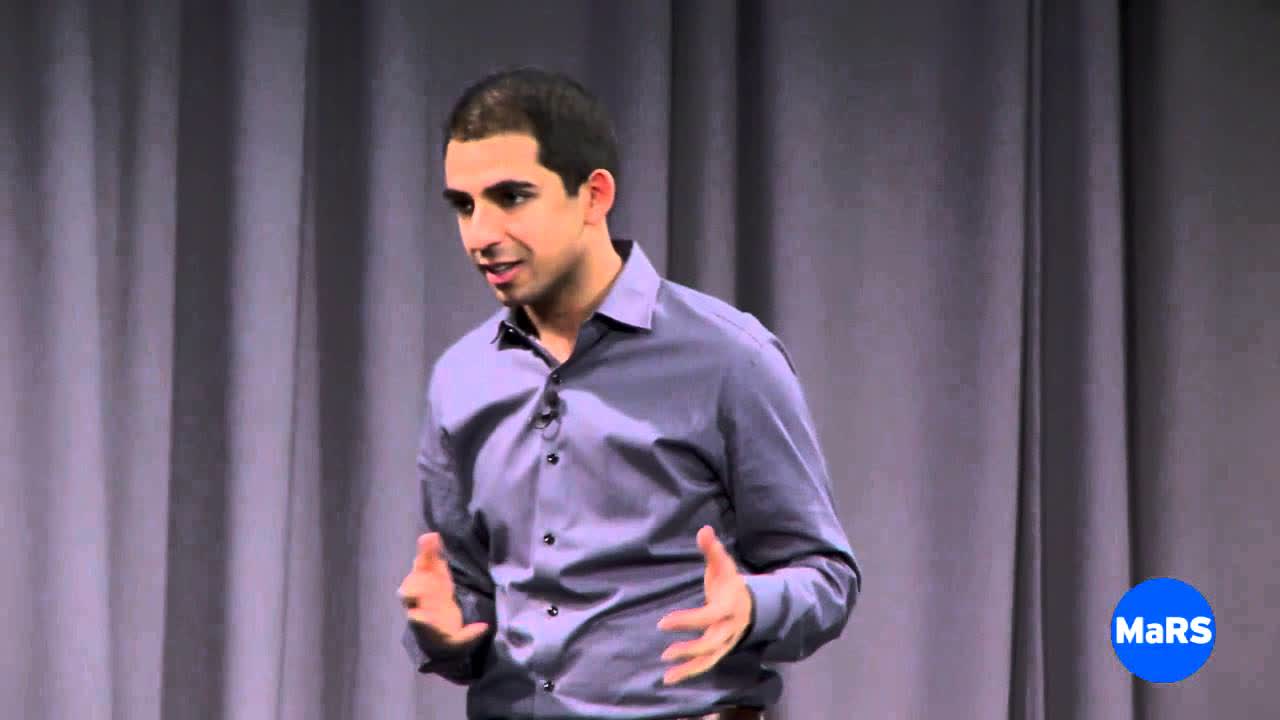 TalkMaRS Entrepreneurship 101
MaRS, Toronto’s innovation hub, and its Entrepreneurship 101 lecture series.
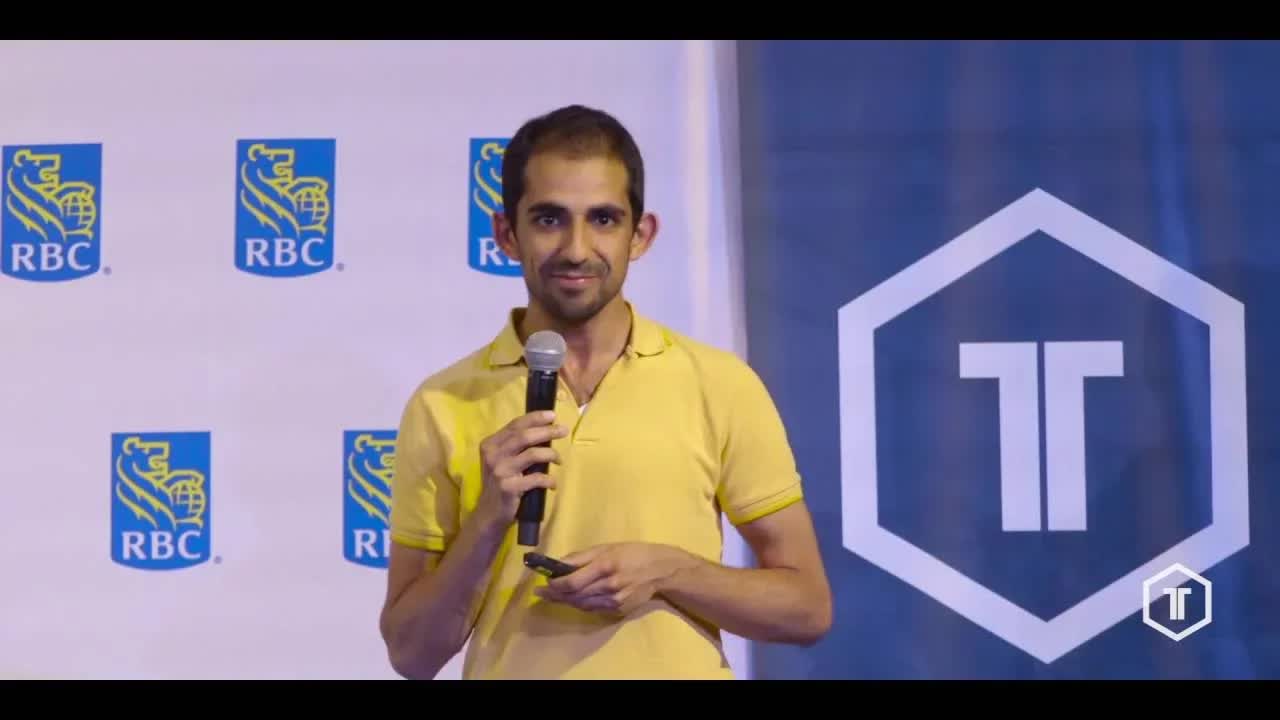 TalkTechTO
Toronto’s monthly tech community meetup.
The University of Waterloo’s startup programme.

Ontario Centre of Innovation’s annual Discovery conference. Kunal moderated.

The Financial Post’s technology desk.
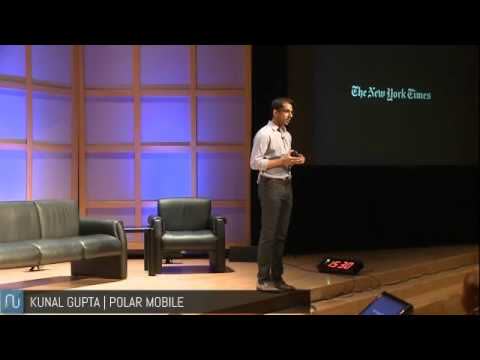
A show about the mobile industry and the people building it.
Canadian technology news for business leaders.
The national voice of Canada’s universities.
No conversations in this format yet.