AI, cognitive load and the things we no longer have to do

Chapters
Quotes
Host
Ross Dawson
Futurist, keynote speaker and founder of Humans + AI, a community and podcast on how AI can amplify human thinking.
Podcasts, talks and interviews where someone else held the microphone.
PodcastHumans + AI Futurist, keynote speaker and founder of Humans + AI, a community and podcast on how AI can amplify human thinking.
 Video podcastIn The Blink of AI
Georgie Healy hosts In The Blink of AI on the Day One network, talking to people shaping how we live with AI.
 Video podcastThe Seen
Kaia Tham’s show about people building unusual lives and companies.
 Video podcastThe Seen
Kaia Tham’s show about people building unusual lives and companies.
 TalkBetter Societies
Adrien Harrison’s Better Societies: a how-to guide for building better societies.
 Video podcastA Success of Our Own
Natalie Ruskin’s show for anyone ready to create their own authentic version of success.
 Video podcastTheStevePodcast
Conversations with the authentic unprofessionals who are changing industries.
 InterviewSander Recommends
For people thinking about moving abroad, buying property, starting a business or investing internationally.
Jon Davids talks to entrepreneurs and creators about how they made it.
 Video podcastThe Red Chair
Índico Capital Partners, a Lisbon venture firm, hosts a monthly close-up conversation in two big red chairs.
 Video podcastThe Business Leadership Podcast
Edwin Frondozo interviews business leaders on how they lead and grow.
 PodcastThe Growth Suite Leadership Podcast
Jonathan Spiess on leadership and building high-growth teams.
 PodcastStigma Podcast
Stephen Hays on mental health, and the people working to remove its stigma.
 PodcastSober Company
Nik and Lacey on living alcohol-free, with guests on the habits that replace drinking.
 PodcastAdExchanger Talks
The podcast of AdExchanger, the trade publication for advertising and marketing technology.
 Video podcastThe JOMOcast
Christina Crook, author of The Joy of Missing Out, on living well with technology.
 TalkUniversity of Waterloo
The University of Waterloo’s alumni webinar series. Kunal studied software engineering there.
 TalkTEDxSiliconNorth
An independently organised TEDx event for Canada’s tech community.
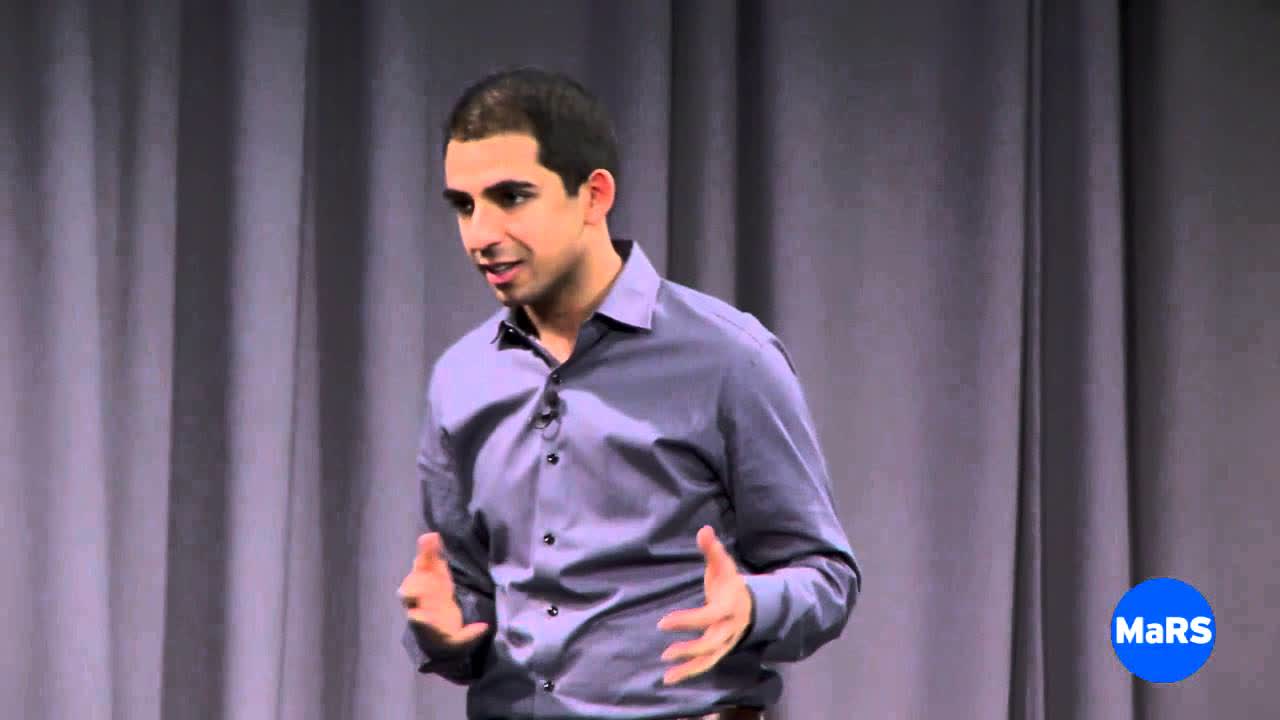 TalkMaRS Entrepreneurship 101
MaRS, Toronto’s innovation hub, and its Entrepreneurship 101 lecture series.
Kunal I'm gonna share with you some of my perspectives, and, uh, you may not agree with all of my perspectives, 'cause that's what entrepreneurship is about, seeing something that you don't necessarily agree with and having the courage and the passion to do something about that.
MaRS Good evening, everyone, and Happy New Year. Welcome to the second half of our Entrepreneurship 101, the eighth year of our program, and to 2013. Um, I just wanted to get a sense of who's in the audience as we start the second half of our program. Uh, if you c- if, if you're an aspiring entrepreneur, can you put up your hand? If you're just here to learn about entrepreneurship and checking it out. Um, who here has started something? Even the early stages, you're actually starting to work on just one idea, you've picked one. And who th- who here wants to or plans to start something in the next 12 months? Great. So we've got, we've got a great mix of, uh, aspiring and already active entrepreneurs, which is perfect for the presentation that we have for you guys tonight. Um, we have Kunal Gupta from Polar Mobile, who is probably one of the, the most famous young entrepreneurs in Toronto, and now rapidly becoming quite famous around the globe.
MaRS Uh, Kunal started, uh, started his career going to the University of Waterloo as a software engineer. He was also a Shad Valley alum. And about 10 years ago-- So entrepreneurship has become quite cool in the last couple years. A lot of people are thinking about it, lots of, uh, places are writing about it, but before it was getting as famous as, as it is now, he started, um, a, a group called the Impact Entrepreneurship Group, which is a nonprofit, uh, and led by youth to s- sort of promote this idea of getting out there and becoming an entrepreneur. So that's very close to our heart here at MaRS, 'cause obviously that's our mission as well, and we also have youth programming, which we'll explain in the next couple weeks, 'cause we're just about to run another Future Leaders Bootcamp for ages 13 to 15. About five years ago, he founded Polar Mobile, which has experienced tremendous success in five years.
MaRS Uh, as-- Does anybody here have the app, like, Globe and Mail? Does anybody here have an app on their smartphone that has Polar Mobile? Yeah, so I, I see it every day when I-- especially the Globe and Mail app that they do. Um, they have-- Their, their products have been downloaded more than 10 million times, um, and they have hundreds of customers in over a dozen countries. Actually, Kunal travels quite a bit. He w- just came back a couple hours ago from New York, so we appreciate him making the trip back, and he says it's warmer there, just to make us all feel bad. Um, some of the, the accolades that he's been awarded recently and, and why we're so excited to have him here is he was-- the Marketing Magazine called him Top Thirty Under Thirty, which makes us, those of us over 30 looking a little bit, uh, lacking. He also was, uh, mentioned in Huffington Post as one of the most influential millennials in Canada.
MaRS So he was alongside, uh, the likes of Drake and some other superstars, so that's pretty amazing as well. I will let him introduce, uh, Polar Mobile in more depth, and he has asked for extra time for questions. So, uh, think of your questions throughout his presentation, and we'll try to take at least 20 minutes at the end to, uh, to answer your questions. So welcome back again, everyone, and welcome to Kunal. Thank you.
Kunal Thank you, Kerry. That was quite nice. You could have gone on longer if you wanted. Uh, so who here is a Leafs fan? Who here became a Leafs fan today?
Kunal So I, uh, I, I was born in Montreal. Anybody here from Montreal? Couple of people. And I have a lot of a big Indian family, a lot of older cousins, uh, very influential, uh, as, as a kid, and all my older cousins are Habs fans. And then I grew up in Ottawa. I spent 18 years in Ottawa. Anybody from Ottawa here? It's okay to admit it.
Kunal Uh, so 18 years in Ottawa, formative years, went to a lot of Sens games, and then the Leafs became one of our customers four years ago. Uh, so when you talk about, like, bipartisan politics, like, I'm a bipartisan hockey guy, uh, and very conflicted. And my family are all Habs fans. I grew up in Ottawa, so my friends are Sens fans. But the Leafs pay me every month. Um, so I remember the first time I met Brian Burke, it was probably three years ago, and, uh, maybe two and a half years ago, and we got invited to a game, and a couple of us got asked to come to one of the boardrooms upstairs at the ACC. We weren't sure what was gonna happen. It was, like, five of us, and, uh, Burke walks in, and this is probably an hour before the game, and we spent about 30 minutes just talking about hockey and the business of hockey.
Kunal So we're going around the table at one point, he turns to me and says, "So Kunal, what do you do?" I said, "Brian, I run a company called Polar Mobile. You're actually one of our customers." Uh, 'cause he is, or I guess he was the, uh, the GM and the president, so he has a business function. Said, "You guys are one of our customers." And he's like, "Oh, yeah? What do you do for us?" "Well, this thing called mobile applications and smartphones, and people are downloading apps, and they're accessing content and scores," and I was, like, going on and on and on with a lot of enthusiasm, apps this and apps that. And after probably my five-minute rant, uh, he pauses and he says to me, "Kunal, what's an app?"
Kunal So, uh, it brought back, uh, that memory today when I was following my Twitter stream that, uh, Burke is gone. I'm, uh, I'm thrilled to be here with all of you today. Uh, entrepreneurship is something that's very dear and near to my heart. Uh, in today's talk, I wanted to focus it a bit less on entrepreneurship and a bit more on the entrepreneur, and I think there's a lot of resources that exist today online. There are a lot of, um, courses. There are a lot of conferences that talk about entrepreneurship, that talk about the ins and outs of starting a business and growing a business, especially in the tech space. What there is a lack of, though- From my perspective, i- is a focus on the entrepreneur and the person behind the venture. And I'm sure a lot of you, by the raises of hands, um, are about to embark or are embarking on the entrepreneurial journey.
Kunal Today, I thought we'd go a little bit behind the scenes to talk about what does it actually mean for the individual and the individuals behind the scenes, uh, to start, run, and grow a venture and a business. Um, so a bit about us. Uh, our company, Polar Mobile, has been in business for five years. This is a company that we started while we were students at the University of Waterloo at a time when mobile, um, was nonexistent. So, uh, the iPhone had just launched. Uh, the App Store on Apple came a year after the iPhone had launched. We started our business a year before the App Store existed. Uh, Android did not exist. The iPad did not exist. The Kindle did not exist. Uh, mobile advertising did not exist. Mobile advertising still does not exist. Uh, 3G networks did not exist.
Kunal There was this little thing, uh, called the BlackBerry. You might remember that.
Kunal No, nothing?
Kunal Uh, but that was the, the time in which we started our company. And, uh, the initial idea was to take, uh, the idea that software scales and our understanding, our limited understanding at the time of the media industry and how media had gone from print and broadcast to online, and nobody had done a good job at the time of bringing media content from online to mobile devices. While I was a student at the University of Waterloo, I had the chance to, uh, work in the UK on a co-op term, and I had a chance to study in Hong Kong on an exchange. And while in Hong Kong, I was watching live TV on my phone underground on the subway seven years ago, and at that time, we were barely texting over here. That's where the inspiration came from, to think of mobile devices as media and entertainment devices over communication devices.
Kunal And then with our software background, myself and our team, we went out to build software to make that happen. That was, you know, the, the, the short version of the initial inspiration for the company. Uh, our business today, we have forty people on our team. Uh, we're right on Front Street, uh, great offices, an amazing team. We work with about four hundred and twenty media brands in twelve countries. So newspapers, magazines, broadcasters, TV stations, sports teams, and they use our software to publish onto mobile devices. Uh, last month, we announced our new platform, uh, and solution, which I'll talk a little bit about how we got there, but it's an exciting time for our business. And, uh, we've learned a lot in our space, um, but now we're, we're trying to take it to the next level, um, which is not easy to do, but something that we're very committed to doing.
Kunal So throughout today, uh, the talk this evening, I'm gonna share with you some of my perspectives, and, uh, you may not agree with all of my perspectives. Uh, and I think that's a really good thing 'cause that's what entrepreneurship is about, seeing something that you don't necessarily agree with and having the courage and the passion to do something about that. Uh, so you're gonna have some views and some biases from me, um, that you don't agree with, and I think that's a good thing. Feel free to tell me that you don't agree with them, be it on Twitter or be it in the Q&A.
Kunal Anybody from Waterloo here? That's it?
Kunal We, uh, you know, we started the company, uh, eight months before graduating, and I studied software engineering. And, uh, software engineering was not an easy program at Waterloo, especially when you didn't go to class. And I'll be the first to admit, like, I did not go to any class, and in our last year, I didn't buy a single textbook. Just, you know, did the projects, studied, crammed for the exams, passed every course, uh, and that was that. Uh, but we started the business eight months before graduating with the purpose of creating our own job. Didn't wanna work for somebody. So what was great about co-op is I learned that I did not wanna work for somebody. And I had worked at a bank, at a telco, in consulting, and I, I got that exposure for big company, learned a lot, but say, "Hey, that's not for me." How many people here have, have gotten their entrepreneurial passion or have gone through the experience of being exposed to the big company environments and, uh, are saying, "Hey, that's not for me, and I wanna be in a smaller company environment"?
Kunal So being an entrepreneur is a very small company environment, and that changes the way you do absolutely everything, and you need to be ready for that. So when we started the business, uh, we know the initial idea was there around mobile and media and bringing it together using software and the idea of applications at a time when nobody understood what we were doing. Um, I'll start by sharing our first customer, uh, story. So our first customer was Rogers Media, um, not a bad first customer, and we had launched the first ever apps for a Canadian business in Maclean's magazine. So this is now summer 2007, probably a month or two after Apple had launched the iPhone. Nobody really understood what applications were. BlackBerry, at the time, was, was king of the hill in terms of smartphones.
Kunal And I knew an editor at Rogers Media, uh, Ian Portsmouth. I went to go see Ian, and we had a prototype of a magazine on a BlackBerry device. These are the BlackBerries with the side wheels on them. I hope nobody still has one of those. Um, we're showing Ian what an app could look like and what the magazine experience would look like on a phone. And he asks, you know, some very simple questions, and he's like, "Why would you wanna put a magazine on a phone?" And, you know, screen size was very small, resolution was terrible, connection speed was terrible, it was slow. Uh, we didn't really have a good answer to that. We just knew that's where mobile devices were gonna go, and there was an opportunity that nobody had done before. When we got past that, Ian asked, you know, by looking at the application for a magazine, he's like, "Where are the ads?"
Kunal And I paused and I was like, "That's a really good idea. This thing should have ads in it." That shows you how naive we were about our understanding of our customer's business. They make all their money, for the most part, from ads, and we walked in with a product that had no ads in it. And the second question on the product was, "So how do we get our content into it?" And once again, another pause. And then, you know, we asked, "So how would you like to get your content in it?" And he says, "Well, we have a content management system. Why don't you integrate into that?" I said, "That's a very good idea." Um, so sharing these stories is an example of how we went from being software guys, a passion for mobile, uh, no understanding for media, and r- in a very short while, by going out there and talking to real customers, understood what the customers would want and need.
Kunal Um, so our first meeting was with Deborah Rosser, who's the publisher at Canadian Business, which Ian had set up for us. I remember walking into the room, and there were seven or eight people around the table. I went to the meeting alone, which I realized at the time was not a good idea. It made us look really, really small, uh, which we were. It was me and two other guys at the time, the company, we were students, and we were part-time. And I'm demoing off of a very small BlackBerry device to eight people what a magazine would look like on a phone in 2007. I could tell within three minutes that nobody had any clue what I was talking about. They had no clue, and they were being very polite. And then at one point in the meeting, I had asked Deborah, like, said to her straight on, and said, "Deborah, what do you think? Do you guys wanna do this with us?" And I had a big smile on my face, and Deborah's answer was, "We'll think about it."
Kunal And my stomach, like, dropped at that moment. A lot of energy, a lot of excitement, very naive, and I got that answer. Naive enough to ask the next question to Deborah, "Hey, Deborah, so how long?"
Kunal And the answer was, after a big pause, "Three to six months maybe, we'll get back to you." And then I was devastated. Meeting ended a few minutes later, walked out, took the Greyhound back to Waterloo. Guys back in Waterloo were like, "So how did it go? How did it go? How did it go?" I was like, "Not that great." And, uh, that was a big letdown. At, at that moment, we could have walked away. We could have said, "All right, we tried something. It's not working. We're too early, or customers don't get it, or it's the wrong market, or it's the wrong product." We could have made a million different excuses, but we didn't. Literally, the next morning, I called somebody else in the meeting who I got their card and had the word digital in their title, and one thing led to the next. But basically, about 10 weeks, nine meetings later, a dozen phone calls later, uh, we got the deal.
Kunal And they said, "Yep, we'll pilot your software with Canadian Business. And by the way, Maclean's is gonna do it, too." And that was a bonus that just put it over the top. That's what it took, and, uh, I... The two words I use are professional persistence. And maybe it's the Canadian in us that we can't really get that annoying or we get aggressive, um, but it felt like we were being really aggressive and chasing, and chasing, and chasing, showing them our passion, showing them we really do believe in this. Um, still to this day, I don't think they really understood what we were doing and what they were buying, um, but we told them they'd be the first to do it. We showed them how it would happen, and they said yes. So we launched in January 2008, six months before Apple's App Store launched. Um, within three months, there were 10,000 users.
Kunal They had set a goal of hitting 5,000 users in the first 12 months. And that's when we knew, okay, we're onto something here. And by the way, you know, now we probably have 10,000 users in the last 12 hours, to show you how fast the market has evolved. Um, then we graduated, and, uh, it was funny. While we were graduating, you know, we were running the business, going full force, and our founding team was six people by that point. And, uh, Michael, our CTO, and myself, he's a computer engineering grad, I'm a software engineering grad, uh, we were going hard after the US market. So we got one Canadian customer, we're going straight to the US. And literally during our fourth year Waterloo engineering exams, uh, we're flying to New York. Uh, I went to CTIA, which is like the CES equivalent for the mobile industry that happens in April every year in Vegas, between exams, and our head was totally out the door.
Kunal Um, I remember right before exams sitting with the key guys and saying, "Hey guys, if you don't graduate, don't worry. Like, if you don't pass your exams, you'll still have a job. Um, you're just not gonna get paid."
Kunal Uh, but we were going full force, and literally after our last exam, the next day, we came to Toronto, we set up office, six of us, and that was day one, full-time. Um, but at the point we were running full-time, you know, we had a, a good team. We had a couple of customers. We had very little revenue from those customers. Um, you know, a couple thousand users off the platform. I would say a half-baked product based on what I know now. At the time, we thought it was great. And, uh, and no salaries. Nobody was getting paid. Everybody was pretty much living at home except myself. I'm from Ottawa. So that's the early start, and that's how we got to the real day one and, and got all the key pieces in place. Um, so question I have for all of you is who here thinks it's challenging, uh, to raise money or to get funding?
Kunal You're all wrong. You're all wrong. There's so much noise and distraction about how hard it is to get funding. Put yourself in the funder's shoes, and I'm not a funder. I've been on the other side of the table a few times now. But put yourself in their shoes and just ask yourself, "Well, what am I looking for to evaluate a venture before funding it?" It's very simple. It's three things. So these are the three things that are hard. Um- Don't write this down. This is so basic and simple. See some of you guys taking out. Uh, the first one is do, is there an established or proven market? So market, and the way this is a big check mark is if you have customers that are paying you. We had customers that were paying us, um, and we could show that there were other companies that wanted to pay us for our software.
Kunal Doesn't have to be enterprise clients, it could be users, it could be advertisers, based on whatever your business model is. But have you proven that there is a market that is going to drive some sort of revenue, profit, income for your business? That's like number one thing they look for. The second is, do you actually have a product or service or something that's differentiated or some sort of intellectual property? Intellectual property doesn't mean patents, it means have you built something of value, and does it scale? Usually, in tech companies, that's kind of the key thing on the product is, can the product scale? In the early stages, it can't scale. Um, the platform I talked about how we, you know, launched a month ago in five years, that was kind of our fifth iteration of our platform. We kept iterating it 'cause it wasn't scaling, and that's typical.
Kunal That's what happens, happened to Twitter, that's what happened to Facebook, that's what happens to every software company, be it a consumer-facing or business-facing software company. But the second piece is, do you have a product? Um, and we did. We had a product that was live and had ten thousand users. Now, it was-- there were tons of bugs in the product, tons of bugs, and that's what kept us up all night. Uh, but that's expected when you're launching an app in 2007 and 2008, and nobody knows what an app is. And, and the third one is, do you have a team? Do you have the talent? Do you have the skills? Do you have the experience you're gonna need to build your business? And in our case, we were very engineering heavy. Um, we had very talented people, but we were able to recognize we didn't have all the skills and experiences we needed, um, which is fine.
Kunal Nobody expects you to have everything you need. That's what the funding and cash is gonna help you do, is get additional skills and experience. So the funding is not the challenging part. The challenging part is to get a customer, and to get a product, and to build the team. So when you ask yourself, you know, when your businesses get to the stage where, okay, I need-- I would benefit from out- some outside capital to help accelerate our business. If you're spending three or six or nine months trying to get funding, then you're probably spending your time on the wrong things. If you have the market proven and the market potential there, if you have the product, you know, proven, and the ability to show a path to scale the product, and you have talented people, and an ability to show the path to attract the additional skills or experience you need, that's a very fundable venture.
Kunal Um, there's a lot of talk, especially at the, uh, you know, tech venture stage, of not enough capital in Canada. There is a lot of capital in Canada. There's not enough businesses that check these three boxes. Uh, and the reason I, I feel passionate about this, and you may not agree with it, which is fine, is I hope many of you go out and check these three boxes and are able to build the business to the next level. So that's my quick rant on funding. It's not challenging at all, but what is challenging is getting customers, building the team, and building the product.
Kunal Anyone here been to Singapore? You guys need to get out more. Uh, Singapore is an amazing country if you look at it from, uh, an entrepreneurial perspective. I've been there a number of times in the last few years, a mix of business and, uh, and friends. And if you've seen what they've done with their economy, it's a very small country, six million people. But they've-- they're se- you know, beside a powerhouse in China, a billion plus people. They're seated right beside Indonesia, two hundred and fifty million people, not too far from India, another billion people. So they could very easily get lost. They could very easily make a lot of the excuses that we make as Canadians about the US market. Um, but Singapore has really done a great job of, of focusing.
Kunal And, uh, I wrote a blog post around this, since anything Singapore does, they, they shoot for gold. They're not trying to do too much, but whatever they do do, uh, they make sure they're the world's best at that. So you look at biotech, they're a global leader in biotech based on the investments they're making there. Uh, you look at something like casinos, um, this year, they're gonna pass Vegas in total gambling revenues. And they're on track with their growth to pass Macau and become the world's largest capital for gambling revenues. Something simple like orchids. Four years ago, they didn't produce any orchids. Now they're the world's second largest exporter of orchids. So it's the idea of, of, of taking an idea, focusing on, on it, and then winning. Um, a lot to learn from, from places around the world, and I encourage all of you to continue to, to travel and get out there and experience it.
Kunal Um, I wanna share with you the story of our, of our first major US customer. So I talked about Rogers Media, and this was at a time where we were in school, we were part-time, we weren't sure if we were gonna do this full-time as a business, and it was very early days in the mobile space. Our first major US customer was Time Warner. Uh, not a bad first major US customer. How did we get Time Warner as a customer? This was in, like, two thousand and nine, so about a year and a half into the business, uh, as a small Canadian company. Um, well, we were so naive and young at the time that, uh, literally, I just emailed the president of Time Warner.
Kunal I also emailed the president of CNN and Bloomberg and Forbes and Wall Street Journal, a whole bunch of companies. And, um, a bunch of them got back to me, but the, you know, the head of one of the divisions of Time Inc, uh, the president, he got back to me and said, "Sure, come on in. Let's see what you guys are up to." I remember going to Manhattan, walking into his office, and this was, um, this was in May two thousand and eight. So this was, like, three weeks after we graduated from school. So we had just graduated. We were three or four months into the Rogers Media project and launch. And, uh, I remember walking to his office, and it was huge, and there were couches in the office, and for some reason at the time, I thought that was the coolest thing in the world, to have couches in your office. We've got a lot of couches in our office now. And, uh, we were sitting on the couches, and he says, "You know, Kunal, I'm very curious to hear what you guys are up to, but out of curiosity, what's a little Canadian company doing here in New York?"
Kunal And that totally threw me off guard. Uh, you know, he said it in a very, I'll say, American way. And, uh, you know, thinking on my feet, pulled out my BlackBerry, um, and asked him, "Hey, where is this from?" He said, "I don't know. China?" I said, "No, it's from this place called Waterloo, Canada. That's where we're from." So credibility went from down here to up here. So we had a great chat, great conversation. Meeting was about 40 minutes. Still remember almost every minute of that meeting, and I walked out thinking like, "Wow, we got this deal. This is awesome." Went back to the team and said, "Hey, guys, guess what? Had a great meeting with Time Warner, and they own all these magazines and publications, so the world's largest magazine publisher." Um, little did we know that things don't happen that fast.
Kunal It took us nine months.
Kunal I can't even count how many meetings. Uh, I actually got an apartment in New York because I was there every week for a few days, uh, over the span of that nine months, uh, to get that deal done. And there's so many times in that process where we could have stopped, where we could have walked away, or we could have made excuses, where we could have said, "Hey, this isn't going anywhere," because it'd be like a rollercoaster. There'd be momentum, and I'd say, "Yep, talk to this person. We're gonna be getting a hold of this person for a few months or a few weeks." And it was ups and downs, and we were so young and so naive, and it was our first time that we learned so much as to dealing with a massive company. Um, and our team was about nine or ten people at the time, pitching the largest magazine publisher in the world, so you talk about ambition.
Kunal And when I look back at it, you know, it was, it was a, it was a-- they've been a great customer of ours and definitely helped change our business, and we learned a lot from them. But I remember how stubborn we were at the time. Um, so we launched the first apps for Time Magazine, Sports Illustrated, and CNN Money. And all three of these brands are part of the same group, the News Group. And, uh, the president, he was good to go to give us Time Magazine and CNN Money, you know, more business news-focused brands. And for some reason, I really wanted Sports Illustrated, and I can't even remember why. Um, but we're a small company. You know, we knew this account would really benefit the-- us. Um, but I was so stubborn, I didn't do the deal until they gave us Sports Illustrated.
Kunal And in some ways, that probably, uh, increased their level of respect for us because we were negotiating properly. We weren't just saying yes to everything. Um, so stubbornness, even if it's not justified, sometimes helps. I'm sure it hurts as well. Um, but as entrepreneurs, you guys, you know, whether you admit it or not, are probably all very stubborn. Uh, I'll be the first to admit, and my team will back me up on this, I am very stubborn, uh, which is very helpful when negotiating big deals and big contracts with very big US companies. Um, so going and hitting the big leagues was not easy, and we massively underestimated how much time and resources and money it would take just to get the deals done and then afterwards to actually execute and deliver those deals.
Kunal Um, but it's worthwhile. And we definitely made a lot of mistakes. Made a lot of mistakes off the customers' back, made a lot of mistakes on our end. But we had a couple successes in there, and, uh, that really helped transform our business and our understanding of our market. So that's a bit about the customers. Um, we talked a bit about funding and kind of what's behind that. Uh, let's talk a bit about talent and the team. So when you're at the early stages of a company, it's hard to attract senior-level experience and skills because you're just getting started. You may not have the cash. The venture might be too risky. You might have a few big assumptions that haven't yet been proven. Um, I've found a lot of success in hiring for aptitude, for attitude, for ambition, uh, versus-- and then training for skills.
Kunal Uh, and I'll share with you a story of, uh, one of our team members, Sydney. Sydney is probably twenty-four or twenty-five years old. She's been with us for almost three years. So we were Sydney's first job out of, uh, college. Um, she comes from a little town named Renfrew outside of Ottawa. She's the oldest of a family of seven. Father's a doctor. Um, very athletic. So Sydney, you know, in Renfrew, she was-- she probably outgrew Renfrew. Um, she moved to the city and came to join our company at a time when we were, like, fourteen people. And, uh, she came in into a customer support role. Uh, she was the customer support team. It's her first ever job.
Kunal Had showed leadership through her sports activities, and she just took the bull by the horns. And I remember kind of two, three months into it, she came to me and she's like, "We gotta make a couple of changes." I'm like, "What do you mean?" And she's like, "We need some process. We need some tools. This is, you know, getting out of control." And I was like, "Sure. So what do you suggest we do?" And then she paused, and she was like, "Well, I thought you were gonna tell me what we should do." And I was like, "No, Sydney, you know more about customer support than I do." And then, like, a magical thing happened. She paused and she was thinking, and she realized, "Actually, yeah, he's right. I do more-- know more about this." And that's just an example, and Sydney's, you know, taken on a lot of responsibility in our team today. She, um, runs our entire customer operations team.
Kunal She manages our biggest customers. Um, she does take trips to go see the customers, and, uh, she's one of our superstars. But that's an example of hiring for aptitude and attitude, and then training for skills, and that's worked extremely well for us. Now, you know, we're starting to mature as a company, so we have complemented that, a lot of young, call it raw talent, with senior experience, and the combination, um, is working extremely well. So something to look forward to as you're building your company.
Kunal Uh, alignment is key, and it's very easy to stay aligned when your team is, like, three people or six people or nine people. It's actually much more challenging when you're, like, twenty people or forty people, which is where we're at today. You know, a year ago, we raised an additional six million dollars in capital for our company, taking it to nine million dollars total, and we announced, uh, essentially our, our new platform, which is sort of the new vision for the company, 'cause we'd already accomplished what we set out to do five years ago. Um, it's called Media Everywhere, and it's a development platform for mobile sites and apps focused on media companies.
Kunal I thought it was gonna be as simple as saying to the team and our customers and our investors that, "Hey, guys, here's Media Everywhere. It takes what we've done to date to the next level and builds on that, and it means some changes in the direction, some changes in the roadmap, some changes in our roles, um, but that's the plan." Little did I realize that, uh, aligning a larger team, a larger organization, uh, takes a lot of effort, and it's something, uh, I very much underestimated. Um, that's a big mistake I made, and basically, it just took us longer. It took us longer to help everybody on the team understand, you know, what the new vision, what the new platform needed to look like and what the company needed of them. The reason I bring up alignment is, as an entrepreneur at the early stages, you're, like, realigning every three to six months.
Kunal And you've got a small team and you've got limited resources. You've got to make sure all of your resources, every minute of every day for every person on your team, is focused in the same direction. And it's easier said than done. Um, you know, a, a couple days ago, we presented our first half of the year business plan to the entire company, and somehow, bananas made it into our business plan. Um, so you're probably asking, like, "Why bananas?" And I realize, like, uh, you know, it's, it's silly, but bananas is something that our team is aligned around and that, uh, our CFO, Andrew, was commenting on... Like, we have fruit and food in the office all the time, and, uh, his one comment when we talked about some of the talent initiatives was, uh, he's shocked with how many ban-bananas we consume as a team on a weekly basis, uh, and it's a ridiculous amount.
Kunal I'm more of an apples guy, and that was my suggestion. But it's, it's funny. As a lot of people spend a lot of time together, you start to think and act and talk the same way. And, you know, you're gonna spend an hour with me this evening. If you actually talk to some of the people on our team, you're gonna notice a lot of similarities in our styles and the words we use, and, uh, that's a good thing. That's a powerful thing. That's something that you miss out on in a bigger organization and a bigger team, and that's what makes a f- small team a lot of fun. And that's all back to alignment and ensuring that you've got that every step of the way. But it's easier said than done.
Kunal So if we talk about you as the entrepreneur, um... You know, I went to, I went to Shad Valley, and, uh, Barry Bissong, who's the current Shad president, he was the program director when I went to Shad, and that was 12, uh, 10 and a half years ago at UNB. And, you know, Barry would always say, you know, "What does a CEO mean? A CEO stands for chief everything officer." And when you're starting a company, you really feel like that. Who here feels like a chief everything officer?
Kunal A lot of you guys are timid in putting your hand up. Uh, the reason is, you know, you do it, you have to do it, and, you know, you're ambitious and passionate, and you just do it for the sake of doing it sometimes. But you know it's not really the right thing to do. Um, and that was a lesson I learned probably a little too late, in that as the chief everything officer, you do not scale. And the solution is not to put more hours in or to work weekends. Like, you just physically do not scale. And it took me, like, two and a half years to realize that. I wish somebody told me that when we were starting. But even if they'd told it to me, I probably wouldn't have listened, because I'm stu- too stubborn to listen anyways. Um, but understanding that as the entrepreneur, as leader, you cannot do everything.
Kunal You cannot, you know, check every line of code. You cannot close every deal. You cannot do every, you know, media interview. You cannot do every customer pitch. You can't write every line of copy for the website. You can't make every decision. And it's very hard to give up that control. But the sooner you do it, the sooner your business starts to scale. And people are gonna make mistakes, but hey, guess what? As an entrepreneur, guaranteed you've already made more mistakes than your team has. So if it's okay for you to make mistakes, it's okay for your team to make mistakes. And, uh, my message to you, and this is what I learned, is you have to get over yourself, acknowledge that everybody's gonna make mistakes, and that's the environment you live in, and you want to make mistakes. Otherwise, you're not trying hard enough.
Kunal Now, along the way, though, of working hard and being the chief everything officer, you've got to take care of yourself. So I've got a saying that your body is a barometer, and it's almost like, uh, a check on the health of your business, like your physical body. And if you're healthy, your business is probably healthy. If you're not healthy, guaranteed your business is not healthy. And I lived through this firsthand. Our first two and a half years, I did not take a single vacation or more than two or three days off at a time. Um, into 2009, so once we were like two years into it, I was probably getting sick every four to six weeks with a cold or the flu, and I just did not feel good physically. And a lot of that was tied to the business, and something doesn't go well with the business, and you take it on yourselves, and you're thinking about it constantly, and you're not physically working all the time, but you're mentally running all the time, and that takes a toll, uh, on your body.
Kunal And so I often look and pay attention to my body because it tells you when you're stressed, which means, you know, you're not doing something right. Uh, it, it tells you when you're not focused because you're trying to do too much and going in too many different directions. And, you know, the entrepreneur, you're central to everything happening in the company, so your mind kind of hears and is aware of everything happening, which is great, and then your body actually is very connected to that. So that's a-- it's a, it's a physical and a very easy way to tell. Sometimes we forget, and that's where family and friends are very, very helpful. Um, so a lot of the realizations I've had in the last five years where we're doing too much, or I'm doing too much, or, you know, I need to take a step back, a lot of it was my sister or my parents or friends saying to me, "Hey, is everything all right?
Kunal You seem a little off." And you don't realize it until somebody close to you who knows you says it to you. So when somebody asks you that, uh, pay attention, uh, because they're probably asking it for a reason.
Kunal How many people here are still, uh, in school or about to graduate? Just a couple or a whole bunch, actually. That's great. You know, the one thing that's changed in the last five years I've seen, uh, and with Impact, which is, you know, a youth entrepreneurship organization, I get exposed to a lot of young entrepreneurs, is that a, a lot of people are starting younger. All right, so I graduated from engineering at Waterloo. We were the only guys in our class that went out and started a business. It wasn't cool to start a business five years ago out of school. Uh, it was crazy. Um, but it is cool now. It's great to see. It's something we worked very hard to encourage people to think entrepreneurially younger. Uh, a challenge I'm seeing, though, is a lot of young people, second year, you know, third year, maybe even first year, you're getting something started, and it's getting some momentum, and you might get a check for twenty-five or fifty thousand dollars or get into an incubator, and, you know, you come and talk to, you know, guys like me and say, "Hey, I've got this great thing going on.
Kunal Should I finish school?" And some of you might be thinking through this decision right now. I know I've, um, answered this question for a lot of young entrepreneurs in the last year alone. And, uh, my answer every time without a doubt is yes. And here's the reason. As an entrepreneur or even as a leader of any type of organization, be it a sports team, be it a nonprofit, be it a leader within a larger company, you need to learn how to do things you don't want to do. And, you know, for me, finishing a software engineering degree at Waterloo, which was very challenging when I wasn't really interested in the software-software part of it, uh, I really didn't want to do that, but I, I finished it, and I passed every course, and I got the degree. And that taught me a lot at a very early age, um, how to do something I don't want to do.
Kunal You got to do something you don't want to do almost every single day as an entrepreneur and as a leader, be it having a difficult conversation with a customer saying, "Those features you promised or that date you promised isn't gonna happen," uh, or having to make difficult decisions to terminate, uh, somebody on the team, be it for financial reasons, which I've done, be it for performance reasons, which I've done, or be it for elimination of the role.
Kunal There's countless numbers of decisions that an entrepreneur needs to make which are really not popular decisions. And if you're like, you know, water and always taking the least resistive path, the easiest path, you don't learn to own up and step up and make those hard decisions that lets the whole team and company continue to move in the same direction. And that's my fear when I see, um, people chickening out and taking the easier path a-and not finishing something they start, um, because that's what life as, as a leader is and as an entrepreneur is you're making commitments. You're making commitments to your customers, to your team, to your investors. This is what we're gonna do, and you need to go do that. Um, the same way when you start a degree, a, a program that you signed up for, um, you've got to finish what you started.
Kunal So if we talk a bit about, you know, our experience here in Toronto, a lot of people have asked me, you know, would you still-- if you had to start again, would you start it in Toronto? And I look at Polar as a company, and I look at what I've learned and observed from other successful companies here in Toronto, and Toronto's a great place to start a business and probably one of the best places in North America to start a company, and here's why. So I talked about those three things that you needed to prove to get a business really off the ground. The market through customers, the product through, you know, technology or scalability, and the team through the talent and the skills. You look at a, a, a place like Toronto, and you've got access to amazing talent, especially in the technology domain.
Kunal You know, the biggest tech companies in the world come to, you know, schools like Waterloo to get talent. So you don't get better talent anywhere else in North America than you get here, especially within engineering and computer science. You look at the market, be it you're selling to media companies like we do, or to banks, or to retailers, or to healthcare providers, or to government, like, pick any industry that you sell to, you've got companies here in Toronto that do that. The same is not true of the Valley. The same is not true of LA. The same is not true of Boston. So you've got those early customers that can be early adopters of your new product or service, you know, here in Toronto, and they're sizable enough that they can write you big enough checks for your products or services to get you started.
Kunal And they make excellent case studies, which is exactly what we did. We took Rogers Media, made them a customer, had success with them, went down to the US. And then you look at the product piece, that's very much tied to the first two. If you've got the talent and skills and you've got the customers and the market and you're listening to both, then you'll develop the product in a way that scales. Um, so Toronto's a great place to start a company, and it's something that, uh, we should not take for granted.
Kunal Anybody from Vancouver here?
Kunal So all the people that put up their hand are smiling. I was, uh... I gave a similar talk a few months ago in Vancouver and, uh, I did a call from Vancouver a few years ago while I was at Waterloo, I guess a w- a while ago now. And, uh, I had distinct, I, I can notice distinctly a difference, uh, with the entrepreneurs and the tech entrepreneurs in Vancouver versus here in Toronto. I'm not putting any of you guys down, uh, I'm just complimenting the Vancouver guys. Um, first of all, everybody seemed a lot happier there.
Kunal And people were just nice. They were smiling and they looked like they were having fun. And that's how I opened up my talk, and I was like, I was shocked 'cause it was, it was a nice, it was a nice, uh, refreshing surprise. Used to, you know, our office on Front Street, and we're close to Bay Street, and you're used to seeing people stressed and mad and walking really fast and not being nice to each other. And, um, it's like stress, stress, stress. And, uh, you go to a place like Vancouver and people are doing great things there as well, but they're happy. Uh, so Toronto's a great place to start a company. Uh, I think we still have a little more to learn, and I'd love to see us bring some of the, the happiness, for lack of better words, uh, over here. Um, and that's kind of the, the last point I'll, I'll make, and we'll open it up to, to questions now is, uh, remember to have fun.
Kunal Entrepreneurship is about having fun. A lot of the reason people become entrepreneurs is 'cause they were not having fun.
Kunal I'll be the first to admit it. I have many times in the last five years forgotten that. I've forgotten to have fun. And you know what? It shows. Your team notices it when you're not having fun, and your team notices it when you are having fun. Customers notice it when you're having fun. And entrepreneurship, like, we work so hard, um, after this I'm going back to the office uh, to get a few things done 'cause I was out in New York the last few days. Like, we're working constantly, and if we're not physically working, mentally we're working. Um, we deserve it, we need it, and it turns us in, frankly, uh, better, into better leaders, um, for the team. So remember to have fun. It's not an easy journey, uh, but you signed up for a reason.
Kunal And, uh, thank you for your time. Hopefully you got something out of tonight.
MaRS Thanks, Kunal. Um, such a fresh perspective and so many practical insights, really a breath of fresh air. Um, a couple questions that we'll, we'll start with, um, on the webcast, and if anyone in the audience has questions, we just ask that you go to the mic so the webcasters can hear. Um, one is quite easy. Uh, a lot of people complain about, um, a lack of ability to sort of find developers. Do you find that you guys have a hard time hiring developers?
Kunal We've been very, uh, fortunate in that, um, we've got a, a great team, and a great team attracts a great team. So a lot of our, uh, technical talent comes through referrals. Um, it came through referrals in terms of building the founding team, and it's come through referrals still to this date. Uh, we use LinkedIn Jobs as well. That's a, that's a good cost-effective way to put postings out there. Um, there's certain developer-focused recruitment sites as well that we've used. Um, we did use headhunters, uh, in the past. We don't as much anymore. Um, and we do a lot of events. I mean, it's not something I would encourage at the early stages. We're, uh, a little farther along now, 40 people. We've got a 10,000 square foot office. So in a few weeks we're hosting a recruitment event.
Kunal So we have an open house, um, you know, beer and pizza, and we're c- talking about the industry, we're talking about technology. We'll be demoing our products and giving people a sense of what it's like. Um, we recently had somebody start with us last week, and he had come to one of our hosted events back in August last year. So at the time, there wasn't a posting for the role this, you know, person joined us for. And, um, but he came to an event, he met the team, and the event was just us talking about the industry. It wasn't a, a recruitment or sales pitch. And, uh, he kept in touch, followed us on social media, saw when we posted a role in November, applied. We liked him. We liked his skills. We made him an offer. He joined us. Um, another person that joined us in early December on the development side, uh, I- I had an opportunity to go to Mohawk College probably eight months ago, um, to speak and meet with some of the students there, and, uh, he was one of the students there at the time.
Kunal You know, he thought we were interesting, started following us on social media. You know, six months later, I'm interviewing him, and I'm the final interview in our interview process, and I was asking him, "So how did you hear about us?" And he was like, "Actually, we met six, seven months ago, and that's where I found out about you guys." So you can see here a number of different tactics, um, to get access to talent, and it, it will depend on the stage of company you're at.
MaRS Great. So we'll go to the floor. We'll start with you.
Speaker 5 Thank you. Hi, Kunal. I have a question about pricing. As a early-stage startup, when you were signing up your first customer, uh, what helped you figure out how-
Kunal Sure
Speaker 5 ... to price that particular deal?
Kunal Right.
Speaker 5 And as you grew-
Kunal Mm
Speaker 5 ... and your pricing model changed, how do you handle their expectations to make that a seamless and pain- painless transition? Thank you.
Kunal It's a great question. So my, my one-word answer, and I'll go more than one word, but, uh, my one-word answer to that is to listen, and I'll give you two examples of that. So one of our early customers, I'm not gonna tell you which one, uh, but one of our early customers,
Kunal we weren't even thinking about the pricing, and it was, it was positioned as a pilot. We were just so anxious to get them as a customer. And, uh, at one point in talking to one of the executives, you know, he said, "You know, I should probably... I should be able to free up some sort of budget for this pilot for you guys." I'm like, "That's great. How much do you think you could free up?" He said a number. The next day, I gave him a proposal for twice that number, and he said yes. Um, but that, that speaks to listening to the customer. Um, another example, this is with a bigger US media company. We went in with a certain pricing model and numbers. Um, they said, "We like you guys. We like the product. We like, you know, your case studies. Your model doesn't work. Let us give you some ideas." And literally the next week they gave us, uh, a rate card and a whole different pricing model, which we actually still use to this day.
Kunal Um, they gave us the model. We increased it probably about 60%, the numbers, ended up negotiating. Um, but for us, it's been listening, listening to the customers and being very open with them. How would you like to pay for this?
Kunal It's not a question of should you pay for this. Everybody, you know, understands that you're a business, and it's in their best interest to make sure that you're making money. Um, the model and the specifics comes through conversation.
Speaker 5 Great answer. Thank you.
Kunal Over here.
Speaker 2 Of your entire talk, two words stuck out, and that is you're meeting with Time Warner. You go through the negotiations. You're this small Canadian company. But you said at least you negotiated properly. Now you're addressing an MBA group doing case study. It's 2013. How did you negotiate properly? What defined you doing that? I'm curious. You said stubbornness was one thing, but there had to be more than that in order for you to get Time Warner.
Kunal Sure. So if I understand the question, you know, what are some, some things we've learned on how to negotiate, maybe particularly with bigger, bigger companies that are, you know, a million times your size.
Kunal I've learned a lot over the, the years because we've done a lot of deals, and I've been the lead on a bunch of the, the bigger deals. It starts, from what I've learned, with just, uh, setting the stage and agreeing on the objectives. So making sure that the customer is sold and is bought in to what both companies, both parties are gonna bring to the table. Um, so if you agree that this is the right thing for both businesses, then it becomes more of a numbers game. Um, generally, the best practice that I've been advised on, which I've practiced successfully, is to push off that discussion as long as possible. You get a lot of customers ask you in the first meeting, "Okay, this looks great. How much does it cost?" Don't answer the question. Focus on validating that y- you are actually solving a problem for them and, you know, a- achieve that shared vision saying, "Yeah, this is what we're gonna do together."
Kunal So push off that pricing discussion. So achieve the objectives. In the pricing discussion, it's always good for you to take the lead, um, but do it through a conversation. Um, you know, our sales guys are trained to, to never just send a proposal to a customer over email. It sounds like it's much easier, and it's less, um, frightening to do it that way, but always have a conversation, be it on the phone, be it in person. It's actually easier to do it on the phone than in person. In person can be a little awkward. I've been in those situations before. Um, but, uh, do it over the phone. So, so you introduce and you get real-time feedback saying, "Are, are you on m- on the mark or, or off the mark?" 'Cause in the early days, you don't have a consistent rate card. You don't have a pricing scheme. It's more of a get what you can pricing model, uh, which is totally fine. Everybody understands that.
Kunal Your customers understand that. They, they know that you're not sophisticated enough yet to develop that standardized pricing. Um, so, so number one is setting the objectives. Number two is the pricing and the delivery of that information. And number three is the legal. My recommendation is as a, as a supplier, um, try and use your legal paper, assuming you have one, versus signing their paper. In the early days, you may wanna sign their paper 'cause it's just cheaper and easier. But as you start to scale, you definitely wanna use your own legal paper, your own terms and conditions 'cause it brings down your costs long term because you've got consistency versus having to use a lawyer for every deal you sign.
Speaker 1 Hi, Kunal. My name's Gwen. I run an agency called Motion and Still, and we focus on intelligent content. Uh, I just wanna ask a really quick question based on your experience through reception. When you have a brand-new idea, uh, you may be a bit early to the game, how do you explain it to a person who's going to relay that message? How do you get them to understand, uh, like a receptionist, that you need to speak to somebody else in her team without losing her totally?
Kunal Make it very, very simple. So the question is how do you explain, you know, a new concept, new idea, uh, in a way that somebody else can explain it to the right person probably in the organization? So, you know, step one, make it very, very simple. Think it as you're explaining it to your mom or your dad. That's kind of the, the, the test I use all the time. Don't tell them I said that.
Kunal Uh, I'd say number two is, you know, ask the question, "Do you understand or does this make sense? Um, it's important to me that you understand what we're doing." And the other person will usually say, "Yeah, from what I understand, this is what you do," and you'll get a sense real time do they understand what you're doing. Um, those are a couple of pieces. Um, try not to overcomplicate things. Try not to, um, close the deal on the first meeting. That's something, you know, I speak to our sales guys about, is the, uh, the inclination is that, you know, you walk in, and you guys put everything out on the table and get them to say yes. Doesn't work that way. Um, it starts with understanding from their perspective what they're looking for, what they're trying to accomplish, identifying a problem, and then leading into, you know, your product or your service as a solution.
Speaker 1 Thank you.
Kunal Yes.
Speaker 6 Uh, you mentioned, uh, being a small startup, you, uh, emailed the head of those big companies. Do you remember what you said in that email? And also, uh, what advice would you have as being a small startup getting advice or getting a big guy being a client?
Kunal So in terms of how to email big companies while you're a small company, uh, you want the email to be very, very short, like extremely short. Um, you wanna include some links at the bottom of it, not during, in the middle of it. Um, and you wanna do a couple of things. I mean, the process I would go through is to put yourself in their shoes. In a very objective and honest way, ask yourselves, "Would I reply to this email? Would I click on the link? Would I actually read the email?" So you pay attention to the subject line, the greeting line, the opening line, the message, any numbers or names you're using in the, in the email. Um, in the early days, like, I would spend literally half an hour writing a three-line email and wordsmithing it and editing it, um, 'cause that's what it takes, and, and it works if you're thoughtful.
Kunal Um, the other piece I would say tied to that is trial and error, is you have to, um, fail to succeed at it. You know, so the Toronto Maple Leafs are one of our customers. I was literally sitting in our office one day looking out the window, and I saw the, um, the Skydome, Rogers Centre 'cause our office is on Front Street. And for some reason I thought of the Leafs. I, I haven't still figured out the connection there. Um, and literally I emailed the president of MLSE, and I got his email address wrong. And then I emailed it again, and I got it wrong again. And I emailed it again, and I got it wrong again. And then I emailed it, and I didn't get a bounce back, so I thought maybe I got it right. Then the next day I got a call from somebody on his team. They didn't call me and say, "Yep, let's buy your software." They said, "Okay. Why don't you guys come on in and tell us more what you're up to?"
Kunal Um, so it takes that perseverance and that trial and error, and you gotta do it yourself. Um, you're not gonna learn it by asking guys like me or reading about it online. You're gonna learn it by doing it.
Speaker 6 Thanks.
Kunal Hi. Thank you very much for taking the time to be here today. I found it very informative. I'm also in the mobile industry, and I'd really like to hear your opinion onto the future of mobile. Uh, do you think NFC is gonna become more popular, uh, Passbook for iOS? And, uh, does Research In Motion actually have a chance of making a comeback? Thanks.
Kunal A lot of questions there. I think I forgot the last one.
Kunal When we look at the future of mobile, I mean, the, the biggest stat that we look at is just the, the amount of consumption happening on mobile devices. And when we look at, uh, within our space of media, about 30% now of traffic to, say, The Globe and Mail or the Toronto Star or CNN is coming from mobile device,
Kunal and that's double what it was a year ago, and it's gonna cross at 50% in the next 12 to 18 months. So a lot of businesses that spent a decade getting themselves online, that spent a couple of years getting them on social media, are now actually mobile first businesses without realizing it. So I think for every business, mobile is changing the way you interact with your customers, with your readers, with your users, and it's changing so fast that it's very challenging to actually figure out how to stay engaged and, uh, how to maintain those relationships. From a technology perspective, there's a lot of cool technologies coming out. Um, there's technologies we're playing with. There's technologies I'm seeing other companies play with.
Kunal Um, we pay a lot of attention to manufacturers. That's usually a leading indicator of which technology advancements are gonna come. Um, and it's not about paying attention to what is, like, Apple patenting next. It's more around what are people buying in the market from the manufacturers. Which manufacturers, if you read their annual reports, their financial earnings, are growing? Which ones are in decline? And what investments are they making? 'Cause it all starts with the hardware, and then guys like us, software we sell on top of the hardware and the infrastructure. So if you can figure out where the hardware is going, you can build your software to take advantage of that.
Speaker 7 Thank you.
MaRS So we'll take these last two questions on the, the left over here, and then I think Kunal's agreed to stay later if anyone else has some questions, they can come up and ask him after.
Speaker 3 Hi, Kunal. Thanks so much for being here. Um, so my question is, at the early stages of the startup, obviously you talked a lot about not being the chief everything officer. So, um, of the tasks that obviously you have to accomplish, what do you think that you should definitely be doing? Um, what do you think you should definitely be delegating, and how do you decide which ones, uh, which ones are which, I guess?
Kunal That's a great question. Question was around, you know, as you're the chief everything officer in the early days, how do you decide what you wanna do and what you need to delegate? Uh, I answer that question by, you know, suggesting you ask yourselves a few questions. At any point in the business, and that includes at a point where we're at, five years into the business with a few hundred clients, you should know the answer to the most important question is, what's the most important thing for our business at this time? And there better be just like one answer. Like, one thing's gotta be most important. Could be that key hire you're trying to make, could be closing that big deal, it could be building that specific feature or functionality, um, could be breaking into a new market. So at any point in any business, and that includes an Apple, a RIM, anybody, there's like this one thing that is the most important thing for that business to go to the next level.
Kunal Um, so that's the question I always ask myself, and I make sure that our team is aligned around that. A- and that usually guides where I spend my time.
Speaker 3 Okay. Thank you.
Speaker 4 Hello, thank you very much for your time. Um, I'm interested in finding out how to manage relationship with co-founders, because as time go on, things can get tough. And examples like, what if one of the co-founder got a full-time job and only working on this like, you know, evening and weekends? Like, how do you manage to- so that it's fair for all the people in the founding team?
Kunal That's a great question around managing co-founders. How many people here have co-founders?
Kunal So I'm sure there's a lot of different perspectives and, and experiences in the room around this. Um, so if you feel passionate about it, I encourage you to talk to the person who a- asked the question to share your perspective. Uh, but my perspective on this is a couple of things. Um, transparency is, is really, really important, and transparency leads to trust. So being very transparent with the individuals on your team that you're starting the company with around, "Hey, here are the expectations. Are we in agreement?" You know, "Here's, uh, concerns," or, "Here's feedback," or, "Here's praise." And all of that, and doing that in a transparent manner, uh, is very, very important. Um, the couple people that I started the company with, um, they were friends, and we had very strong relationships, which very much helped the transparency and trust aspect of it.
Kunal So I think that's step one is to be very transparent, 'cause that leads to a strong degree of trust. Um, the second one is alignment, and I talked about the importance of alignment and the challenges of alignment. You know, if part of the team is working full-time and part of the team is working part-time and everyone's compensated the same way, it's very clear that alignment's not there. Um, anybody looking out-- from the outside looking in would be able to see that. Um, and if you combine these two, alignment and transparency, um, it usually does work to get everybody on the same page and to make sure it is a win-win-win situation. Uh, it absolutely has to be. There's much bigger challenges for an enterprise, like getting customers, and that's where the discussions and the debate and the focus needs to be. And you wanna limit as much internal noise as you can, uh, and focus on really what matters.
Kunal Um, and that kinda goes back to the, um, to the last question of always being able to ask yourselves at any point in time, "What is the most important thing for my business, and am I focused on that?" So with that, uh, thank you for your time. I hope you got something out of this. Um, stay in touch and good luck.
MaRS Thank you very much, Kunal.
 TalkTechTO
Toronto’s monthly tech community meetup.
The University of Waterloo’s startup programme.
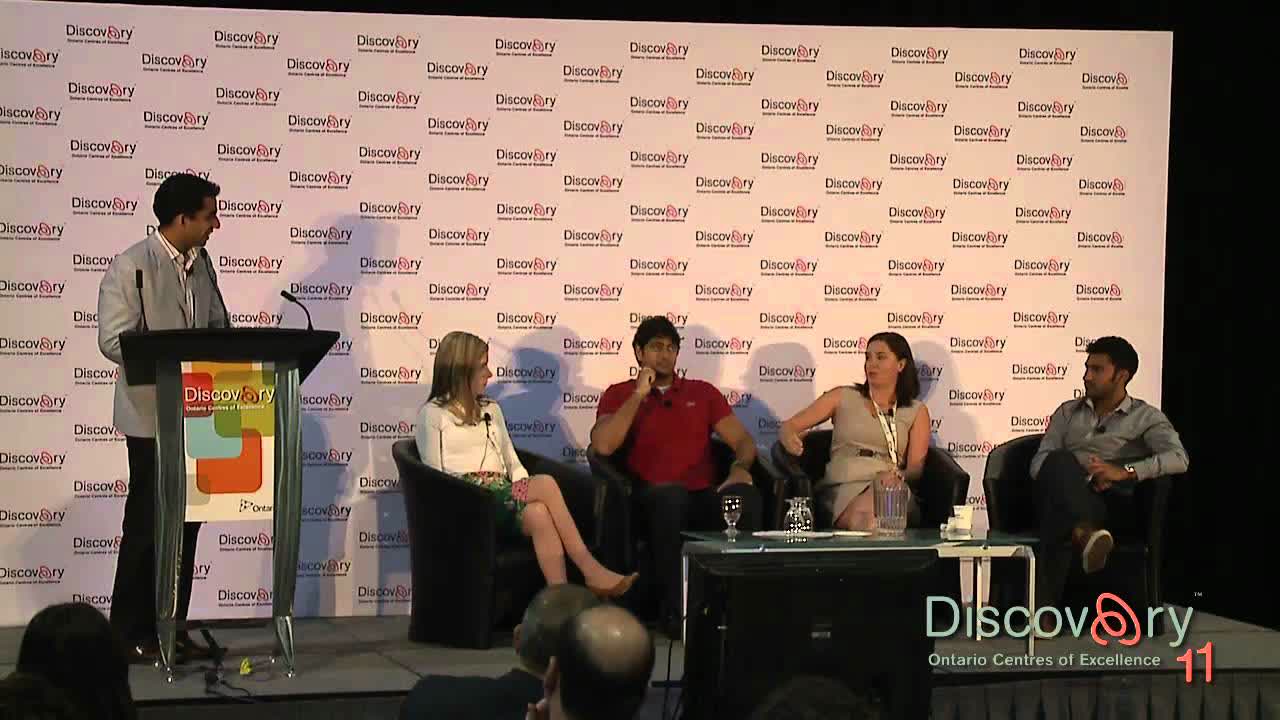
Ontario Centre of Innovation’s annual Discovery conference. Kunal moderated.
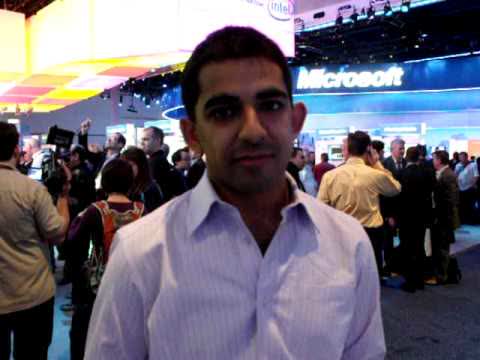
The Financial Post’s technology desk.
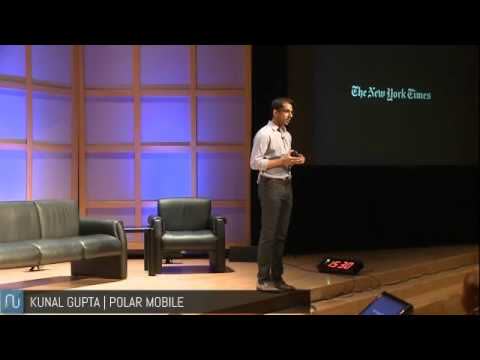
A show about the mobile industry and the people building it.
Canadian technology news for business leaders.
The national voice of Canada’s universities.
No conversations in this format yet.