AI, cognitive load and the things we no longer have to do

Chapters
Quotes
Host
Ross Dawson
Futurist, keynote speaker and founder of Humans + AI, a community and podcast on how AI can amplify human thinking.
Podcasts, talks and interviews where someone else held the microphone.
PodcastHumans + AI Futurist, keynote speaker and founder of Humans + AI, a community and podcast on how AI can amplify human thinking.
 Video podcastIn The Blink of AI
Georgie Healy hosts In The Blink of AI on the Day One network, talking to people shaping how we live with AI.
 Video podcastThe Seen
Kaia Tham’s show about people building unusual lives and companies.
 Video podcastThe Seen
Kaia Tham’s show about people building unusual lives and companies.
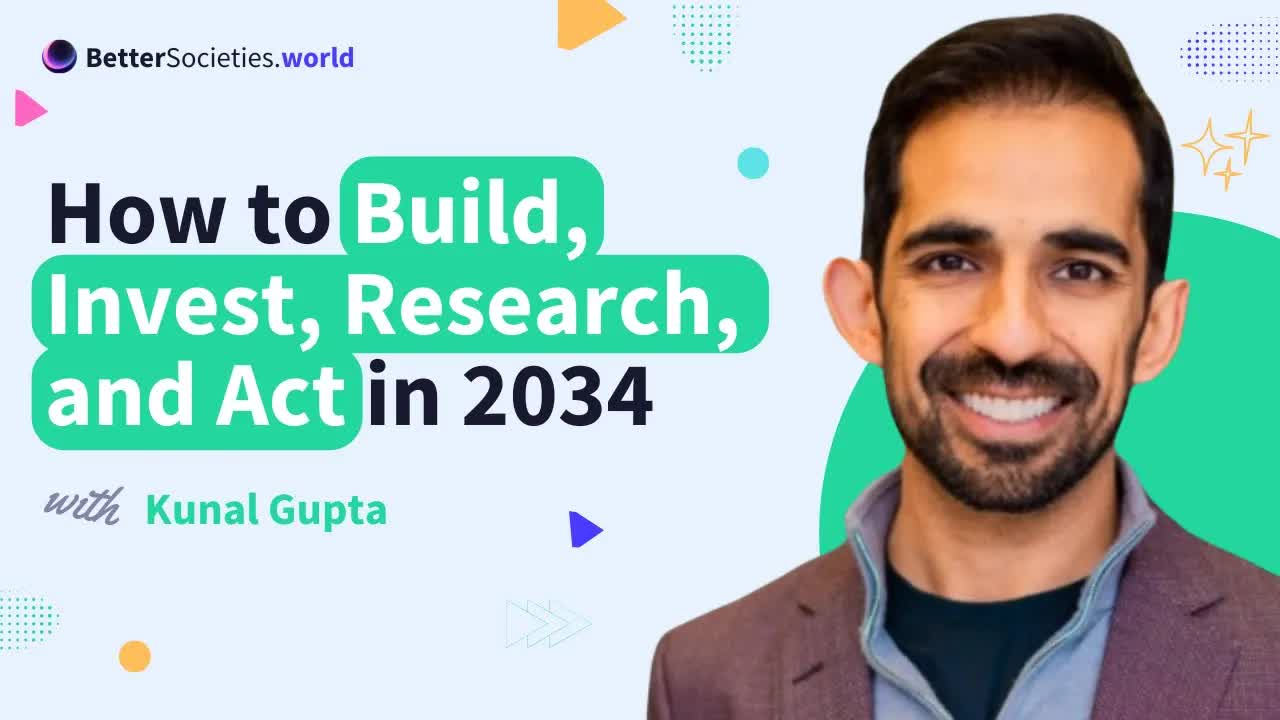 TalkBetter Societies
Adrien Harrison’s Better Societies: a how-to guide for building better societies.
 Video podcastA Success of Our Own
Natalie Ruskin’s show for anyone ready to create their own authentic version of success.
 Video podcastTheStevePodcast
Conversations with the authentic unprofessionals who are changing industries.
 InterviewSander Recommends
For people thinking about moving abroad, buying property, starting a business or investing internationally.
Jon Davids talks to entrepreneurs and creators about how they made it.
 Video podcastThe Red Chair
Índico Capital Partners, a Lisbon venture firm, hosts a monthly close-up conversation in two big red chairs.
 Video podcastThe Business Leadership Podcast
Edwin Frondozo interviews business leaders on how they lead and grow.
 PodcastThe Growth Suite Leadership Podcast
Jonathan Spiess on leadership and building high-growth teams.
 PodcastStigma Podcast
Stephen Hays on mental health, and the people working to remove its stigma.
 PodcastSober Company
Nik and Lacey on living alcohol-free, with guests on the habits that replace drinking.
 PodcastAdExchanger Talks
The podcast of AdExchanger, the trade publication for advertising and marketing technology.
 Video podcastThe JOMOcast
Christina Crook, author of The Joy of Missing Out, on living well with technology.
 TalkUniversity of Waterloo
The University of Waterloo’s alumni webinar series. Kunal studied software engineering there.
 TalkTEDxSiliconNorth
An independently organised TEDx event for Canada’s tech community.
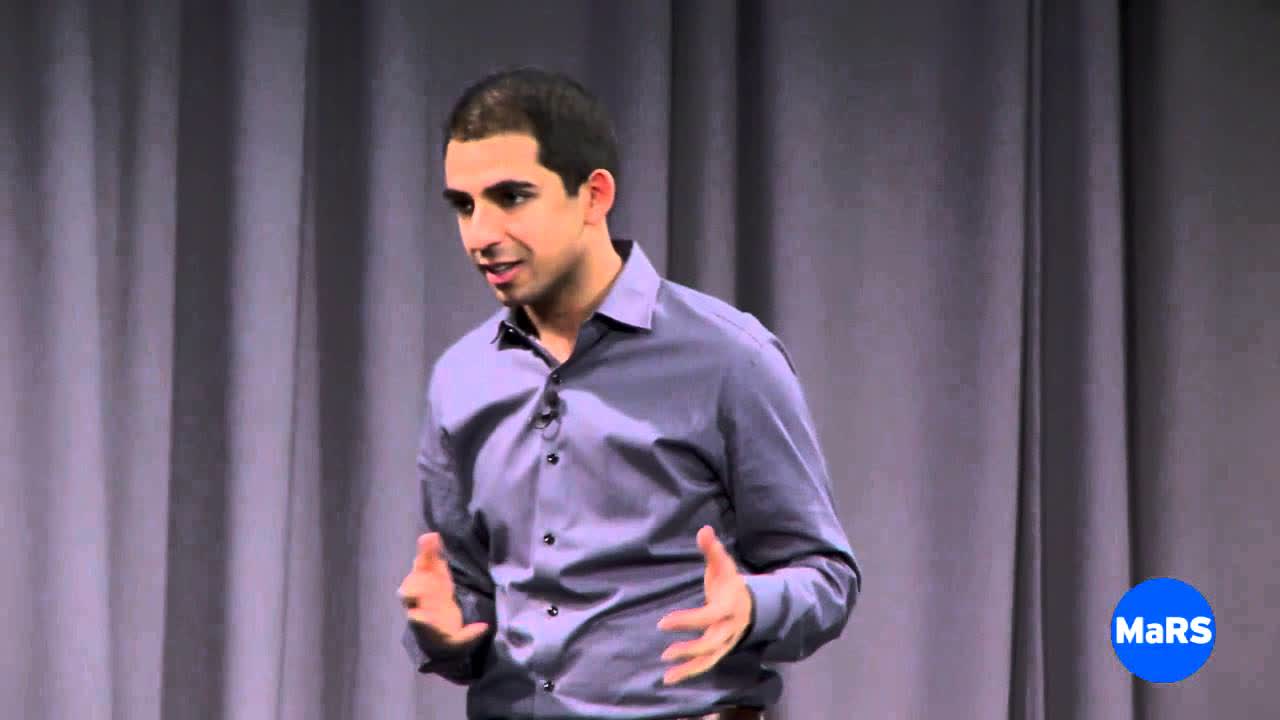 TalkMaRS Entrepreneurship 101
MaRS, Toronto’s innovation hub, and its Entrepreneurship 101 lecture series.
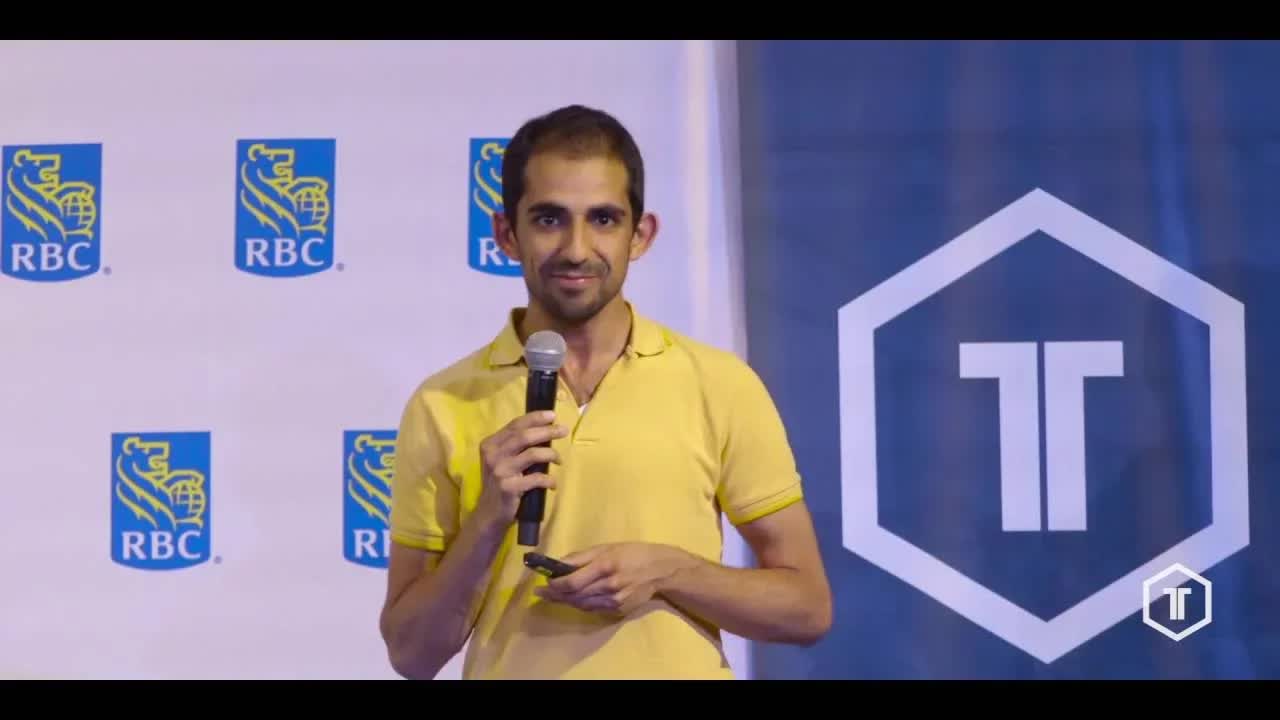 TalkTechTO
Toronto’s monthly tech community meetup.
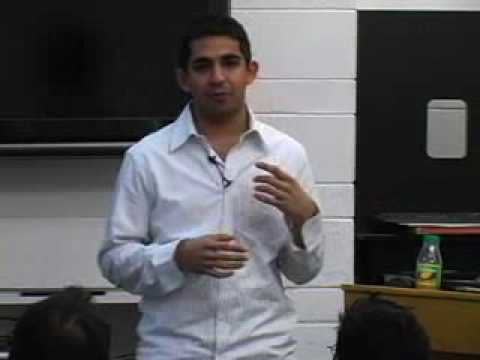
The University of Waterloo’s startup programme.
Speaker 1 Off of that, I'm really happy to introduce Kunal Gupta, who some of you might know, um, have met before, the, uh, founder and chair of Impact Entrepreneurship Group on campus here, and also a nat- nationwide organization, uh, started in two thousand and three?
Kunal Four.
Speaker 1 Four. Two thousand and four.
Kunal It's on there.
Speaker 1 And, uh, Kunal graduated in software engineering just this past May, and, uh, so that's, what, eight months ago, and already with his company, Polar Mobile, uh, you've switched offices about three times. You're up to over 20 employees, um, and just doing some really great things that I know, uh, Kunal's gonna talk about. So, uh, without further ado, here's, uh, Kunal Gupta.
Kunal Thank you.
Kunal Thanks, John. Can you guys hear me okay?
Speaker 1 Yeah.
Kunal Yeah? Is the mic on or is it...
Kunal Okay, let me know if my voice starts to die off. So I'm really excited to see so many people here on a Saturday morning at 10:00 AM. How many of you guys got more than five hours of sleep last night? Just wondering. A few, a few. How many people got two hours of sleep last night? A few. So thanks very much for coming out on a Saturday morning. I, um, I've got my BlackBerry in my hand. It's gonna be in my hand. I'm not checking email or doing work. I'm actually reading notes for the speech that I wrote, and, uh, I'm a big BlackBerry geek. Uh, how many people have here have a cellphone? How many people here have a smartphone? Okay, what type of smartphones? What do you guys have?
Speaker 1 iPhone.
Kunal iPhone.
Speaker 1 BlackBerry.
Kunal Samsung Ah. We're not gonna be too hard on you for that. Don't worry.
Kunal It's a few things I wanna share with you today. I wanna share with you some of the experiences in starting Polar, a company that we started just over a year ago here at Waterloo, and I wanna share with you what we've learned and, you know, the mistakes, uh, the ups and the downs, and also wanna get a sense of, you know, what you guys wanna learn about. So a year ago, eight months ago, I was, I was here at Waterloo studying software engineering. I'm originally from Ottawa. Anybody from Ottawa here? Uh, which, uh, which high schools did you guys go to?
Speaker 1 Lisgar.
Kunal Lisgar.
Speaker 1 Colonel By.
Kunal Colonel By.
Speaker 1 I'm in Gatineau.
Kunal Gatineau. Close, close. I went to Gloucester, so-
Speaker 1 Okay, close by
Kunal ... you're arch rivals. So going to, to high school at, at Gloucester, um, one of Ottawa's largest schools, very involved with extracurriculars and students' council. Uh, in my last year, I took a computer science course.
Kunal In high school, you guys know, it's, you know, looking back at high school, it's, it's relatively easy compared to Waterloo, and, um, okay, extremely easy compared to Waterloo. In high school, I got a lot of help from classmates as I would, you know, do assignments and do work. Um, I was very involved with students' council, so I didn't have too much time to finish my assignments, so I got a lot of help. In computer science, I had some great friends, uh, which means my assignments were really, really good- ... and I got really good marks. And a really big computer science prof said to me, "You know, you got really good marks. You should go to Waterloo." Um, and I said, "Okay, you know, why Waterloo?" And he's talking about the software engineering program, so he really convinced me to go to Waterloo, wrote me a great recommendation, helped me get into the school. I had, you know, really good scholarships at other schools in Ottawa and Carleton. Uh, Waterloo didn't give me a penny, but I still ended up here somehow.
Kunal I know you guys can relate to that. My first term at Waterloo, I quickly realized that software engineering is, is, is fun, it's challenging, but I'm not really good at it. And I realized that there's a lot of people around me who are really smart and really, really good at it, uh, people that I respected and people that I admired, and, like, you can be really good at something that's pretty challenging in my eyes. So very quickly I realized I'm not gonna be able to be the best at software engineering and writing code, so I need to find something for me that I wanna be the best at. Uh, and when, looking back at high school experiences is where I realized, you know, what it was that I wanted to be the best at was in terms of meeting people, learning, uh, and promoting the idea of leadership. So it all started with the idea of, of running a conference, so this is how Impact started.
Kunal Um, put together a small team, this is my first year of university at Waterloo, with the goal of promoting entrepreneurship to young people. Hosted a conference in two thousand and four for about a hundred and fifty students here in Waterloo, and in a long story short, um, throughout university, I stuck with Impact in growing an organization from just a few people to over a hundred student volunteers, uh, which is now Canada's largest student entrepreneurship group. So I was heavily involved with Impact for four years, uh, of my life at Waterloo, and that really taught me a lot. So I guess what you guys are doing through Velocity in these four months, my Velocity was Impact, except it was four years. And I really invested a lot into it, and I wanna share with you kind of what I invested into and then really how that's helped me with Polar and what I'm doing today.
Kunal So a bit about Polar and kind of how we started Polar. I'll start with the, the pretty version. So last summer, so summer two thousand and seven, July, August two thousand and seven, um, eight months before graduation, realized I didn't really wanna work for somebody after graduating. Realized my parents, uh, weren't gonna let me not have a job and just graduate school and kind of be on my own, so realized I need to make myself a job. It was that simple. Put together some people, people I met through Impact, put together a team, started coming up with ideas, and we really w- an idea that we came up with that we seemed to like was the idea of publishing content to your BlackBerry. This is primarily used to make phone calls, to write text messages, to check email, and that's it. Everything else is way down there in terms of the usage of a BlackBerry.
Kunal Uh, living in BlackBerry's backyard, which all of us are doing for so many years, um, at least for me, I fell in love with the device, fell in love with the potential of this. How many people here have worked at, at RIM or BlackBerry?
Kunal A few of you. So you guys know how addictive this device is. So really we started out with the goal is how do we make this BlackBerry even more addictive? How do we play on that fact? And, uh, the concept is pretty simple. It's publishing a magazine to a phone. So we looked at the media industry, newspapers and magazines, how everybody who had a newspaper or magazine created a website five, six, seven, eight years ago. Um, and pretty simple to say, okay, these guys are gonna wanna be on mobile devices as well. The trend is going in that direction. Realized that nobody's doing anything really exciting in terms of publishing a magazine or newspaper to your phone, so we came up with an innovative way to do that. And that way was downloading an application to your phone that allows you to read a magazine for free. Uh, we've done it in a very slick way, that it's very easy to read.
Kunal There's no wait time. There's no load time. And then we serve ads against that, and that's how we, we make money. So kind of what I just described, that took, like, six months to figure out in terms of how we're gonna make money, you know, what the concept is, why would people use it, how it's different than what's out there. Um, a-and figuring that out, we started talking to people, um, through, through our, through our networks, through people we had met, and went to go see our, our first customer, Canadian Business. Um, so from the first meeting to the time we actually closed them as a customer, took about three months.
Kunal When I walked into that first meeting, I thought they were gonna say yes on the spot. They said the complete opposite. They said, uh, "We'll get back to you." Which, you know, i-in sales speak means a no. And then I was fairly persistent, talked to other people, and kept going at it, and they, they liked the concept, but they weren't really motivated to move forward. And I kept asking myself here, "Why aren't they motivated to move forward?" And then I realized in terms of how we, how it was-- in terms of how we were positioning it and pitching it to them. So we pitched it in a way that this is gonna make you money, and that's when they said, "Yes, let's do it." This is gonna make you look great on mobile. Yes, let's do this. You're gonna be the first one to do this in the world. Let's do it. So that was our first customer, Canadian Business, Canada's largest business magazine. Um, shortly after that, uh, we got Maclean's magazine as a customer, and I still remember the day.
Kunal This was November two thousand and seven. November two thousand and seven, when I got the phone call saying Maclean's wants to do it as well. I was jumping up and down, and you know, this is-- it was in fourth year University of Waterloo, graduating six months later, and we got two customers. By the way, we didn't have the product really built. It was just a concept. It was just an idea. We had a prototype that looked, looked okay. Looking back at it, you know, it looks terrible. At the time, we thought it was great. Uh, and that's what matters. At the time, we thought it was great, and we were able to sell it. So from the time that we-- It was November two thousand seven, the time that we closed them as customers and said, "Yes, let's do it," uh, you know, we're like, "When do you wanna launch?" And like, "Okay, let's launch in January." So January twenty-fourth was our launch date, January twenty-fourth last year, so it's even less than a year ago. It's funny looking at it.
Kunal Less than a year ago, we launched them.
Kunal The three, I guess two and a half months leading up to January twenty-fourth were probably the most stressful weeks of my life, uh, to this date. In taking an idea that we had sold and got buy-in for and actually making it a reality and launching it. Uh, we launched Canadian Business and Maclean's. Uh, within a few months, we hit ten thousand users, which was their goal for the entire year, two thousand and eight. Uh, so they were very happy, and then we got them to pay us more money. And in doing that, we started to get calls from their competitors. We started to get calls from other magazines and newspapers, and we started to grow. So April two thousand and eight, we graduated. At that point, the team was myself and five other Waterloo guys. Um, a CS grad, a, an economics grad, and the others were engineering grads.
Kunal And we moved to Toronto. On May first, uh, we decided to share a space with some people that we knew in Toronto, downtown. There were six of us, and we started the company full-time. So May first, two thousand and eight was our first full-time day. I still remember it. It was a great day. It was so exciting. Um, and then we, we brought on a co-op, and then we started hiring more people. And then by July, we were nine people from six. And then, uh, then we raised funding. We, we got some angel investors to believe in us and give us funding. And then by September, we were at fifteen people. So this was four months into it. Um, then we brought on co-ops. Uh, two of the co-ops were, were Neil and Ashok. Uh, Josh, I don't see him here, right? Uh.
Speaker 8 Surprise.
Kunal Not, not surprised. Josh and I was coming late to, to, to work. So we had four co-ops over the, the fall, and we were twenty people in December last year. Uh, so that was kind of the first eight months on how we've grown. In terms of customers, about fifty customers. Um, we're developing on the BlackBerry. We're developing on the iPhone, developing mobile websites. We've got Windows mobile products as well. Um, hitting different verticals, sports, finance, news, entertainment. Working in Canada. We have customers in the US. We have customers in the UK as well. Um, and in a, in a big nutshell, that's, that's Polar in the last eight months really, and how we started. So that's, that's kind of the pretty version. That's how we've ended up. The real version and, you know, what this actually means and what it took to get to where we are today, it's been tough.
Kunal It's been hard. It's a lot of work. The, the last eight months makes five years at Waterloo feel like nothing. You know, like just how we, you know, drew the analogy that high school is nothing compared to what you guys are going through now, Waterloo feels like it was, it was nothing compared to now. It was, it's, it's been, it's been tough. It is tough. It's, it's, it's, it's tough to, to go continuously, uh, without sleeping very much. It's tough to be, to be stressed out about money, about, you know, the team, about customers. Uh, it's, it's tough to, to run a software company, uh, and then software is prone to having bugs and defects and issues. Um, and it's, it's tough when you're on a short timeframe, and you wanna achieve a whole lot. But it's also exciting, uh, and that's what's allowed us to really grow and prosper.
Kunal So, so the real version of Polar, you know, what has it taken in the last eight months? There's been ups, and that's what I just described. Um, there's also been lots of, lots of downs. There's lots of lessons learned. Tons. Um, everything from us taking on customers that, uh, were, were a big headache, and when we realized that, you know, small customers who aren't sophisticated take a lot out of you. And big customers who are sophisticated take more time, but they know what they're doing, and they're easier to work with. Um, everything from growing too fast. You know, we, uh, you know, w- we grew the team very fast from six people to twenty people in, you know, eight months, um, spending a lot of money. You know, there, there's a lot of ways that we spent money that we, we probably shouldn't have.
Kunal Uh, you know, everything from
Kunal twenty people in the office probably had about forty phones, right, forty cell phones, to, uh, trips to New York every week to see customers, to, um, a world tour that we, we, we eventually canceled right before we realized, you know, we didn't need to do that, to going to trade shows and paying thousands of dollars to exhibit. Um, in, in doing this, we, we grew really, really fast, but in, in a lot of ways, we, we ended up hurting ourselves too. Not hurting ourselves that, so bad that it's killing the business, um, hurting ourselves in a good way that we've learned from it. Um, but looking back at, you know, the picture is not all rosy. But where we are today is, is a good position, but it's taken a lot to get here. So one of the topics that I wanna start with is talking about mistakes.
Kunal So who here has ever made a mistake?
Kunal Okay. Who here has made a mistake this year?
Kunal Okay. This is, this is good. I didn't expect this many hands. So the, the first step of making a mistake is being able to admit that you've made a mistake. That's a hard pill to swallow when you're, you're running a company or a new venture and leading a team, is to admit to yourself, to admit to the team, that you've made a mistake. But it's absolutely necessary. Uh, over the holidays, I actually made a list of our top twelve mistakes for the company for the year. And, and I shared it with the, the management team, um, which is myself and two other people. And, you know, we spent hours and hours just talking about our mistakes, just talking about what we've learned. A few days ago, I sat down with our investors and angels, and we reflected on two thousand and eight, and I shared with them our learnings. I didn't call them mistakes, I called them learnings. I didn't wanna scare them off.
Kunal Uh, and they... Well, you know what they said? They, they, they laughed a little bit and they started saying, "You know, this is all stuff that we hinted at, that we told you, but we're not surprised. You needed to do this. You needed to learn it yourself." And they were like, "Now that you've learned it, okay, just don't make it again, and let's, let's move on and do things properly." So the biggest learning that I had from the mistakes that we made last year as a company was, and kind of the biggest mistake that, that I've made, was not appreciating the value of making mistakes, and for me personally, being scared to make mistakes. As an entrepreneur, as a leader, it's very easy to get stuck in a mindset where you need to always be perfect. You need to always be at the top. People are looking up to you. Which is the case, and, those things are important, but you need to make sure you're learning, and that way the team is benefiting from your learnings versus making mistakes and taking the team down a path which isn't good for anybody.
Kunal So the biggest mistake that I made is not recognizing the value of making mistakes, and that's why the biggest, uh, message I'd like to give all of you today is there's a tremendous value in making mistakes. So I'm not gonna stand here and tell you what mistakes not to make. I wanna tell you what mistakes you should go make. And these are all mistakes that I, that I made, and these are mistakes that you should make. Uh, you can make them this year, make them next year, make them after you graduate. Make them, you know, within a year after graduation if you really wanna do this and you wanna take it seriously. To grow too fast, like just grow unbelievably fast. You're gonna learn a whole lot from it. Spend a lot of money.
Kunal S- Don't spend more money than you have, and don't spend all of your money, but spend a lot of money. And then you'll feel it, and be like, "Wow, how did I spend that much money?"
Kunal And spread yourself too thin. Like, and, and spread, spread yourself too thin in, in the way that you're trying so many different things that you can't tell what's working and not working anymore, 'cause then you're really invested into it. And when you take a step back, you're gonna realize, wait a second, that's not working, that's not working, but that's working really well. Let's focus on that.
Kunal That's the biggest message I can give you is, is go make mistakes and, and fall and, you know, fail quick, fail fast. That's what a lot of people say. That's something that we did a lot of last year. And reflecting back on the mistakes is, uh, is so valuable. So I can't tell you what mistakes not to make except to just go make mistakes. That brings me to my next point in terms of focusing. Um, I'm still trying to learn how to do this. I think Neil and, and Josh can attest to this, in that at Polar in the last four months, probably like every week or every two weeks, I'd say to the whole team, "Okay, everybody get together." I'd pull, uh, from what everyone's doing, just get them all into a room and say, "Okay, here's what we're gonna do now." And our focus wasn't very clear. You know, I'll say it 'cause these guys might be shy to say it, but every ten days or every two weeks, we kept changing the focus.
Speaker 3 We were very adaptable.
Kunal We kept focusing on different things, um, and kept chasing different opportunities. But as a result, we realized we were spending so much time supporting and on maintenance and keeping everything up and running that we had no time to pursue new opportunities and the real opportunities that were gonna create value and revenue for the company. So I'm still learning how to do this. Um, I know it's important. Um, that's about all I can tell you on focus though, 'cause I'm still, still learning how to do this, but it-it is important. That's what I've, that's what I've recognized.
Kunal Next, I wanna talk about the idea of taking risk. So how many people here, here feel that coming to Velocity is taking a risk?
Kunal Okay.
Kunal Coming to Velocity is a huge risk, guys. It's a, it's a huge risk, and here's why. If you really wanna benefit from the next four months, um, the way that I benefited from my Velocity, i.e. Impact over four years, was by investing yourself into something completely, 110%. And you don't-- you're not the one who decides and measures if you've invested yourself into something 110%. You're not the judge of that. The people around you are. And here's how you know if you've passed or not. If your, your parents, or your brothers or sisters, or your, uh, girlfriends or boyfriends, or your friends or your classmates think you've lost your mind, or think you're weird, or are asking you, "What are you doing with all your time?"
Kunal Or, "Why are you wasting your time in, in that thing called Velocity or on that project?" That's a sign of success. That's a sign that you're pushing yourself outside your comfort zone. That's a sign that you're really investing yourself into something. If the people around you don't think you're crazy, then you haven't invested yourself into something. You wanna invest yourself into something so much that people around you... And, you know, it, it might sound a little scary, but that you alienate, in some ways, people around you. And it, it will happen. It happened to me. But that was a sign that I was really focused and really interested and passionate about something, and only with that interest and passion do you have a chance to make it successful. Like, it is really, really hard to take something from an idea and make it a reality.
Kunal So what you need as a foundation for yourself is a complete investment into it. And a good measure is, what do the people around you have to say when you're not around? And if it's some of the things that I mentioned, then I think that's actually a good thing. You may not agree with me today, but I think most of you, you know, after it happens, you will agree. And, and I hope it does happens. I hope it does happen. I hope that people around you do think you're weird, um, 'cause then, you know, then, then, then you're on the right track. So don't be scared of being different. Don't be scared of, um, going away from the path. The fact that you guys are here in Velocity is a step in the right direction. It's not enough though. You need to do more. And people are gonna ask you, "What is Velocity, and what are you learning, and what are you getting out of it?"
Kunal It's very easy to get caught up in the short term in terms of like, what am I getting tomorrow or the day after or the next month? The way that I would see it, the way that you should see it, is it's an investment in yourself for the long term, and that's what Impact was for me. And getting a little more tactical now, so, you know, how do you invest in yourself?
Kunal Something that's very important at this age, and something that you should definitely take advantage of, is networking. I know you've heard it a lot, and a lot of people talk about it. How many people here feel confident that they can go and network and meet people and get to know people?
Kunal I guess, Sean, one of your goals is by the end of this term, right, for every hand to be up. Networking is extremely, extremely valuable. I don't think I have to sell you on that fact. Um, you know, m-my quick tips on how to network, and I've, I've networked a lot at Waterloo in five years here. Uh, for me, it was primarily through Impact. So my first, uh, ad- piece of advice is find a vehicle to network through. Could be Velocity. You've already got it. Could be your co-op terms. Could be an extracurricular. Could be a sport. Find that vehicle and that you're gonna use that vehicle to network. And what that means is when you meet with people, that's what you're gonna talk about first. When you meet a stranger, um, you wanna have something to say, something that you're passionate about, but something that you're proud about.
Kunal Doesn't have to be a huge accomplishment, or it doesn't have to be talking about how, how great you are. Um, some of you might be great, some of you might not be great. It d- doesn't matter. Networking is about meeting people. Networking is about making contacts. Networking is about learning from others, and that's the goal. So one of our past speakers for Impact, Michael Hughes, um, said several times and really s- you know, drilled into me the idea of networking without a purpose. This is a really hard concept to do. I'm still learning how to do it. The idea of networking without a purpose is exactly what it sounds like. When you meet with somebody, your goal is not to get something out of it. If your goal is to get something out of it, that means you've got a purpose, which all of a sudden, you know, it hurts your networking abilities.
Kunal If you're able to network without a purpose, just for the joy of meeting people, getting to know them, sharing and learning, you'll find that people are more amenable, and people are gonna like you more, people are gonna be more open to you, and, and you never know what can come out of that. Through that networking without a purpose is how I met my founding team. It's how, you know, I met the angel investors who pro- you know, are funding us up until this day. It's how I met our first customers in the US, some big customers in Canada. It's through the concept of networking without a purpose. Um, I, I, I do a lot of networking with a purpose, don't get me wrong, but networking without a purpose is, is something that you definitely need to know how to do, as, you know, your time is limited here at Waterloo.
Kunal You've got a few years left here, and you really wanna leverage that and make use of that to meet as many people as you can, but also keep in touch with them, um, and have them remember you and value you. So networking is a, is a big piece of it.
Kunal I'd like to ask, uh, Neil and Josh, I'm gonna put these guys on the spot just 'cause I can, to comment on, you know, the top, the top one or two things that you learned, uh, that you liked about Polar as a, as a startup environment.
Velocity Do you want to go first or should I?
Speaker 2 I can go.
Velocity All right. Probably the first thing that I learned most, um, is that if you're in a startup, you need a great idea and you need to be really talented, and most of the time you're gonna be doing really boring work that requires no talent whatsoever. So I mean, it, it's easy to come up with a great idea, but to turn it into reality, there's gonna be a whole ton of just sifting through sand, staying 60 hours a day or more at the office just to fix tiny bugs and move pixels around to get it to look good. 'Cause that's gonna be what separates you from the competition. Um, so that's the first thing, like don't go in expecting that you're gonna be working on really challenging problems the entire time. Um, there's a lot of grunt work, and that's why not everyone does it, because they can't take the grunt work. So be sure you can do that. Um, the second thing I'd say is you can always make a difference no matter where you are.
Velocity So like I came in just as a co-op student. It was already a fairly large company, like 20 people. I'd been in some larger companies, but the team I was actually working in was much smaller, maybe less than 10. Um, so it already felt like I was in a larger, much larger environment than I expected. Um, but you can really, really make a difference both in a positive way and a negative way. So, you know, on the good side, within a few weeks of being there, um, I had developed this for thestreet.com, like the mobile applications, a, uh, portfolio, custom portfolio and stock trackers that we could add onto the news aspect of our magazine. And that was really one of the things that brought us apart from being just an RSS reader to being a full-fledged application. So that was something really cool I was able to do at the startup. And on the negative side, um, the demo we sent to thestreet.com was full of bugs and things- -uh, and full of these like half-complete features that I'd forgotten to, to finish.
Velocity So, and that's, uh, and that's one of the very small mistakes we made. I, I can't emphasize that enough. Like, Kanal doesn't go into specifics, and I guess I won't either, but there were so many things we had done wrong. It was ridiculous-
Velocity -the amount of mistakes we had made. Um, a-and in the end, it doesn't matter as, as long as you keep going. Um, and 'cause if, if you're looking at working with someone that's never made a mistake, that's, that's when I would be worried, right? If they're just a clean slate, you don't know what to expect. I would much rather be in, in a team or invest in someone that has made tons of mistakes, because then I know they can bounce back and learn from it, and I know what they do when they mess up.
Speaker 2 Yeah. And yeah, so that's, that's another thing that I learned a lot is, um, adding to that is you need to be confident to make those mistakes. Um, I remember at times where I felt like we made so many mistakes, it was just like, it was like, "What are we gonna do from now? Are we gonna, how are we gonna move on?" And the biggest thing is you have to believe in yourself. You have to believe in your product. And if, if you lose that faith, then those mistakes are just gonna bring you down. So you always have to be positive. You always have, have to have that positive belief and believe in yourself that you're going to come out of this. And if you make all those mistakes and come out of it successful, you're so much more stronger. And that was the biggest thing that I learned. And going into it, when I was first starting there, I thought everything would be perfect.
Speaker 2 You know, everything, all the processes would be set up. But, uh, that wasn't the case at all. Uh, like you said, every 10 days we'd have to- -refocus and-
Kunal It was a lot of fun.
Speaker 2 We'd go back to our desks and be like, "Uh, so I just dropped everything I just did." And then do something else. And as a, as a small company, you can do that, especially in the early stages, which is advantageous. But at the same time, um, there's a point where you just have to focus and start, you know, accomplishing and executing things. And so yeah, that focus is really important. But, uh, going through those shifts, uh, did help us a lot.
Kunal Good. Thanks, guys, for the comments.
Velocity There's actually one more thing I'd like to touch on. And this is something I learned about Kanal. Uh, he's, he's very good at pushing his software development team. He has a, an annoying habit of selling things that don't exist yet.
Kunal It's how, it's how I started the company.
Velocity He, he did things, uh... So he'd be out there selling all these like crazy video streaming features. He was selling cloud computing technology that didn't even exist. Um, but, but you know, in the end, uh, coincidentally with the cloud computing stuff he was talking about, Amazon did end up developing it, so he was just a little lucky on that one. Um, but, but within our team, it really helped us, um, 'cause we could never get comfortable, you know? We, we did come out with some really solid products and stuff, and it looked great, and it would've been easy to stop there and just say, "Okay, well, this, this is great. Now let's just keep tweaking the UI, you know, enhance stability and stuff." But Kanal really kept pushing us to go further. Um, so I was lucky that I had Kanal to push me. Not everyone will have Kanal to push you, so you have to push yourself.
Velocity So when you're going out and talking to people about the, about the product you're working on, the project here in Polar, you know, tell them, tell them what you have, but go a little bit further. Try to push yourself. Imagine what's the next step. Talk about it like it's reality. You know, if someone invests in you, then you really better make it reality. And, and that might be after pushing you to get going.
Kunal Uh, thank, thanks, guys, for the comment. And just on Neil's point, what, what we really, and what I really learned is the ability to think two steps ahead in absolutely everything I do, professional and personal. It's very easy for us to think, um, "Okay, I'm gonna do this, and then I'll see what happens. I'm gonna kind of throw it out there." But train yourself to think two steps ahead. Say, "I'm gonna propose this, or I'm gonna ask for this, and then let's see what comes back." You know, are, are people gonna, how are they gonna come back to us? I, I'll give you a specific example. Um, so I had a proposal out to one of our potential customers. Um, and we were asking for money. We were asking for $24,000 for the, for the project, for what we wanted to do. I knew in my mind it was actually, you know, it was 20, it was a $20,000 project, and I was about to send the proposal for $20,000, but I changed it to $24,000.
Kunal So thinking two steps ahead, I sent it to them. Two days back, they said, "Okay, we'll do it for 20,000." So by pitching for 24, I knew they were gonna negotiate me down into the 20,000. I said, "Okay, let's do it." So they're happy 'cause they feel that they've negotiated down and got a good deal. Then I'm happy 'cause I got what we needed to get. If I pitched 20, they would've come down to 15, I guarantee you that, and then I would've been in a tough position to make a hard decision. So that's one small example of where thinking two steps ahead has really helped impact the decisions you're gonna make now. Um, when I was selling stuff we didn't have, I wasn't really thinking two steps ahead. Let the team take care of that. How many people here have ever come up with a good idea?
Kunal Glad we're all so modest. How many people here have ever come up with a bad idea?
Kunal How many people here, here have come up with more bad ideas than good ideas? Okay.
Kunal If you look at the word good, good is a relative term, right? You're only good compared to something else. So to come up with a good idea, don't you have to come up with a bad idea?
Kunal You can't come up with the one idea and say it's a good idea, 'cause what are you, what are you comparing it against?
Kunal Are you comparing against, like, air? Comparing against nothing? Well, then everything is- Other people's bad ideas. What's that? Other people's bad ideas. Other people's bad ideas.
Kunal So I, I wanna talk to you about the importance of coming up with bad ideas. It's really, really important. It's more important than coming up with good ideas. We're, right now we're, we're getting ready to design our next, uh, our next big product. It's run basketball on the iPhone, and, uh, the first thing I said to the team, to their, to the, to the business guys, to, for the product management guys, was, "Come up with 10 bad ideas. I wanna see 10 bad ideas first."
Kunal And they're like, "No, we can't do that. We only come up with good ideas." I'm like, "Yeah, right. Come up with 10 bad ideas." And I was explaining to them, and you know, through doing this process a few times, we've come up with this like 10, six, three, one rule. You're gonna come up with 10 bad ideas, you're gonna take six of them, you're gonna flesh them out, and you're gonna try three of them, and one of them's gonna work. That's exactly how we started Polar. So the company's called Polar Mobile, but we started the company before we came up with the name. Um, the way the company started was we, we came up with a lot of ideas. Probably came up with like 12 or 15 ideas. All sorts of things. Um, pretty much all software oriented, but not all mobile oriented, and not all consumer stuff as well.
Kunal There's some B2B stuff, some enterprise stuff, some online portals, mobile banking, like all sorts of, you know, really bad ideas. And then out of this 12 or 15 ideas, we really... I think we took about four or five of them, and we started prototyping them and developing demos. And I talked to you about how we took our mobile, mobile magazine concept and, you know, pitched that to Canadian business. At the exact same time, I was pitching four bad ideas to other people as well. I didn't tell you guys that part. And you know, that, that stuff, you know, for, for two of the ideas, we actually did get customers. Um, two of the bad ideas, they got customers, right? I was actually selling what we had, not like, you know, beyond that. But we realized the customers were small, and we started thinking, "Okay, how big is that market?" And that opportunity wasn't really there for us.
Kunal And it's at that point we said, "Okay, this mobile magazine concept seems to get good feedback and traction." That's when we dropped everything else, and this is like September 2007. And we said, "We're just gonna focus on this and make this successful." So that's an example where we at, at a macro level, we came up with a lot of bad ideas for the company, and I expect that's what you guys are gonna do in the next four months for your projects, um, for your future endeavors, for your co-op terms, for your, your ventures that you'll start, is come up with bad ideas, and then only can you come up with the good ones. Now, the specific skill needed to recognize a good idea from a bad idea,
Kunal none of us in this room really have that skill, and it doesn't come from us. It comes from people around you. It comes from people out there in the real world. That's what I've learned. Um, don't, don't kid yourself by trying to come up and distinguish a good idea from a bad idea yourself. Get your customer to figure that out for you. You know, leverage somebody else's experience and expertise to help you figure out what's actually valuable and, and what's just interesting and cool.
Kunal And that k- kind of goes back to the networking, right? Unless you're networking, you're networking without a purpose. So imagine this, so you're networking without a purpose. You meet tons of people. You're not really sure if they'll be useful to you or if you'll be useful to them, but that's okay, 'cause you're networking without a purpose. And then you go on and you come up with tons of bad ideas. And then you need people to vet these bad ideas by to see what's actually good. Well, all those people that you networked with and that you, you know, and th- th- they like you or you, you know, you ha- Now you have a reason to email them and contact them, and you'll find it'll be very, very helpful. So if, if you take a few concepts that I've mentioned, you know, making mistakes, you need to make mistakes. We've made mistakes, you know, big ones, small ones. We've also had lots of successes and wins. You need to come up with bad ideas, and you need to network to build your team, to build the mentors, to build people who are gonna support you, to meet your future customers.
Kunal And those, those type, those are the type of things that you need to do now to invest in yourself, to allow you to really go on and, and do what you wanna do. And I'll kinda end off by just sharing the good stuff of being an entrepreneur.
Kunal It's a lot of hard work. Uh, it's a lot of stress. There's not much sleep. But I slept so much over the holidays, I don't know how much, how I slept that much, but I'm ready to go for the entire year now.
Kunal The, the, the feeling when you get a customer, the feeling when you launch product, um- These guys will tell you, you know, we, we launched the Hockey News as a, as a application mid-December. It's been a few months in the making. Um, today, like four weeks later, we're the number one sports application in Canada, number 12 globally. This is for a hockey application.
Kunal Um, over 50,000 users in, in a few weeks. But we're also making, you know, money off of it. We have advertisers, like Labatt and Telus, people advertising on it. We have people calling us saying, "We wanna do that." And every day, every day, an email gets sent out to the whole team, it's actually three times a day now, with how many new p- users we have, and we literally look forward to that email. So the, the joy you get from your accomplishments and your successes is unbelievable. And, you know, I, I've worked for companies during co-op terms. Um, I've worked with, you know, part of teams and extracurricular stuff, and all of that is, is, is, is helpful and is a way to invest in yourself. But working for yourself and building something successful with a team is the greatest feeling in the world.
Kunal Just like I told you, I can't tell you what mistakes not to make. Can't really describe the feeling. You've just gotta do it, and you've gotta really experience it and live it for yourself. Um, and with that, I wish all of you the best of luck, and I'm very excited to see what, what you accomplish. Thank you for your time, and happy to take questions.
Kunal I'll take any questions except from these two guys.
Speaker 5 So, uh, you started this business with a lot of your friends, right? Friends you'd worked with on Impact. What was the pros and cons of starting a company with friends?
Kunal Uh, so our founding team was six people. Um, two of the other people I had been working with with Impact for the past, you know, three, four, five years. Um, but the other three I'd never worked with in my life.
Speaker 5 How did you find them?
Kunal Um, they were brought on by other people on the team, and, you know, just through other people that we've now worked with. And, you know, had a few conversations and wanted to make sure we really get to know each other. But it, it, it was a bit of a risk. It was going out on a limb to work with people that I hadn't worked with before, uh, but it's worked out great. Part of it is, like, showing people that you trust them, and you're taking a bet on them. Uh, they return the feeling, the, the, the favor as well and the feeling as well, and that they trust you. And we've been able to come together as a team and are very tight as a team. Um, you, you guys know that, you know, and see the environment, you know, 20 people, like, sometimes we feel like 50 people, but sometimes we feel like, you know, a group of guys around a table. Um, so the, the founding team was really important, um, but it was a mix of people I'd worked with before and people I hadn't worked with.
Kunal Um, but for the people I hadn't worked with, I definitely went out on a limb and trusted them, and it's, um, it's worked well.
Speaker 5 Uh, other than student council, what kind of extracurricular activities were you involved in in university?
Kunal In university, uh, in my first year, um, so you guys heard me say spreading, you know, don't spread yourself too thin or go spread yourself very thin to learn from it. Uh, I did that exact same mistake in first year university at Waterloo. I was part of FEDS as the engineering counselor. Um, I was part of the Entrepreneurs' Association. Um, I was doing intramurals with, um, classmates. I was involved with some class rep stuff as well, some EngSoc stuff. Like, I probably had my hands in six or seven different things. The one thing that really caught my interest and passion was the Entrepreneurs' Association, and then from that, came up with a concept, but also had the people around me to start Impact. I started that at, at the end of my first year. So a-after the end of my first year, I was focused on one thing, and that was Impact.
Kunal Um, and I highly encourage all of you to, to really focus during your time in university. Spend time on one activity or one extracurricular that you really wanna make a dent in. Um, and the, the ability to volunteer your time to help other people is so powerful. And to understand how to do that at this age, and we're all the same age, is something that'll stay with you the rest of, the rest of your life.
Speaker 5 Just a follow-up question to that. Uh, so after first year, you dropped all those extracurricular activities and focused on Impact?
Kunal Yeah. I mean, it was a, it was a gradual drop-off. It was kind of convenient in that the, the term ended or the commitment ended. So I didn't, I didn't quit, or I didn't leave people hanging or, you know, um, not fulfill any commitments I had made. But in terms of new commitments, all of my new energy was focused on Impact and then started to really recruit a team and, and, and build that.
Speaker 6 Yeah. Um, being fully immersed in, in the world of mobile and media, um, where do you see the future of this wave going? What's your prediction for-
Kunal For mobile?
Speaker 6 For progressing, where's it going for mobile?
Kunal Yeah. So over the holidays, uh, myself and I guess three or four other people, we each put together a small PowerPoint presentation for our predictions for 2009. And a year from now we're gonna pull those up and actually see what actually happened and what didn't happen. Um, so one of my predictions is, is BlackBerry and iPhone are gonna win. They're gonna own the market for 2009 and a bit into 2010. The concept of app stores is really taking off. It's changing business models of mobile developers. So before you would launch a mobile service or any, uh, piece of software, you would figure out how much does it cost to make, how many times can I sell it, and do some quick math, and that's how, that's how you have your s- your selling price. Things are completely different because of the App Store concept.
Kunal People aren't pricing their services based on making back the money they invested. People are pricing their services as, how do I get to the top, or how do I sell the most amount, or how do I get the most amount of users? Which isn't always the most profitable way to do it, which also changes the dynamics for the old guys, the traditional guys, the big guys. Um, and that's where we're, we're trying to get an edge, is the big companies are really, really distracted right now. Uh, you know, the economy doesn't seem to be doing too well. Um, still trying to figure out what e- that exactly means. I mean, this is the first recession that we've actually lived through and, um, are noticing. So the online guys and the big guys are really, really distracted, which means there's more opportunities in mobile than ever before. 'Cause the stuff that Google and Yahoo and MSN and AOL and ESPN, and these guys would typically y- you would expect them to do in mobile, they're gonna do it-- They're gonna take a lot longer to do it now, which creates holes in the market and, uh, a need to fill many different needs.
Kunal So that's, that's my quick predictions on the next few years.
Speaker 4 What about-- What would beyond that, like, ten years from now, do you have that sort of vision at all?
Kunal So a year ago, a year ago now is when I gave up my laptop. So I don't, I don't have a laptop. I've got a nice computer in, in the office, but I'm not in the office very much. So I do everything off of these. Like, more smartphones are sold than laptops. Uh, I think these are gonna be much more powerful, and you'll start to do everything off of these. Um, I'm not gonna make crazy predictions like I think you expect me to make in terms of these, you know, reading your brain or, um, doing all those type of things. Um-
Speaker 4 Or, or, or, or even as for the mobile as a company, like where do you see it growing in the years to come?
Kunal Yeah. I mean, our goal is to turn this into a media device, and the iPhone has really helped us. It's been a, it's been a blessing in, in disguise, in that this is a media device that happens to make a phone call.
Kunal Today, it's a phone that happens to take a picture. So that same analogy is what we're looking to accomplish. Now, that's our vision as a company, is making the phone-- It, it's not gonna be called a phone. I don't think it'll be called a phone. I think it'll be called something else. We tried to brainstorm ideas. We didn't come up with anything good.
Speaker 4 Just a quick clarification. When you say media device, do you mean, like, content, like what you're doing now, or expanding beyond that?
Kunal Uh, media in the broader sense. So content and publications is one slice of media, but media in the broader sense.
Kunal I'm gonna take, uh, the one over there.
Speaker 4 I have two real quick ones, John. The first one was, um, you have a lot of, like, such really cool ideas, like, uh, you know, the whole product presentation in two thousand and nine, like, come up with, like, ten worst ideas. Uh, where do you come up with those as a company?
Kunal I only shared with you the good stuff. I come up with lots of bad ideas too. Uh, the team definitely sees the bad ideas that I come up with, and only then I realize the bad ideas. I think, I mean, part of it is just immersing yourself into it. When you immerse yourself into it, you're just constantly thinking about it, and you don't need to be at the office or in front of a computer to think about it. Um, I mean, I, I've got a, I've got a place d- downtown Toronto, a few blocks from the office. I don't have internet at my place. Um, I just got a TV a few months ago. So, like, when I'm outside of the office, I'm still thinking about work and coming up with ideas, but I don't n- I don't need to be in front of a computer. I don't need to be on the internet. I don't need to be on email. I don't need to be talking to somebody. So, um, force yourself to not be as connected sometimes during the day regularly, and that's where you can think about things.
Kunal Yeah. You have a second question or...
Speaker 4 Yeah, uh, you, you graduated software engineering. How much development do you do yourself for mobile phone? Do you wanna say it's none?
Kunal So I have offered many, many times to the team to help write code. They don't let me anywhere close- -to anything, so I'll leave it at that.
Speaker 4 Um, just wondering, how do you stay organized and keep on top of your priorities with so many responsibilities?
Kunal How many people here make to-do lists?
Kunal Okay, I didn't raise my hand, and here's why.
Kunal How many people here feel like you always have tons of stuff to do, right? You always have tons of stuff to do, and, um, you have to make these lists to keep yourself organized and prioritized and all that stuff. Um, I was definitely like that, eh, in, in running Impact, right? A large team, conferences, competitions, school, class, exams, co-op interviews, all that stuff happening at once. I don't believe in to-do lists at all, and here's why. As it is, we already have so much work to do.
Kunal Isn't it a good thing if you forget to do some of it? You'll have less work to do.
Kunal That's part of it. But the other part of it is, if it's really important, you don't need to write it down. If it's really important, you're gonna remember it, and if it's really important, that means it's top priority. So that's why I'd force yourself to challenge because that means you're really immersed into it. So you'll-- It's gonna force you to really understand what's important 'cause then you're relying on yourself and how you feel, and then you're training yourself to always keep at the top of your mind what's most important for me or for my team or for the business or whatever it is. Um, that's why I don't, I don't make lists. I mean, I have a tasks list in the Outlook thing. I haven't looked at it in months um, because what's really important stays at the top of your mind, and that's what you end up doing. And don't worry about the other stuff 'cause, you know, you'll have less work to do if you forget about it, and it probably wasn't important if you forgot about it.
Speaker 3 Uh, first, uh, sales representative
Kunal Our first customer?
Speaker 3 Yeah.
Kunal Uh, it was through a relationship and a network that I had with through Impact. So through Impact, I had met somebody who worked for Canadian Business, and then I went and met with them. I really just talked to them for like ten minutes and showed them the, at the time, very pretty prototype. Looking back, very ugly prototype. Uh, they smiled politely, and they said, "That's an interesting idea. It's cool. How are you gonna charge for it?" I'm like, "I, I don't know." "Is it gonna cost us anything?" "Uh, I don't, I don't know." "How do we get the content on it?" "I don't know."
Kunal So i-in talking to somebody, that's when I realized what I needed to figure out. So I, I met with that person, went back with the team. We had to figure out exactly how do you get content into here? How do we charge for it? How much does it cost us? Do we host it? Do they host it? So we had to answer all these questions. And then I went back, and then we had more meetings and more meetings and more meetings, and then, um, they really helped us understand what we need-- They helped us form the business without realizing it. And they also helped fund the business without realizing too by being our first customer.
Speaker 3 Is it time to cold call people?
Kunal Uh, I, I cold call probably twenty, thirty people a week now. That's, that's, that's a big chunk of my day. Like, I would go into the office pretty early in the morning and do a bit of research, and then send out emails and make some calls every day.
Speaker 3 I was thinking for my next co-op term, like if I get a project role here, uh, to pursue that in co-op and get placements for that. Do you think that's a pretty cool idea?
Kunal I took my last co-op term off. So in November two thousand and seven, um, when I started Polar and did all this stuff, I wasn't in school. I had five co-op terms under the belt, and I, I did it. Um, that's, that, that's another sign in terms of how you focus and immerse yourself into something, is you're sacrificing other opportunities. So I think it's a great idea. Uh, you wanna be-- make sure that you're doing it at the right time in your Waterloo career. I think it's great to do it near the end because you're kinda sick of co-op by that time anyways, and you're sick of school, and you just wanna get out. Uh, so it's a good time to rest and, and relax, but also focus on something. 'Cause, you know, for us, like the day after I wrote my last exam, I was in New York pitching to customers. And, uh, this past Christmas is actually the first break that we've had since writing our exams. So I think it's a good idea.
Kunal I would just, uh, caution you to make sure you do it at the right time in your career, 'cause, uh, from what I understand, you can only do it once, take one co-op term off, at least for engineering students.
Speaker 7 At the, uh, end of your first year, you said you were not gonna be the best software engineer. Did you consider switching programs at that point?
Kunal I did. Yeah, I did. Um, so a personal, like, pe-peeve of mine is I, I, I, I really dislike doing administration and logistics type work. Uh, and at the time I was just like, I was really annoyed with having to go talk to people and fill out forms and do all the stuff. Like, the, the idea of, of doing that and no guarantee I'm gonna be in a program that I like better didn't appeal to me. But what kept me in software engineering was two things: the idea of engineering, which was valuable in terms of the problem solving, the skill set basically engineering taught me. But the other part that was valuable is the people that I was around. The people I was around were probably the smartest people on campus at the time, and I'm like, "I can learn stuff from these people." Um, and once again, networking without a purpose is just good, smart people.
Kunal I wanna be around these people. So that's what kept me into it. Um, it was definitely a struggle at times during engineering, but you guys, you guys know all about that.
Speaker 3 Uh, how did you have courage, I would say, to start up a software company knowing that your software skills weren't at its best?
Kunal Who says my so-software skills aren't good?
Speaker 3 No one.
Kunal I'm joking. I'm joking. Yeah, my software skills aren't very good at all. I'll be the first to admit that. I was-- The, the people around me, I was very confident, and I trusted the people around me. Um, the, the people on the team, the, the founding team, they'd worked at Microsoft and Amazon and IBM and RAM and different places. But regardless of that, I knew we were all pretty smart people and we'd be able to figure it out. So just trusting the people around me.
Speaker 3 So you mentioned that you made a lot of mistakes, and you mentioned that when you-- just your first idea, they asked a few questions you didn't know the answers to. So how did you, uh, recover kind of gracefully from these mistakes and keep that whole process seamless? What did you do to succeed, supposedly, as part of that example?
Kunal Uh, at the specific time, I just smiled.
Kunal Learning how to smile and, and, and be nice and friendly does wonders, um, professionally and personally, but we're not gonna get into that. Uh, so at the time I just, just smiled and, you know, by, by going in there young and being very transparent, saying, "This is a new concept. It's a few of us. We wanna get your input and feedback." I'm not going in there saying, "I want you to pay us money for this." I'm saying, "What do you think of this? And what would you change, and what do we need to think about?" So asking it in the right way. A lot of my cold calls now, actually probably a third of them, are asking people for feedback, uh, knowing that I wanna get a sense of what they like and what they don't like, so I can pitch them something, if it makes sense, that we have that they would value.
Speaker 7 So one more question.
Kunal Go ahead.
Speaker 3 Um, how is, uh, Polar Mobile doing currently financially? I mean, like, uh, I'm sure a lo- a lot of your customers are not sure that like, because now it's like financial, financial crisis. Uh, how do they view, um, putting some money into developing a new product and research?
Kunal So over the fall term, we invested a lot Like the guys will tell you, like I, I was out of the office probably eighty percent of the time, just constantly selling and hitting the road, going to New York, Toronto, um, you know, Waterloo, Montreal, Ottawa, like frank- all over the place. California, Boston, like I was everywhere. It was way too many places, selling. Um, now, even just this past week, we've started to benefit from all that effort put into the fall. Like, we're, we're getting customers saying yes and signing deals with us, um, now. So I guess we, we invested a lot in sales, and sales doesn't happen in one meeting. That's what I've learned. It doesn't happen in two. Sometimes it doesn't happen in ten. It takes three, four, or five months to sell a product. So the people we first started talking to a while ago are now starting to say yes, which is very encouraging.
Kunal And we're starting to bring on some really big customers, and we're gonna leverage that to get new customers. Um, so right now we're, we're, we're doing great. We're actually probably in the best financial situation we've been, um, since the history of starting the company. You know, we're, we're making revenue, and the numbers keep going up every day, literally, which is, uh, it's encouraging and it's motivation to, to keep pushing even harder.
Speaker 1 Last question. All right, one more.
Speaker 3 So what's the-- I guess what's the, like, administrative structure of the company? Is it publicly owned or just individual investors?
Kunal Would you like to buy some, uh, shares?
Kunal We can talk after. It's, uh, it's privately owned. Um, myself and the five other founders own the company. Uh, we had angels, so they, they, you know, they purchased a piece of the company and that provided us funding to grow the company, and we have an option plan in pool, um, where, you know, everybody joining the company, all the employees can take part in that as well. So, you know, my philosophy and our philosophy as founders, I mean, everybody in the company, you know, is an owner in that sense. And, you know, we have the proper governance structure in place. And we learned all this by talking to lawyers and advisors. I didn't come up with it on my own, believe me.
Speaker 1 Okay, we're gonna have to cut you off, and, uh, hopefully you can hang around for a few minutes afterwards. But, uh, one thing I forgot to mention when I introduced Kunal is I, I met Kunal probably about two years ago. And, uh, starting about a year and a half ago, he and, uh, his right-hand man, uh, Gaurav Jain, um, they were really influential in the development of Velocity. Um, you know, when I came up with the idea, I really realized that I needed to get input from students like Kunal, who would be, if he was still in school, the ideal Velocity resident. So he, he was very, very helpful in, in making Velocity what it is today. So I wanna thank him for coming today to speak, uh, but also for what he's done to, to help Velocity come to life as well. So Kunal, thank you.
Kunal Thanks.
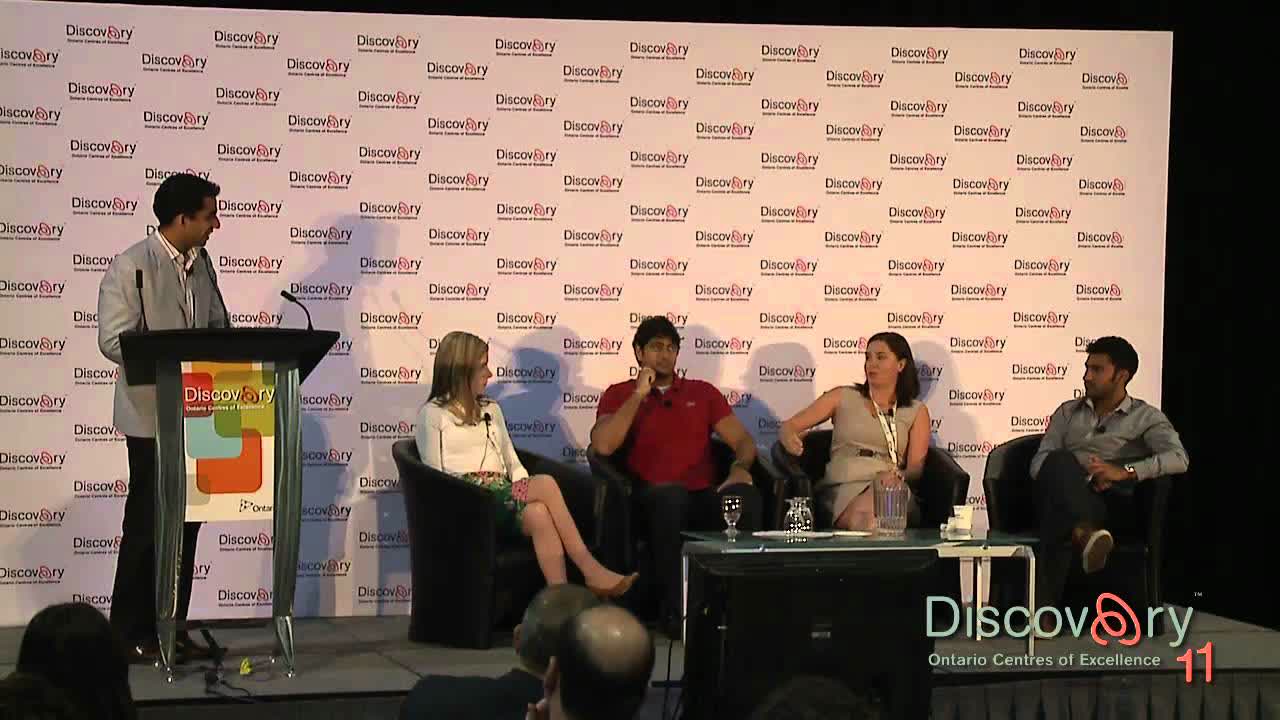
Ontario Centre of Innovation’s annual Discovery conference. Kunal moderated.
The Financial Post’s technology desk.
A show about the mobile industry and the people building it.
Canadian technology news for business leaders.
The national voice of Canada’s universities.
No conversations in this format yet.