AI, cognitive load and the things we no longer have to do
Chapters
Quotes
Host
Ross Dawson
Futurist, keynote speaker and founder of Humans + AI, a community and podcast on how AI can amplify human thinking.
Podcasts, talks and interviews where someone else held the microphone.
PodcastHumans + AI Futurist, keynote speaker and founder of Humans + AI, a community and podcast on how AI can amplify human thinking.
 Video podcastIn The Blink of AI
Georgie Healy hosts In The Blink of AI on the Day One network, talking to people shaping how we live with AI.
 Video podcastThe Seen
Kaia Tham’s show about people building unusual lives and companies.
 Video podcastThe Seen
Kaia Tham’s show about people building unusual lives and companies.
 TalkBetter Societies
Adrien Harrison’s Better Societies: a how-to guide for building better societies.
 Video podcastA Success of Our Own
Natalie Ruskin’s show for anyone ready to create their own authentic version of success.
 Video podcastTheStevePodcast
Conversations with the authentic unprofessionals who are changing industries.
 InterviewSander Recommends
For people thinking about moving abroad, buying property, starting a business or investing internationally.
Jon Davids talks to entrepreneurs and creators about how they made it.
 Video podcastThe Red Chair
Índico Capital Partners, a Lisbon venture firm, hosts a monthly close-up conversation in two big red chairs.
 Video podcastThe Business Leadership Podcast
Edwin Frondozo interviews business leaders on how they lead and grow.
 PodcastThe Growth Suite Leadership Podcast
Jonathan Spiess on leadership and building high-growth teams.
Jonathan Spiess Welcome to Rocket Talent, the podcast dedicated to helping you, the tech professional, learn from real world discussions with notable leaders in the product management, data science, and engineering space.
Jonathan Spiess Hello, and welcome to the Rocket Talent podcast. Today, I am here with Kunal Gupta, the CEO of Polar.me, and I'm very excited to have you on the show. Welcome.
Kunal Thank you.
Jonathan Spiess So today's show is gonna be quite exciting, and it's kinda con- gonna be a continuation of another episode that we had where we featured Kate Leto from Mind The Product. But we're gonna dive deeper into being a mindful leader and what that all means as a professional in the technology sector, whether you're a product manager, an engineer, or even in the data world. And so the reason for me this has become a very important topic is you dive deep into your own inner-ness and how you think, and especially as you evolve and things get crazy, there's a lot of different things that happen, right? And if you're not mindful, you can have issues in dealing with conflicts. You can have issues in prioritizing.
Jonathan Spiess You can get caught up in a bazillion different things, especially here in a city such as New York. And so, uh, we bumped into one another, and you have a blog specifically around the topic, and been doing a lot of discussions around it, and great thought leadership. And so I'm very thankful for you to be on the show. And, uh, yeah, so why is this such a important topic to you, Kunal, and, and where did this all b- start?
Kunal Sure. Thanks for having me on the show, and I'm very excited to talk about these topics that are something that I think about a lot. I think it affects everybody, but we don't talk about it as much, so, so thank you for taking that initiative. I started Polar as a business 10 years ago, and in starting a business, uh, especially at, at the time that we did, it was not an easy experience. And we're doing well today, and we're still around and growing, which is nice, but it took a lot of work, not only the type of work you would expect in running a company and growing it, but also in building myself as a, as a leader and the team around me. After working endlessly and tirelessly, I got to a point a couple of years ago where I realized that everything I said that was important to me in life existed in some shape or form around me, be it professionally or personally, yet despite that, there was this feeling of boredom, this feeling of emptiness, this feeling of dissatisfaction.
Kunal And for me, that was my trigger about four years ago, where I started to now look inside for answers versus outside. And that's when I started this journey to adopt different mindfulness practices, which has literally changed my life. It's changed my lifestyle. It's changed my worldview. It's changed my day-to-day. It's changed my relationships. And most importantly for the context of this conversation, it's changed how I show up as a leader in the team, in the industry, and for the business. So it's a journey that continues. It's never, it's never finished. I'd say about four years into it, and I continue to learn a lot about myself, and then as a, almost like a byproduct, the world around me changes.
Jonathan Spiess Well, thanks for giving the intro. And, uh, you recently opened up offices here in New York. Well, it's a global company but with headquarters in Toronto. Why don't you just give some light, and I'm sure as you practice mindfulness, New York is not always the easiest place to, with everything going on and all the chaos, it's not the easiest place to, to practice that. But give us the story on why you opened up an office here and why you relocated yourself to the New York office.
Kunal I think New York can be one of the most mindful places in the world.
Kunal And I-
Jonathan Spiess Explain that.
Kunal Well, like, uh, it's easy to go sit on a mountain and meditate. Well, I mean, that's not easy, but, like, learn to go meditate sitting in the middle of Times Square. Learn to meditate riding the subway. Learn to meditate, like, in line at a Starbucks. Like, New York presents so many real-life opportunities, and the diversity in people, and socioeconomic classes, and values, and beliefs is so strong that this is the best place in the world to practice mindfulness. It's the best place in the world to learn tolerance, and acceptance, and diversity, to create the space for yourself, but then also for others that may be slightly different than you, and that's, that's a big reason why I'm here and why I'm enjoying the experience so much.
Kunal We've been set up in New York for a couple of years. I've been traveling in and out of the city. But since moving here, and getting a place, and, and building a lifestyle here, it's deepened my mindfulness practice, which is probably the last thing you'd expect, but it really has.
Jonathan Spiess If you can make it here in New York, you can make it anywhere, right? I mean, I've never thought of New York being the place for mindfulness, but if you're ready, if this is something that's really important to you, yeah, like, put yourself to the test. Go, go try to meditate in Times Square. I think that's absolutely amazing. I don't know if I c- To be honest, I, I think I would severely struggle. I've tried just on the East Side River with headphones on to block out all sound, and I'm struggling. What's the journey been like so far since you've been here in New York? Like, what's the highlight?
Kunal I, I, I, it, it, it's a breeding ground for innovation, and it's not isolated to technology or high tech the way we think of it. You've got, you know, specialty donut stores, and nap pods, and pop-up experiences, and street vendors, and taxi driver. Like, everybody has a story. Everybody's obviously hustling, but there's so much entrepreneurship and innovation. And what happens is that innovation breeds more innovation. So people are walking around, you're walking down the street, you're seeing what other people are doing, and you're saying, "Okay, that's a cool idea," which is really you saying, "That's a cool feature," and then you start to see all of these features everywhere you walk. And then you start to incorporate those features almost unconsciously into what you're building. And this is only possible if you're mindful and aware as you're walking down the street versus being distracted, you know, on your phone or in your thought pattern.
Kunal So I absolutely love the inspiration I get every single time I'm walking down the street or taking the subway or in a yoga class or at some random event here in the city.
Jonathan Spiess Highlight on that, right? Like, obviously it's very easy to be distracted for the bazillion reasons, whether it's your phone or the people or someone yelling, but to what extent are you so tuned in that you see something and then it's a deeper layer that triggers, "Wow, that, that's interesting"?
Kunal So the practice definitely starts inside of myself and inside of ourselves. It's about learning to just be in touch with our mental state or my emotional state, and then learning to process that. And as... And mindfulness tools definitely help build that skill, and then that skill starts to be applied in the world outside of me. So I'm seeing somebody who's agitated, I'm seeing somebody who's frustrated, I'm seeing somebody who's in a hurry. You almost start to empathize and then get to a point of compassion because you're starting to just become aware of their state, 'cause you've learned how to tune in to your own state. I mean, I'll give the, the simple example. Like, when I hear somebody honk a horn, uh, which happens all the time in New York, it's rarely, I think, at the driver or the pedestrian or the cyclist around them.
Kunal There's usually some other frustration or anxiety or anger that they're feeling, but something else in their life. It's like the water's already boiling, and when we hear a horn honk, or when I hear a horn honk, it's just like the water spilling over. So once you kind of tune into those type of things, you realize, okay, it's not as it seems at the surface. There's something deeper here. I don't know what it is, but I can just accept that there's something deeper here and not take it personally, not make a big deal out of it.
Jonathan Spiess As you started this journey, right, four years ago and trying to be a mindful leader, what were some of the initial struggles to tune into that?
Kunal I think we... Like, growing up, I inherited a lot of values and beliefs, be it from culture, parents, teachers, society or religion, et cetera, pop culture. So I inherited a lot of beliefs. I think a lot of us do, and we blindly follow them. And at the start of my mindfulness journey is, was a process, and that process continues today, to pick up each one of these values and beliefs and ask myself, "Do I agree with it? Do I connect with it? Is this still true for me?" And to your, answer your question, the hardest, the biggest challenge has been choosing and seeing to not believe in some of these values. For example, I used to be an ultra-consumerist. I used to buy everything and stuff I didn't even need and stuff I already owned, I would buy.
Kunal I don't know why. But I think it was tied to this value and belief system I inherited that more equals more. And now I've been exploring what does it look like for less to equal more, and have adopted a more minimalist lifestyle and approach, and that's a value system I more deeply connect to now.
Jonathan Spiess Right.
Kunal So like that example, there's been a lot of values and beliefs, and I'm excited to continue to keep challenging them and changing them, and this relates a lot to building a product and building a business, which is like taking something you assume to be true and then having the courage to hold it up and asking yourself, "Do I still believe this to be true?" And if the answer is no, then to be open to exploring alternatives.
Jonathan Spiess Sure. Have you seen, you know, what were some of the impacts you saw as a leader of your own business, right? Working with your peers, working with, with others. Obviously, work can be frustrating, stressful. Client calls and says they're not gonna take the contract or you have a bazillion things going on. So that's kind of the reason I started to tune into it, is to really stay focused and stay driven and not let the noise distract you and focus on the big picture. But it can be frustrating, right? And you can let that trigger set you off. And so what are-- what were some of the immediate impacts that you saw and where did you kind of start catching yourself as you started this journey?
Kunal Learning to respond versus react has been the biggest game changer for me. So I've been running a business now for 10 years, and in B2B tech, doesn't matter what industry you're in, some principles have, you know, I've learned to be true. You're going to sign deals, and you're also going to lose deals. You're going to hire people, and you're going to lose people. Like, these are basic fundamental things. So previously, you know, if we lost a customer, I would take it personally and I would react and I would take stress and I would probably stress out a few other people on the team. It was pretty a generally negative experience. And now that experience has completely changed. I think it was about two years ago now, one of our, our big customers, probably a top five customer, uh, shared with me that they're gonna be moving on and they're not gonna be using our software anymore.
Kunal And after I walked out of that meeting, I just stood outside for a moment to check in with myself and ask myself, "How do I feel?" And in that moment, just that couple moments, seconds of space, I was reflecting and, like, based on what they shared with me, they probably should have actually made this decision a year before they did. And then I thought through all the steps and actions that our team took to continue to add value and continue that partnership. So instead of feeling anger or stress or anxiety, I started to actually feel grateful, and grateful to my team for the specific actions they did. We're very transparent, and we talk about everything, the good and the bad internally. So on Slack, the way I announced that this customer had decided to move on from us was a giant thank you note.
Kunal And it was a thank you note to specific people on the team on the specific steps they took and the partnership that they were able to continue. Now, two years later, that customer's actually still a customer of ours, and they did not end up moving on. So now hindsight has taught me that, like imagine that moment if I took stress and felt anxiety over something that was gonna change anyways. Their decision changed.
Jonathan Spiess Right.
Kunal And in that moment, grateful, and then now looking back realizing not that big of a deal. They didn't even move on in the end. So that's just a specific example. In B2B business is, like, a lot of call it typical things will happen, and learning to just respond appropriately and not skip a beat, whereas before I definitely would have reacted, has been a pretty big game changer.
Jonathan Spiess Have a pretty similar story of my own. It was... I had a client who was probably my biggest client, and we worked on a bunch of roles together, filled them all, and then they came to me with another role. And, you know, initially when I was just breaking on my own, I gave the-- we worked out a certain deal, and we were kind of renegotiating terms, and they came back to me and we tried to negotiate, and one thing led to another, and eventually they ended up going in a different direction. And it was very like they didn't even tell me. And then I remember they eventually followed up with me, and I remember being, like, so upset with myself, like, "How did I lose this? What did I do?" Then I took, like, a s- step back and was, like, actually thankful. Like, I was like, "You know what? I don't even need this business." Like, why am I getting all worked up? Like, it is what it is.
Jonathan Spiess It's partially my fault. Taking all the steps that I did, and if it was meant to be... And I wish I had that sight, as you're explaining, like, taking that deep breath, not even letting the emotions get to me. And then it's funny, like, a month later, I end up finding out that whoever they gave the business to, like, it never even happened, right? And I was like, "Thank God." You know? Like, I don't... Last thing in the world I need to deal with was that. So, uh, it's funny how the world comes together.
Kunal I think, like, what, what you're speaking about, uh, very simply is, is awareness, and I think, like, mindfulness practices help cultivate a state of awareness. And once we-- once I feel I become aware of something, then I can more readily accept it. And once I accept it, then I can do something about it.
Jonathan Spiess Right.
Kunal It's that, like, lack of awareness of understanding why things are the way they are that causes tons of friction, tons of anxiety, because I expect things to be a certain way, and I'm seeing them a different way, and I can't make sense of the difference. If I'm able to take a moment to just become aware why is it the way it is, like learning to see reality as it is, not as I wish it to be, then I can start to say, "Okay, now that I understand it, I can accept it." And now that I can accept it, now I can move on and take ownership or take action as required.
Jonathan Spiess Well, even taking a step back, right? So for some of the people tuning in or product managers maybe earlier on in their career, you're dealing with a lot of different stakeholders. Not everyone's gonna agree, and naturally, if you're motivated and you're excited, it's gonna be challenging to channel all this energy right, in the right way. So I think it's even more important to be so aware of this and how you're coming off to the world, how you're being portrayed, all the other matters where everyone else is coming from. Because ultimately, you need to get to the yes, and if you're combative with everyone, you'll just get nowhere, and if you're reactive. I think it's hyper important. What are, like, though, some, like, real things that even in a work environment someone can get started to, like, be mindful or be a mindful leader in that instance, right?
Jonathan Spiess Like, they know they think they're right. They come prepared to the meeting, and someone shoots them down, and it's like their whole everything just got bursted. And what's-- what guidance would you give?
Kunal Ask questions. Like, be genuinely curious. If you're able to really understand different perspectives and letting that shape your perspective, that your perspective is, is going to land well. If you're walking into something with only your perspective and then you're trying to convince people to see things your way, uh, that sounds very forceful. It sounds very violent. It sounds like a lot of work. It also doesn't sound like a lot of fun. I think being curious, asking questions, understanding where people are coming from, where they're at, uh, so showing a sense of and building, cultivating empathy in the workplace towards the people or the problems that they have, the problems they're trying to solve, will either consciously or unconsciously influence how you present ideas and solutions and be of value.
Jonathan Spiess Especially as you learn to communicate with others, and you learn to navigate different things and build products. But there comes a point, even as a leader, where you can be empathetic, you can listen, but you have to be stern, right? And how have you seen the-- has the mindfulness become too mindful?
Kunal So when I think of empathy and compassion, I think of compassion as empathy plus action, and action could be as simple as a thought or, or words, or it could be some form of other gesture. I don't think compassion actually means softness or niceness. I think hitting somebody with a stick could be a very compassionate thing to do if it's going to help them in a way that they are looking for and needing the help, whether they realize it or not. When I say stick, I mean it obviously figuratively, not literally. But in a, in a technology environment, giving people feedback is a very compassionate thing to do. And sometimes it's giving them feedback before they've asked for it or on topics that they're not aware of or even open to, but you know that they need to hear it, and it's gonna be good for their own development and, and growth.
Jonathan Spiess I couldn't agree more. And I think for me and- As well, I was, I tend to be the hot head, right? And so my first boss, when- not my first boss, but one of my bosses at my previous company was like, "Jonathan, you just need to chill. You wear your emotions too much on your sleeve," right? And he was spot on, and especially now that I'm running my own business, like, "You're the CEO. You can't do that. You have to be the strong leader." When we first spoke on the s- on the phone, one of the words that he said specifically is, like, the captain of the plane or the captain of the boat. If the plane's starting to go down or there's serious waves coming and, are you gonna start freaking out in front of all the people on your boat? No, 'cause they're gonna freak out, right? So you have to, especially as a leader, it's even more important to stay calm and collected, and it's definitely not easy.
Jonathan Spiess So a lot of this stuff stems from, like, even your personal traits. Obviously, you don't just go to work and be angry, right? It's your, either the way you grew up or your values, and so for folks that are, like, really just getting going with this, what are some helpful either books or things that they can start doing to get on this journey?
Kunal Step one is learn to breathe. Breathing happens naturally, but it doesn't happen consciously, so learning to watch yourself breathe is a very useful tool because if you're breathing, you're okay. If you're breathing, you're alive. Like, you are successful. Like, the moment you're born when a baby's born, everybody in the delivery room is like, "Yay, he or she is breathing."
Jonathan Spiess Right.
Kunal And we're celebrating and, like, high-fiving from what I've heard that, like, the baby's breathing. And then when, like, you're on your death bed, people are like, "Okay, is the person breathing?"
Jonathan Spiess Right.
Kunal So, like, success was like, are you breathing? Success at the end is are you breathing? Somewhere in between we've changed the definition of success to be all of these other things. What if success remained simply just breathing? So how many times a day? Is it three times a day, five times a day, 10 times a day can you just watch yourself breathe? That will actually start to change everything and start to open this door, uh, that'll never close again, where you realize, "Okay, there's a lot of things that I control. There's a lot of things I do choose. I get to choose how to feel. I get to ch- choose how to watch my breath. I get to choose all of these very simple and basic fundamentals of being alive." And what that does is it creates a sense of empowerment. So when you're going through the day, when you're going through the week or the weekend and unpleasant conversations happen, unpleasant events happen, you start to remember that you get to choose how to feel, and that all starts with the practice of being able to watch your breath.
Kunal I think more tactically, meditation has been a very useful tool for me. Yoga's been a useful tool. Journaling has been a useful tool. Uh, reading just for fun, not for productive reasons, has been a, a very useful tool. So those are some of the practices that I follow. Discover your own and, and play around and ask others for input. But having something that you practice that helps you cultivate awareness, that helps you cultivate grounding, that helps you cultivate presence is critical.
Jonathan Spiess For those that wanna take this a l- a little bit further, and I don't wanna just be aware, I wanna be able to be in a blissful state in the middle of Times Square, right? That's obviously not gonna happen overnight, but where would someone even go to begin that?
Kunal So I think what I've learned is, is we absorb things, we understand things through, in one of two ways. One is intellectually, and that's what this conversation is. If you're listening to this, uh, you're absorbing this as knowledge. But the second way we learn is through experience, and that's where the practice comes in or, or other opportunities to experience whatever it is you're trying to learn. And the two combined are what's required. That knowledge, that intellectual understanding, but then also the experiential, and the two combined is a really powerful combination. So I would ask yourself, how can you experience these different ideas around being a mindful leader, a mindful professional in whatever domain you're working at? I think it's looking at situations where you've felt agitated or if you felt stressed and you felt anxious and instead of saying it's water under the bridge or sweeping it under the rug, actually, like, go look at it, go study it, reflect on it, journal on it, think about it.
Kunal And just ask yourself, like, "What can I learn from that experience?" The tendency will be to start to blame others, you know, because so-and-so said this or so-and-so did this. That's what made me feel this way. So then when that happens, do it again and just keep doing it again and again and again until you're not blaming others, but you're taking responsibility for however you felt in those situations that you feel were unpleasant or stressful. I think there's a lot that can be learned from that. One of my favorite authors, Sapiens, Homo Deus, uh, well-known books, kind of talks about this notion of what's the purpose of history. We often say that because it happened a certain way, that gives us almost permission to just do it the same way.
Kunal We used to do this, so it's cool. It presents this idea that I really like that what if the purpose of history is so that we don't repeat it? So then it-- that was from a anthropological perspective. What if we take it from a personal perspective, like understanding your own history with a purpose so that you don't repeat it versus wishing it doesn't happen again? And that's how you start to retrain, retrain your mind. Like, if you change your thinking, you will change your life. That's been my own lived experience.
Jonathan Spiess It's, uh, very helpful. I think where some people come, it's one thing to talk about it in theory, and then it's another to actually hold it in practice and hold yourself accountable. And especially when you're caught up with all the nuances in your day-to-day work, friends, family, it's very easy to let natural human behavior come back in and not follow through. Uh, so for those that struggle a little bit more on that front, what are some easy and more accessible ways to hold themselves accountable?
Kunal So for, for me, it started with a, a process of learning to be kind to myself, and it's not an easy thing to do. I had often almost, you know, figuratively like beat myself with a stick to get myself to do things that I did not wanna do, be it professionally or, or personally, and that only went so far. So learning to be kind to myself, learning to forgive myself, learning to be accepting of myself, I mean, it's still something I'm working on, but that introduces this kindness, this openness, this gentleness to just how I treat myself. And then once I learn how to treat myself well and better, then I start to treat other situations better.
Kunal I start to treat other people better. But I think it all starts from, from within.
Jonathan Spiess Right. Yeah, I think that's a very important note that you mentioned is as you go through this journey, you're not gonna overnight be the most mindful leader right away, right? You're gonna slip up. You're gonna have moments where, "Crap, I wish I, I got better." And so I think it's really important to be kind to yourself, explore that, what happened, and try to improve upon it, but don't beat yourself up and hate yourself and ... 'Cause that just leads to a lot of self-destruction and just, you know, you end up focusing all the energy on the wrong, wrong places.
Kunal Yeah. I, I do wanna, I do wanna add, and this is a bit of a spoiler alert, mindfulness is not something to be achieved, and I have mixed emotions towards the way a lot of, call it meditation or other like services are gamified because it brings an achievement-oriented mindset to the table. But my experience has taught me that we have nowhere to go. Like, we're always on our way. It's not that once I do all these levels or all these courses, and I've done all the levels, I've done all the courses. I've s- I've sat a lot, that I'm going to be in some other state permanently. It's, it's a journey that will never, ever end. And like I said, spoiler alert, I feel like you should know that as you start to go down this path.
Jonathan Spiess I started on the, using the app Ten Percent Happiness, which for me has been great. I try to meditate and, and plug in at least five minutes. My goal is three times a week. But it definitely helps, and it's been tremendous. And obviously, just in day to day, it's like, "What did I do?" Being more mindful in situations and not being so reactive is incredibly helpful, and as, as I continue to evolve as a business owner, as a man, for my friends, my family, for my clients, it's, it's been tremendously helpful. So thank you very much for coming on to the show today. It's been tremendous to get your input. I'm really happy to hear it all out loud.
Jonathan Spiess I've been following the blog for a while. If you haven't already, please do check out Kunal's blog. I'll put a link to it in the podcast. And stay tuned. We have a lot more value. If this is your first time tuning in, please do subscribe. And I'm starting something a little bit new. I started on the last episode, but we do use Anchor as our podcast host, and Anchor has a phenomenal ability to add comments. And so please share, like, what's your journey with mindfulness? What are questions that you might have? We'd love to hear from you directly. Thank you very much.
 PodcastStigma Podcast
Stephen Hays on mental health, and the people working to remove its stigma.
 PodcastSober Company
Nik and Lacey on living alcohol-free, with guests on the habits that replace drinking.
 PodcastAdExchanger Talks
The podcast of AdExchanger, the trade publication for advertising and marketing technology.
 Video podcastThe JOMOcast
Christina Crook, author of The Joy of Missing Out, on living well with technology.
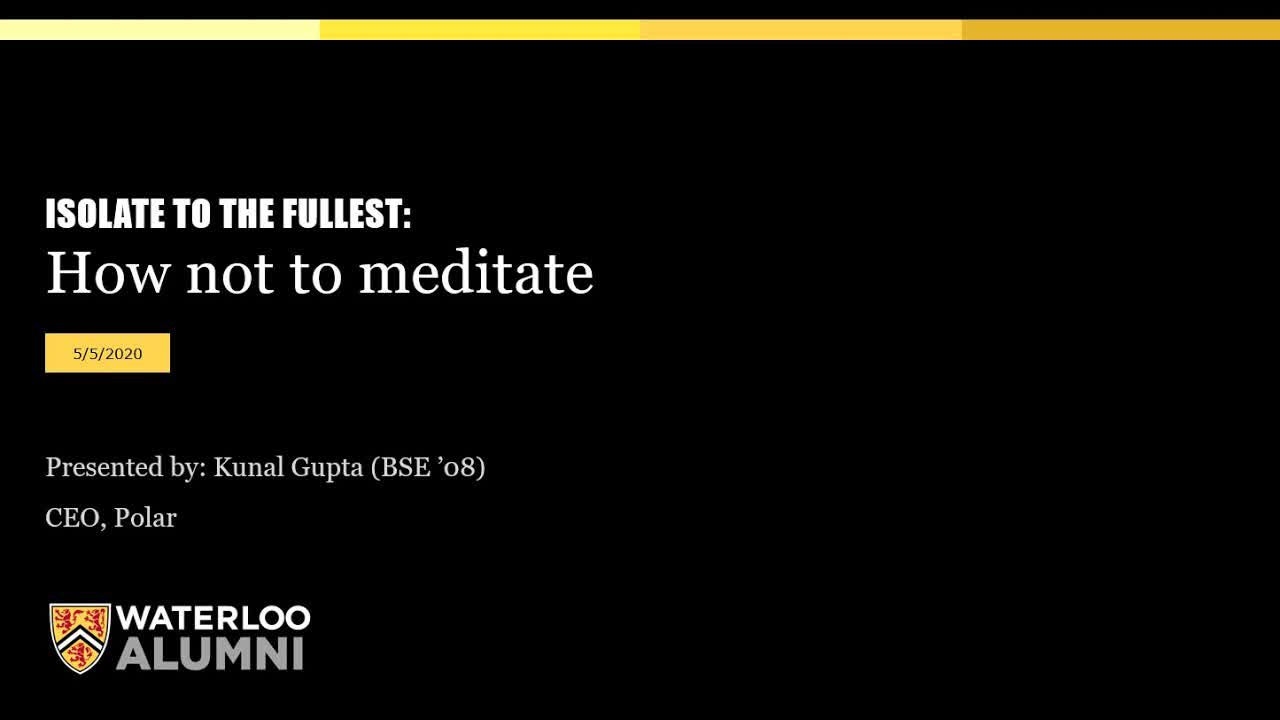 TalkUniversity of Waterloo
The University of Waterloo’s alumni webinar series. Kunal studied software engineering there.
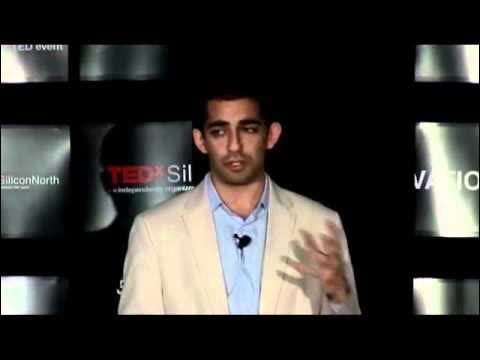 TalkTEDxSiliconNorth
An independently organised TEDx event for Canada’s tech community.
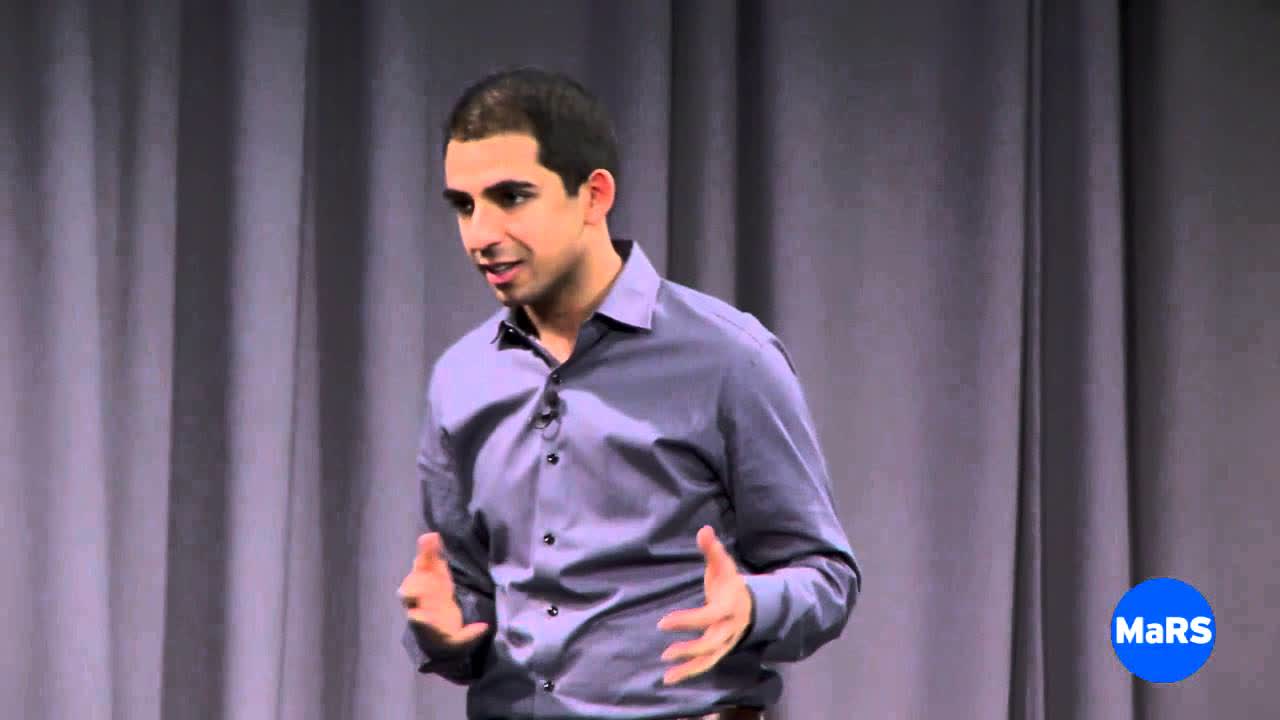 TalkMaRS Entrepreneurship 101
MaRS, Toronto’s innovation hub, and its Entrepreneurship 101 lecture series.
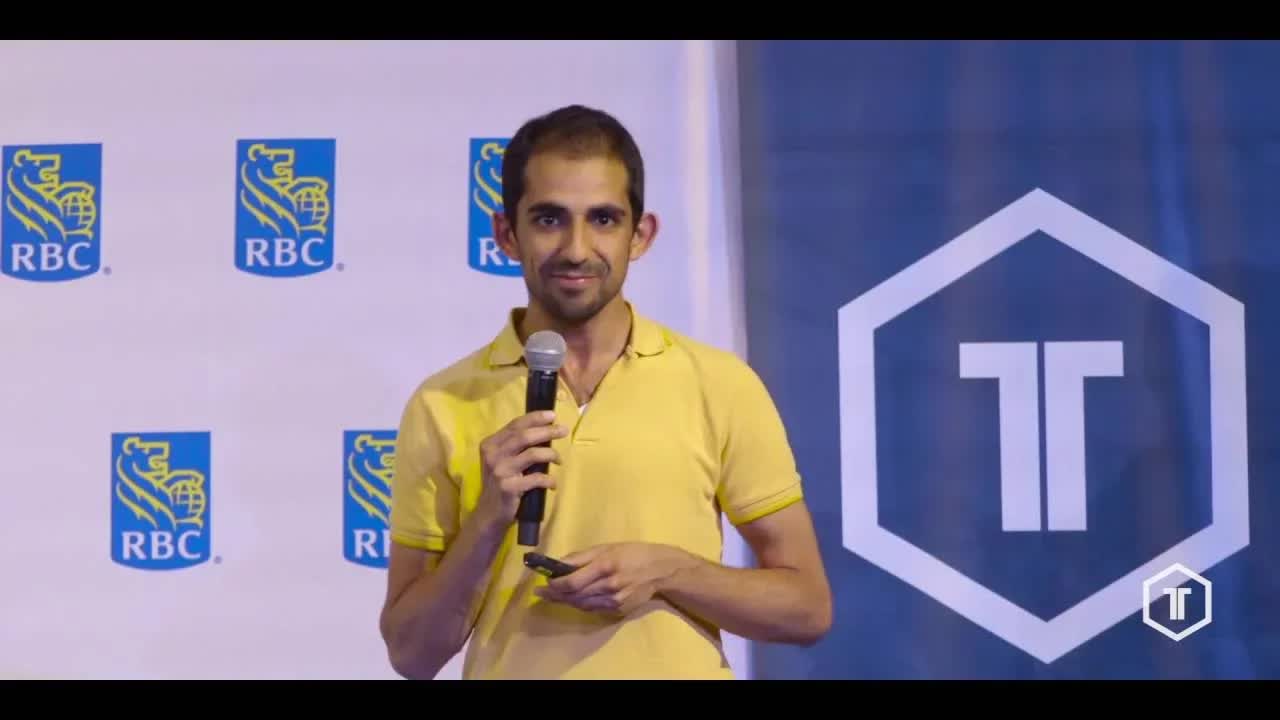 TalkTechTO
Toronto’s monthly tech community meetup.
The University of Waterloo’s startup programme.
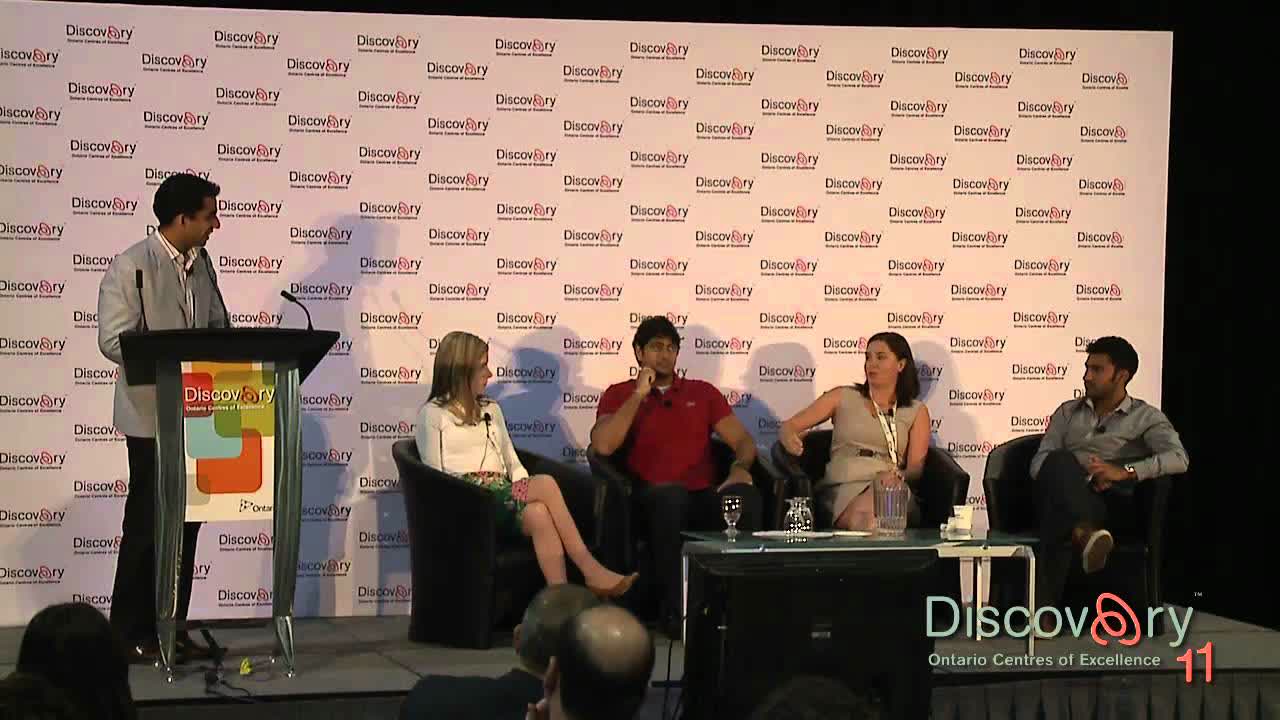
Ontario Centre of Innovation’s annual Discovery conference. Kunal moderated.
The Financial Post’s technology desk.
A show about the mobile industry and the people building it.
Canadian technology news for business leaders.
The national voice of Canada’s universities.
No conversations in this format yet.