AI, cognitive load and the things we no longer have to do
Chapters
Quotes
Host
Ross Dawson
Futurist, keynote speaker and founder of Humans + AI, a community and podcast on how AI can amplify human thinking.
Podcasts, talks and interviews where someone else held the microphone.
PodcastHumans + AI Futurist, keynote speaker and founder of Humans + AI, a community and podcast on how AI can amplify human thinking.
 Video podcastIn The Blink of AI
Georgie Healy hosts In The Blink of AI on the Day One network, talking to people shaping how we live with AI.
 Video podcastThe Seen
Kaia Tham’s show about people building unusual lives and companies.
 Video podcastThe Seen
Kaia Tham’s show about people building unusual lives and companies.
 TalkBetter Societies
Adrien Harrison’s Better Societies: a how-to guide for building better societies.
 Video podcastA Success of Our Own
Natalie Ruskin’s show for anyone ready to create their own authentic version of success.
 Video podcastTheStevePodcast
Conversations with the authentic unprofessionals who are changing industries.
 InterviewSander Recommends
For people thinking about moving abroad, buying property, starting a business or investing internationally.
Jon Davids talks to entrepreneurs and creators about how they made it.
 Video podcastThe Red Chair
Índico Capital Partners, a Lisbon venture firm, hosts a monthly close-up conversation in two big red chairs.
 Video podcastThe Business Leadership Podcast
Edwin Frondozo interviews business leaders on how they lead and grow.
 PodcastThe Growth Suite Leadership Podcast
Jonathan Spiess on leadership and building high-growth teams.
 PodcastStigma Podcast
Stephen Hays on mental health, and the people working to remove its stigma.
 PodcastSober Company
Nik and Lacey on living alcohol-free, with guests on the habits that replace drinking.
 PodcastAdExchanger Talks
The podcast of AdExchanger, the trade publication for advertising and marketing technology.
 Video podcastThe JOMOcast
Christina Crook, author of The Joy of Missing Out, on living well with technology.
 TalkUniversity of Waterloo
The University of Waterloo’s alumni webinar series. Kunal studied software engineering there.
 TalkTEDxSiliconNorth
An independently organised TEDx event for Canada’s tech community.
 TalkMaRS Entrepreneurship 101
MaRS, Toronto’s innovation hub, and its Entrepreneurship 101 lecture series.
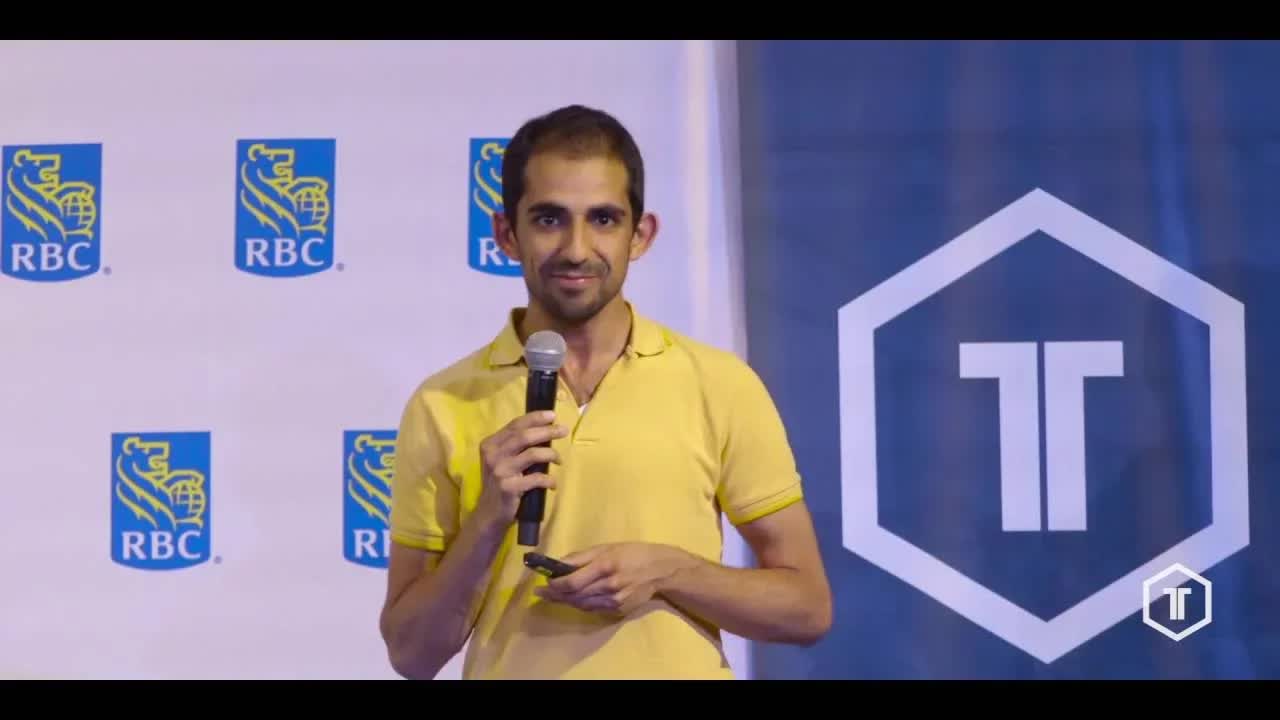 TalkTechTO
Toronto’s monthly tech community meetup.
Kunal How's everyone doing tonight?
Kunal Come on, we can do better than that. How is everyone doing tonight?
Kunal All right. I was able to get a couple of you guys off your phone. I'll eventually try and get all of you off your phone.
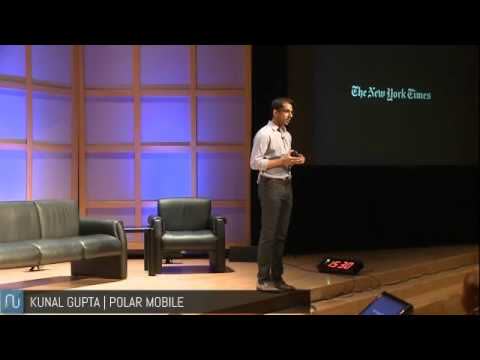
Kunal So I've had a relatively long tenure as an entrepreneur here in Toronto. Came here back in two thousand and seven, two thousand and eight when it was a very different time. It'd be impossible to fill a room with this many people to talk about entrepreneurship and technology eight years ago. Uh, at Polar we build technology. We work in the media and advertising space, but that's not what I'm here to talk with you about today. Gonna talk about something that I find much more important. Uh, much more important to my life personally, and something that I hopefully will leave with all of you as you think of your lives as entrepreneurs, as technologists, and as professionals. You know, twenty sixteen has kind of fast-forwarded and caught up to us pretty quickly, and a lot of us feel that we're being managed versus managing. I'm not talking about our, our companies or our teams.
Kunal I'm talking about our lives. I'm talking about our thoughts. I'm talking about how we feel day to day. And something that I've learned the hard way is about the importance of focus. And really without focus it's impossible, absolutely impossible to achieve anything. But with focus you can achieve absolutely anything. And that not only comes from business, but also comes in life. So over the last little while, I've been really focused on building a culture and building a team and building an environment and community that treasures focus, that treasures calm, that treasures happiness and joy. And I've found that it's actually really hard to find that, and I'm still searching for it.
Kunal I've found glimpses of it, and today I want to share with you some of the things that I've found along the way and some of the tips and tricks that I've learned and some of the things we've been practicing at Polar that hopefully you'll learn as well. So it starts from this belief of awareness, and awareness of how we feel, awareness of how we think and what's going through our mind. And I've developed this belief that ninety percent of everything in life is awareness. And once we become aware of it, then we instinctually take care of it and start to deal with problems, find opportunities. But it all starts from awareness. And I've been working really hard to explore different ways to cultivate awareness, and I'll share with you a couple of, a couple of the ways we've been doing this. Uh, so the first one I wanna tackle is the multitasking myth.
Kunal How many people here feel they can multitask?
Kunal If it wasn't such a large room, I'm sure all of you would be putting up your hand. There you go. We can't actually multitask. When we're multitasking, we're actually switch tasking. And multitasking in its true definition is doing multiple tasks aligned to the same objective. So if I'm driving a car, um, my foot might be on the pedal, I'm watching the odometer, I'm looking at the street in front of me, I'm checking my side mirrors, I'm checking my rear view mirrors. I'm hopefully not checking my phone. That's multitasking all aligned to the same goals. What switch tasking is, I'm working at my computer, I'm checking Slack notifications, I'm popping onto Facebook, I'm eavesdropping on conversation next to me, and I'm having lunch. Our brains can't multitask. Our brains can't switch task.
Kunal It's constantly disrupting our state of flow and our ability to focus.
Kunal At Polar, we've developed this culture on making versus meeting, and part of the reason we all get into entrepreneurship and we get into technology is for the art of creating, and creating is making, and meeting is not making. Who here likes meetings?
Kunal Maybe the Accenture person would have put up their hand.
Kunal We, we've been on a mission to, to kill meetings at Polar. So Tuesdays and Thursdays are meeting free days at the company. Absolutely everybody loves it, and we're just starting there. But it's all around the theme of let's all get towards making, and that's why we show up every single day. That's what we love doing. Let's create an environment where we're doing our best.
Kunal I took email off of my phone five years ago, and it's probably one of the best business decisions I've ever made. So I took email off my phone five years ago. I only told people on my team I did this last year.
Kunal And what I realized was nobody noticed. Nobody said a thing. We did not skip a beat. Business has continued to, to do really well. But along the way, I've learned a lot about myself, and I, I did it out of necessity 'cause there was a time at, at that stage where there was, there was just too much, and I wasn't enjoying it. Um, but I took that action, and now I've, I've enjoyed the ride a lot since that. My challenge to all of you is to try it out. If you actually know how. Half of people in this room probably don't know how. Uh, but try it out. Take email off your phone for a day. Just become aware. How do you feel? How do you feel throughout the day? How do you feel in the morning? How do you feel at night? Guarantee you it'll change your life. And the last point I want to leave you with is really learning to connect, and that's by, by disconnecting and taking time away.
Kunal Um, I take lots of time away. Um, time away is not the same as vacation. Time away could be doing a course, could be going sitting on a beach, could be spending time with family or friends, just taking time away from the day to day. And that's when you start to become proactive. That's when you start to become strategic versus constantly reactive and constantly, uh, distracted. Um, so we have mandatory policy at Polar that everybody who goes on vacation has to disconnect. We track it. They get in trouble if they've logged on, and we can check, uh, on Slack if they have logged on. Um, and that's the, that's the culture we're trying to create. So that's just a, a couple of the things we've started to experiment with. I've written a lot more about this on my blog, and, uh, this is the culture that we're trying to create at Polar, and now I'm s- trying to create that within our community.
Kunal Because we can drive ourselves crazy going after the supposed prize, uh, but these are some of the things I've learned along the way. Thank you.
Kunal Questions? It's all self-explanatory. Pretty simple. Couple of questions over there.
TechTO Hello. Uh, thank you for that talk. It's really, like... I think it's very important also to, um, like disconnect, not using Twitter, not using Facebook once in a while. Um, but also, like, not always being connected to your email. Um, there are some people who would kind of disagree, and they would say, you know, "If you're not going to be connected, someone's gonna... Someone else will. Someone is always gonna be working all the time." And I was just wondering how you would respond, uh, what stance you would take as kind of the, not a detractor to that, but kind of taking the opposite stance, which is you need some time to yourself versus, uh, you're just being the person who's not working as hard.
Kunal Yeah. Two, two thoughts. First, you've gotta take care of yourself so you can take care of your business and your team and your customers. So it starts from, starts from here, and then you can take care of those around you. Uh, the, the second thought is really around kind of what's the, what's the point of it all? And is it, is it to beat the guy next to you, or is it to go solve your customers' problems and to create an environment where your team can grow? When you're disconnected, you're able to think at a higher level and more strategic. That's what I've found through my experience, uh, which means I'm probably solving and creating more value by actually going and sitting on a beach in Miami and disconnecting, which is where I was last week.
Speaker 1 Hey.
Kunal Hey.
Speaker 1 So, uh, so you don't have email on your phone. I assume that means you also don't have Slack on your phone, or do you have Slack on your phone? Admit it.
Kunal I have Slack on my phone. I don't use-
Kunal I don't use Slack on my phone. And I don't... Actually, you can just look at my home screen. There's four icons on it.
Speaker 1 That, that was my next question. So let's say you don't use your phone for email or Slack. What do you do with your phone?
Kunal Our smartphones are amazing GPS devices. Absolutely amazing GPS devices. So I get, I get lost a lot, uh, especially in, uh, different global cities traveling around. So the GPS device is the primary function. I thought for a while to go back to a flip phone, and the GPS is the only reason I haven't done that.
Speaker 2 I'll trade you. Hello.
Speaker 2 Hello?
Kunal Last question.
Speaker 2 My mic's not working.
TechTO Use the bottom.
Speaker 2 Hello?
Kunal Not me.
TechTO Just yell.
Speaker 3 Just yell into it.
Speaker 2 Okay. Um, thanks for the talk. Uh, sorry. Thanks for the talk. Um, if you're focusing on one thing at a time, how do you prioritize what you're gonna focus on, um, during that time?
Kunal Question was, if you're focusing on one thing at a time, how do I prioritize what I'm going to focus on? Uh, so a couple of our team members at Polar are here in the crowd. They're gonna have a chuckle because that's probably all I talked to them about today, specifically.
Kunal We've made it this trend now at Polar, like, absolutely everything needs to be a prioritized list. Anything that we're working on, any customer issue, uh, sales targets, a product roadmap. Absolutely everything has to be prioritized, and it's a great exercise. It's been a great exercise for us 'cause it just forces that thinking, uh, back to higher level goals, higher level values. What's important to us? And then letting that guide those priorities. And by being explicit upfront of here's what we're gonna prioritize and how we're gonna rank things, that means while we're doing it, we don't have to worry, am I working on the most important thing? Because we've already decided that before we jump into it.
Kunal Great. This was a lot of fun. Thank you all.
The University of Waterloo’s startup programme.
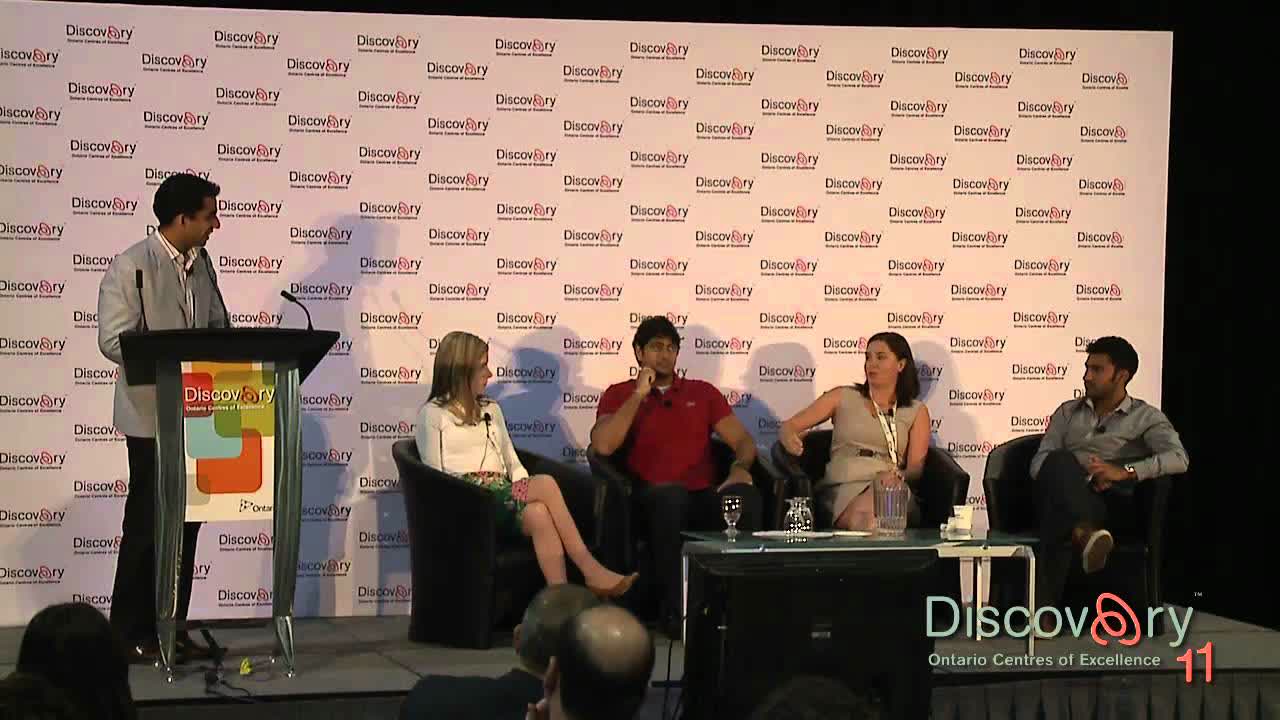
Ontario Centre of Innovation’s annual Discovery conference. Kunal moderated.
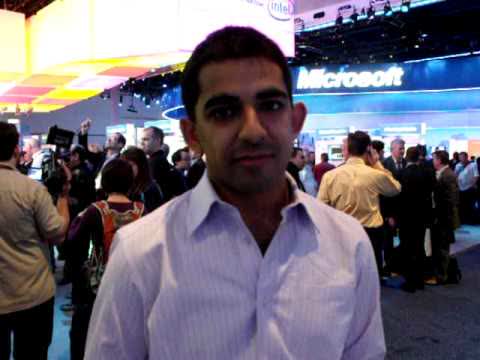
The Financial Post’s technology desk.
A show about the mobile industry and the people building it.
Canadian technology news for business leaders.
The national voice of Canada’s universities.
No conversations in this format yet.