AI, cognitive load and the things we no longer have to do
Chapters
Quotes
Host
Ross Dawson
Futurist, keynote speaker and founder of Humans + AI, a community and podcast on how AI can amplify human thinking.
Podcasts, talks and interviews where someone else held the microphone.
PodcastHumans + AI Futurist, keynote speaker and founder of Humans + AI, a community and podcast on how AI can amplify human thinking.
 Video podcastIn The Blink of AI
Georgie Healy hosts In The Blink of AI on the Day One network, talking to people shaping how we live with AI.
 Video podcastThe Seen
Kaia Tham’s show about people building unusual lives and companies.
 Video podcastThe Seen
Kaia Tham’s show about people building unusual lives and companies.
 TalkBetter Societies
Adrien Harrison’s Better Societies: a how-to guide for building better societies.
 Video podcastA Success of Our Own
Natalie Ruskin’s show for anyone ready to create their own authentic version of success.
 Video podcastTheStevePodcast
Conversations with the authentic unprofessionals who are changing industries.
 InterviewSander Recommends
For people thinking about moving abroad, buying property, starting a business or investing internationally.
Jon Davids talks to entrepreneurs and creators about how they made it.
 Video podcastThe Red Chair
Índico Capital Partners, a Lisbon venture firm, hosts a monthly close-up conversation in two big red chairs.
 Video podcastThe Business Leadership Podcast
Edwin Frondozo interviews business leaders on how they lead and grow.
 PodcastThe Growth Suite Leadership Podcast
Jonathan Spiess on leadership and building high-growth teams.
 PodcastStigma Podcast
Stephen Hays on mental health, and the people working to remove its stigma.
 PodcastSober Company
Nik and Lacey on living alcohol-free, with guests on the habits that replace drinking.
 PodcastAdExchanger Talks
The podcast of AdExchanger, the trade publication for advertising and marketing technology.
 Video podcastThe JOMOcast
Christina Crook, author of The Joy of Missing Out, on living well with technology.
 TalkUniversity of Waterloo
The University of Waterloo’s alumni webinar series. Kunal studied software engineering there.
 TalkTEDxSiliconNorth
An independently organised TEDx event for Canada’s tech community.
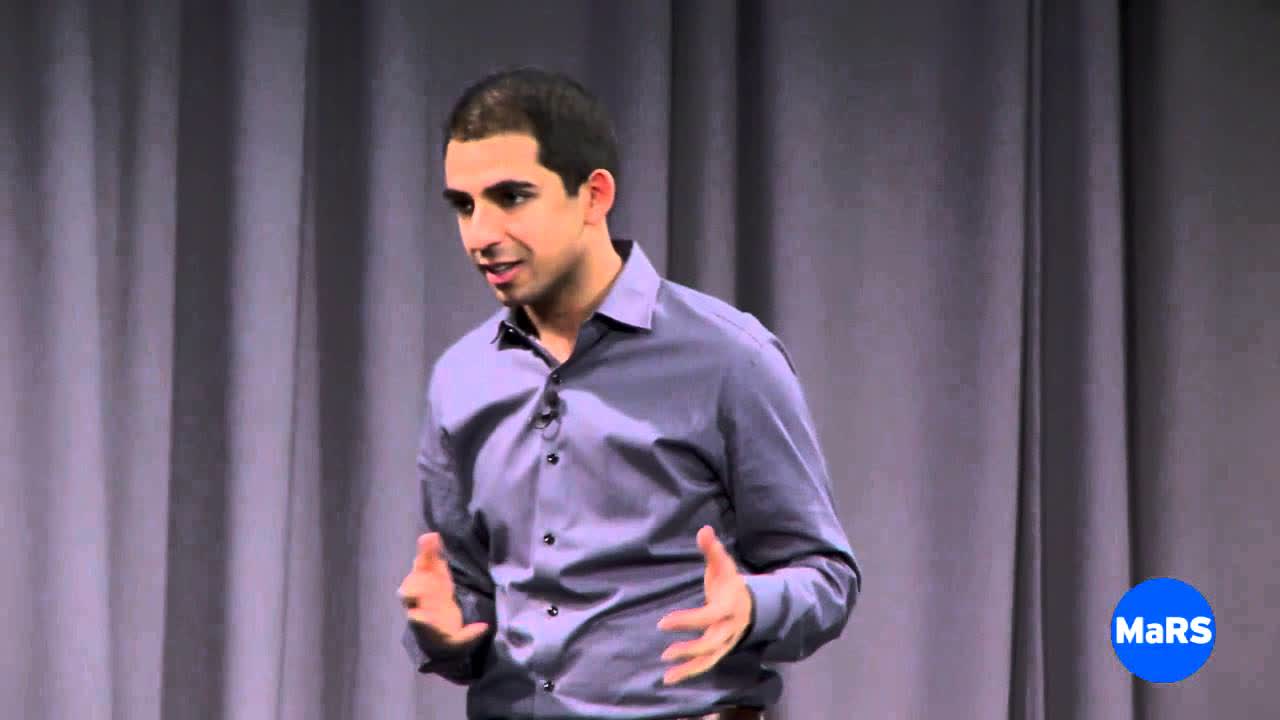 TalkMaRS Entrepreneurship 101
MaRS, Toronto’s innovation hub, and its Entrepreneurship 101 lecture series.
 TalkTechTO
Toronto’s monthly tech community meetup.
The University of Waterloo’s startup programme.
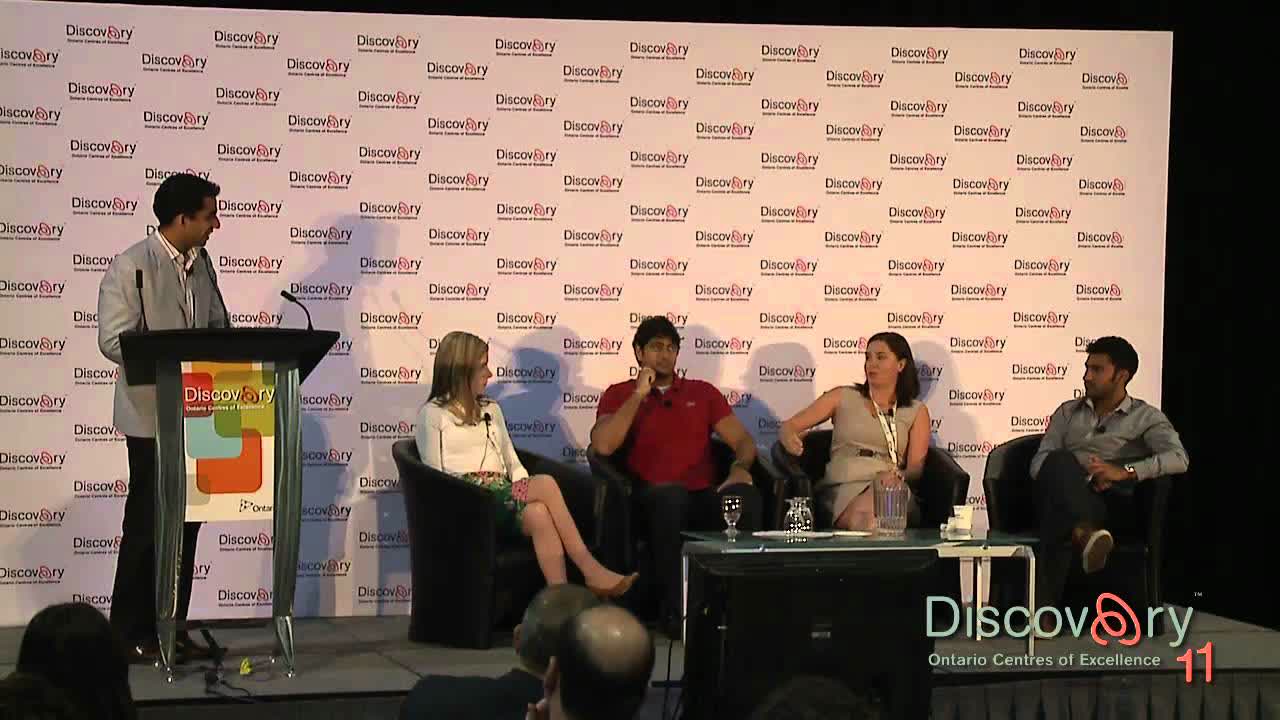
Ontario Centre of Innovation’s annual Discovery conference. Kunal moderated.
Speaker 4 Good morning, ladies and gentlemen. My name's John McRitchie. I'm the regional director with the Ontario Centers of Excellence here in Toronto. And it's, uh, my pleasure to welcome you this morning to our panel discussion, entitled The App Revolution: Consumer or Corporate, Where is the New Gold Rush? Uh, before we go any further, I would like to acknowledge and thank, uh, OMERS for sponsoring this theater. Uh, they've been a big support at OCE over the years and, and we're very grateful for their help. Uh, I would like to introduce, uh, Kunal Gupta, who i- will be our moderator for this session. Uh, he- Kunal is the CEO of Polar Mobile. Uh, he understands the transformative potential that smartphones present in enabling mobile lifestyle for consumers. He has been a market leader in launching innovative mobile applications with major media publishers for millions of their consumers in the rapidly changing communications landscape.
Speaker 4 As CEO of Polar Mobile, a leading mobile content solutions enabler for large media companies, Kunal leads a fast-growing team in building a next generation mobile software platform so businesses can quickly and, and efficiently bring to market intuitive and engaging mobile products and services that grow audiences, open new revenue streams, and extend brands to the mobile marketplace. What all that means is he's built really one kickass company here in Toronto that solves a real problem for some very big, wealthy, but perhaps a little bit slow-moving companies. Uh, he's been good enough at it, I think, and, and Polar and the team he's built has been good enough at it that RIM has recently knocked on their doors to help them a lot in filling the gaps in with the launch of co- core content for their new PlayBook product.
Speaker 4 Uh, our history with, uh, Kunal goes back bef- well before Polar Mobile. Kunal, if you don't know, is also w- was, while he was at university, was a founder of an organization called Impact. Impact is a student-led organization that fosters and, and supports entrepreneurship of students, and that's been a big theme, something that OCE has been well behind and with which we've worked with Kunal for, for a number of years. So please welcome, or join me in welcoming Kunal.
Kunal Thank you, John.
Kunal Get the slides up.
Kunal You guys aren't supposed to see that yet. Can you guys hear me?
Speaker 5 Yeah.
Kunal Can you hear me now?
Kunal All right, I'm excited to be here today. We're gonna start off by spending a couple minutes setting the stage as to how the world has changed and how we've ended up in this app revolution. So I'm gonna set the context and a bit for the panelists' benefit as well, throw out a few ideas and, you know, hints of what we're gonna talk about today. Then I'll bring the panelists up, and we'll get right into it. So our world has changed, and digital platforms, digital mediums have created tons of opportunity, uh, for businesses not only like Polar and some of the panelists up here, but businesses a- across Canada. What's happening is we've got a digital revolution. We've got a digital first generation. We've got the kids today that are growing up with the touch screen, and that's changing the way people are gonna consume content, the way that we're gonna create our businesses, the way we're gonna reach our audiences.
Kunal And embracing that change is something that we all need to be doing as companies within this ecosystem. I'm gonna talk about a couple examples of, of people that haven't embraced that change and, you know, what's happened. On your left, you've got Mubarak, a dictator of, of 30 years of Egypt, and on your right you have six characters. So how did six characters take down a 30-year old dictatorship?
Kunal On your left, you've got Blockbuster and their stock price over the past six years, and on your right you've got Netflix and their stock price over the past 12 months. You've got to believe the idea of Netflix, somebody within Blockbuster came up with that. Guarantee you it wasn't somebody on their management team, and guarantee you the Blockbuster team didn't listen to that idea. So that goes to how are we spurring innovation within companies.
Kunal We read a lot of science fiction novels about how computers one day will be smarter than us. Here's a picture of IBM's Watson computer that is smarter than Ken Jennings, on at least on Jeopardy! I saw an article a couple weeks ago how Watson is now going to med school and teaching doctors at the University of Maryland. So these are all things that are happening today, and examples of how our world is changing, and are creating opportunities for us to embrace that change. So stepping into mobile, how did mobile get so hot so fast? Well, four years ago, Steve Jobs was up on stage, held up the iPhone, and called it a magical device. If you look at the first iPhone, didn't have 3G, didn't have apps, it wasn't even actually that good of a phone. And we went gaga over the iPhone, and everybody followed suit with their own touch screen devices.
Kunal And that's created the app revolution we are in today. And then you look at Android, powered by Google, and the growth for Android has been crazy. Two and a half years ago, this operating system did not exist, and it's positioned to be the largest mobile operating system in the world. So there's some great things happening with Android. There's also some other not so great things happening as well, and hopefully we'll get, uncover some of those on the panel today.
Kunal As of when these slides were put together a couple weeks ago, uh, this is how many apps there were out there. Half a million apps. I predict by the end of this year we'll hit a million apps, by the end of next year easily two to three million apps, and it'll continue to grow. If you're sick of hearing about apps, uh, you know, my take is it's not going away anytime soon, so it's, too bad. And up until now, it's been apps on our phones and apps on our smartphones. We're gonna have apps on tablets, and we're gonna talk about that on today's panel, and what does that mean and where are the opportunities there. We're gonna have apps on TVs, not necessarily on TVs like this.
Kunal We're gonna have apps on cars, and that's already starting to happen. Once again, not cars like this and not cars these old, but we'll have apps everywhere, and what type of opportunities does that create for new businesses?
Kunal So in the end, and, you know, a key topic that we want to talk about today on the panel is how do businesses not only take advantage of this opportunity, but also scale and grow their companies, not just within Canada, but globally? I'll talk about some examples of that. Um, because in the end, we're all trying to win. I'll pay a bit of tribute to Charlie. And with that, let's, uh, let's get our panel up here. Come on up, guys.
Kunal So we've got a great group of people up here. I'm excited to have the opportunity to moderate. I know many of them very well. Um, but I'll let you guys introduce yourselves. So Anand, why don't you start?
OCI Discovery Sure. Uh, my name's Anand Agarwala.
OCI Discovery Oh, geez. Uh, hello? Can you still hear me? Okay. So my name's Anand Agarwala. Um, I was formerly founder, CEO of Bumptop, an OCE, uh, sponsored company. Uh, got acquired by Google last year, uh, almost a year ago. And, uh, now I'm a product manager on Android, uh, working on the system user interface and, uh, uh, framework, so working on the tablets, working on the, uh, the phones and, and, uh, all the cool stuff coming out in the future.
Speaker 1 I'm Michelle Paris. Oh, can you hear me?
Kunal Oh.
Speaker 1 Where am I? There we go. I'm Michelle Paris, director of mobile with Transcontinental Media. Um, I'm responsible for our extensive portfolio of brands, national, local and business across Canada and the US. Prior to this, I was the founding director of the Mobile Experience Innovation Center. We're a nonprofit based here in Toronto and an organization that I'm still very proud to be on the board.
Speaker 3 Uh, my name's Amar. I, um, am f- co-founder of Extreme Venture Partners, a venture fund, uh, focused solely on the mobile revolution, and, uh, also the co-founder of a company called Extreme Labs.
Speaker 2 Hi, I am Krista Napier.
Kunal Oh, shit.
Speaker 2 Krista Napier with IDC. I'm a senior analyst. Uh, my area of focus is on media tablets, uh, so the devices themselves as well as the apps they're running on, um, and looking at, um, how that plays in, into the market.
Kunal Great. Thank you, guys. So there's three topics we're gonna really talk about today. The first is the business of mobile apps and understanding what are people doing to build their audiences, how are people choosing and prioritizing platforms, and how are they eventually making money? The second topic will be around the ecosystem of mobile, so specific to Toronto or Ontario or Canada, what does our ecosystem look like today? And more importantly, what do we need to do to further our ecosystem? And the third piece is the future of the mobile platforms, and where is this all going and where are the opportunities going to be? I'll warn you, the panelists have no idea what I'm about to ask. OCE asked me to send out the questions. I said no , and, uh, I'll be asking specific questions to different panelists. And be as honest and open and transparent, and, uh, don't give us the corporate line.
Kunal So I'll start off with Krista. I'm gonna talk about the business of mobile apps. I have a really hard time finding any numbers about the Canadian market, but talk to us about w- you know, what are the numbers of the Canadian market? How many smartphones, how many tablets? What does the market look like today?
Speaker 2 Sure. So, um, in Canada from a mobile tablet point of view, um, we're seeing an install base by the end of 2011 of over 1.5 million apps. That's how many we would expect to be in the market, including what was, um, sold in 2010. So that's still an emerging market, but it's a fast-growing one, and it tends to be mainly a consumer-based, uh, market right now. Um, the smartphone market, much larger than that, growing at a slower base, but, uh, um, obviously, um, uh, much larger. What's really interesting with the smartphone side of things in the market, um, in Canada specifically, and, and 2011 is sort of the, the marking point of when this is gonna happen, is we'll see more smartphones both shipped and installed in the Canadian market, um, in 2011 than cell phones.
Speaker 2 So that's a pretty important shift that we're seeing now. We're seeing that many more devices in the market that are capable of, of running things like apps and doing some of the more exciting, creative things that, that we're talking about today, and so that's a pretty important shift that we're seeing.
Kunal That's great. And then from a Android perspective, this is an operating system that's come out of nowhere. Um, so why is Android so dominant today? And, you know, tell us some of the, the good and the bad of Android.
OCI Discovery Uh, so good and bad of Android, I'll take forever. I mean, it's, uh, it's a, it's a long list in, in both okay? In, uh, anyway, so, uh, why did Android come out of nowhere? You know, I actually don't know completely. I, I think... You know, I've been trying to figure that out because, you know, Android was literally, like the G1 was, you know, not a completely well-received product. G1, for those of you who don't know, is Android's first phone, I think came out like two years ago. You know, the i- the iPhone is a pretty solid product. It's got a great app ecosystem, thriving, tons of money being made. Um, I think if I had to get... I, I, if I had to put my finger on it, I think it's simply the partner approach or the fact that like, you know, Samsung... You, you've got the, like the, the, the channel, the distribution power of Samsung, HTC, you know, like all our, you know, all, all the carriers love us too, Verizon, you know, Sprint.
OCI Discovery Like everyone around the world is pushing this, and so the sheer volume of that- Is, is a really str- uh, strong thing. That combined with... I mean, it's a pretty solid product. Like, it's, it's not like... I mean, there's other kind of s- you know, free, you know, you can get a Linux phone or whatever, but I mean, this is like a, like, w- world-class product. It's got great integration with the Google, you know, ecosystem. Google ecosystem, which has, you know, like Gmail has, you know, hundreds of millions of users. Um, and so it's, it's interesting for those people already. Uh, I, I mean, I don't know, you know, why Android's, uh, done so well. Um, it's, it's kind of a, I mean, you know, it's kind of a mystery. Like, uh, it's, it's incredible. I mean, because there's, there's still, there's still some things we're short on. I mean, and so to get in the good and bad point, um, I mean, I feel like, um, in terms of our user interface, the...
OCI Discovery Well, I'll, I'll... These are all area, uh, so, our, our... The user interface, I feel like, uh, compared to Apple, uh, is lacking in some ways, it's better in some ways. So it's, it's better in some ways in that, like, our home screen is really rich. We've got widgets that, you know, can deliver you push information without having to open up your apps. Our, our platform is, um, you know, got multi- real multiproce- uh, multitasking, where, you know, your story's already updated and, uh, you know, without you having to open the app and pull to refresh and things like that. Um, you know, we're short on UI, and we're really investing really heavily. I mean, so through acquisitions like Bumptop, through, uh, bringing, uh, you know, Matias Duarte, former director of, uh, the Palm and the webOS, um, you know, and, and, and bringing over a lot of that team that was really talented, that made a beautiful operating system in the webOS, bringing those over, I think we're, you know, well suited to, I guess, address those challenges.
Kunal Good. Well, it gives us a sense of where Android is going as well. How many people here have an Android device?
Kunal I guess not enough to say anything, I'd say.
OCI Discovery Yeah. Oh, wait, yeah. I didn't raise my hand.
Kunal Whoa, Jesus. That's like the Google gods, like, uh... What just happened? Okay, hold on a second. Uh...
Speaker 1 We need a new chair.
Kunal Do we have another chair?
Kunal All right. Well, it's all the food at Google, I guess. It's like a wor-
Speaker 1 It's us
Kunal ... a chair malfunction. I can make do.
Speaker 1 I think...
OCI Discovery I think Paul's gonna get a-
Speaker 1 Oh, thank God
OCI Discovery ... get us another chair.
Speaker 1 Thank you.
Kunal This, this happened to me at a conference before too, and I just sat there. You remember at CES? I, I just sat there like this. I'm used to this. This is entrepreneurial spirit, right? We'll make do.
OCI Discovery Okay. Thank you, Paul.
Kunal Let me get some water.
OCI Discovery Got it. We got you a new chair.
Kunal What's up? Oh, jeez. Okay.
Speaker 1 Oh, my God.
Kunal Can you check it for me? Like, I don't wanna...
Kunal This one looks like it's sinking too, like... All right.
OCI Discovery I wonder how many people tweeted that.
OCI Discovery All right, so moving on some-
Speaker 1 Do you want some water?
Kunal I'm good.
OCI Discovery Michelle, i- in, uh, in your job, you've got all these different magazine and publishing brands, and you've got all these different devices out there. How do you prioritize platforms, and what's your view on the different platforms out there?
Speaker 1 We prioritize based on what market share is. We prioritize based on the hype cycle w- in terms of what's happening in Canada and the US, and also the simplicity in terms of being able to deliver and deploy. We don't want complication, we want ease of de- we want to be able to get to market very quickly. We want to be able to get to market with a quality product that our users are really going to appreciate. Um, we sometimes run into challenges with some of our brands, where there's a dissonance between the typical adopters of that brand and the adopters of a mobile device. Um, sometimes the users of the brand are, or the, the audience is, you know, they're older-
OCI Discovery Do you have any example?
Speaker 1 Um, we have a property called Homemakers. Uh, it's a magazine that's primarily based in English Canada. Our target audience is women over the age of 45. They're typically not smartphone users.
OCI Discovery Mm-hmm.
Speaker 1 So we have to be very creative in terms of how we then look to reach that particular audience using mobile. Is it through, uh, different types of, you know, do, we're using iPhone or are we using BlackBerry, are we using Android in terms of looking to deploy? Not necessarily. How else do we reach them? So there's, there's interesting challenges that we face, um, on that side of it. From, uh, the, one of the biggest challenges that we face, though, is, is also in terms of fragmentation of devices. There's new, uh, releases that come out every single year. Do we adopt based on or do we publish, um, mobile web or apps based on whatever those devices are? How do we deal with the various different devices and fragmentation that both BlackBerry and, uh, and Android are notorious for? With Apple, it's very simple. They've made it very simple for us. But, you know, and it's always changing. You have to really be on your toes.
OCI Discovery Yeah, I guess key point- By the way, can I, uh... Oh, go ahead. I was gonna say- Can I just say on fragmentation, I hope everyone, uh, heard our announcement at Google I/O last week. Uh, pretty big thing. Uh, you know, fragmentation is one thing that Google's really criticized on, and it's a, you know, it's a pain we feel, and it's a pain that we don't like exposing to our users.
Speaker 1 Yeah.
OCI Discovery And it's kind of a, a challenge of the, you know, an open, a completely open platform.
Speaker 1 Yeah.
OCI Discovery Uh, we announced at I/O last week that, uh, there's a huge consortium of carriers, um, who are, uh, committed to provide updates for their smartphones that they release for 18 months-
Speaker 1 Mm-hmm
OCI Discovery ... um, from the time it's released, uh, the latest version of Android-
Speaker 1 Which is great
OCI Discovery ... and make that available. Yeah.
Speaker 1 Yeah.
OCI Discovery And so, you know, to make that problem-
Speaker 1 Yeah
OCI Discovery ... uh, you know, in, in a big way, you know, try to-
Speaker 1 Yeah
OCI Discovery ... whatever.
Speaker 1 And it, it also, uh, like from a Canadian market perspective, it deals with penetration rates. Like when we're looking to release on tablets, you know, are we looking to get 20,000 or 30,000 downloads, which typically is, in terms of our install base, it's typically not that much. But in terms of brand equity, it's a huge amount, it's a huge value to us. So there's always how do we define ROI in terms of what we're looking to put out there.
OCI Discovery Yeah. I, I think a key message there is to understand your audience and then-
Speaker 1 Yeah
OCI Discovery ... prioritize accordingly. So Amar, tell us what you, what you like and don't like about, uh, each of the key platforms.
Speaker 3 Ha.
Speaker 1 A loaded question.
Speaker 3 So, so I'll give you kind of a, a qui- a quick, a quick summary of what I think is exciting, and I'll get to the platforms in a second. So can everybody hear me okay? Okay. So... Oh, I see so-so. Okay. Um, now I can hear. Okay. So couple things that are really exciting. So the phones that you have in your pockets are, are exciting. They're, they're pretty amazing. I think we all agree to that. I think when we look at what we've accomplished as a human race, we look at a couple of milestones, and I think this phone will be one of those milestones. So if you look back, call it the... Half a century ago, we put, uh, we put people on the moon, and the computing power available to the world at the time, cumulative, is now contained in your pocket. So if we could have used that phone and put people onto the moon, imagine what we can do with that kind of computing power in your pocket.
Speaker 3 So let's get past the individual fart apps and, and all these things- ... and let's start putting stuff that's really gonna change the way we work, live, and, and can, can function as a society. Um, what's exciting about the platforms is they're all unique. I have six smartphones. I have five tablets. I have a plethora of computers, and if you can walk in here and think about the biggest idea that I've got on my mind, and if you could solve it, I would, I would be so enthused and enthralled. Get rid of all of them. Make, make one device that does everything that all of those 13 devices I just described h- do. I don't care that there's hardware limitations. I don't care that there's software limitations. Um, I don't care that there's a keyboard or not. I don't care the screen size. Like, just fix that problem, and I think all of the individual smartphone makers are working towards something like that, but they're seemingly incrementally doing things versus actually attacking the problem I've just outlined.
Kunal I, uh, I think we'd all like to have that.
OCI Discovery You could get rid of all of them if you, uh... I mean, Android's completely open, so you could install it on, uh off the platforms.
Kunal Great. So we, we, we've talked about different platforms and how do you prioritize and, you know, that's the first step in terms of getting to mobile. You know, once you're on mobile, the second step is really how do you build an audience? So, I mean, Michelle, from your experience, how do you, how do you get people to download apps? How do you build your mobile audience?
Speaker 1 Um, because we have such a large presence on the web in our print property and our affiliate networks, we do have a fairly, uh, I'm not going to say easy, but, um, accessible way of promoting our applications. We also work with, uh, disclosure, Polar supports the majority of our mobile apps, so we work with Polar in terms of, um, being able to promote them, get them out across their network. We get them featured in the app store fronts as well. That definitely helps. Um, but also listening to our users as well. What are the issues that they're facing when they go to download something? What are the bugs? Always trying to continually iterate and improve the experience for them.
Kunal Krista, what's, uh, what's your favorite app, and how'd you find it?
Speaker 2 My favorite app, I use, uh, Docs To Go a lot actually. It's, uh, really easy to be able to, um, put all of my work based information on there so that I don't have to carry around, um, uh, written papers anymore and be able to pull stuff up really easily from my, uh, Gmail account or wherever I've got my docs. So, um, that's a good one. What I really like about, um, uh, some of the devices that have come out, um, is that they already have the apps pre-built on them. Like for the Playbook exam- for example, when it came out, uh, the other week, it's got a whole bunch of apps already on it, and I don't think that should be overlooked. I think that's a pretty important point because the average consumer does, still doesn't really feel comfortable going onto an app store and downloading apps. Um, y- you know, I think for everyone in this room, it's pretty safe to say there's probably a high comfort level there, but in general, there still isn't. So when these, uh, specifically from a tablet point of view, when these devices are coming out, I think the fact that when, you know, the apps are already on there, makes it so much more easier to see value out of them and to start using them as opposed to have to go find them yourself.
Kunal That's a good question. How many people here have down- downloaded apps?
Speaker 2 That's not the norm, for sure. Um, so you think about, um, you know, the average consumer, especially with some of the tablets that are coming out, um, a lot of them are running Android and, um, a lot of them are, uh, lower priced devices. So for example, uh, Koby is a company that has an Android, uh, based device in the market. You can get it at TigerDirect for $160. Um, so that's considerably less. So what happens is you get, um, people adopting these devices that are really, um, uh, tech forward and that like the openness of the device, and then you get others that are really just really price sensitive and are buying the device because it's cheap and they just kind of want to start to get a feel for them, and that kind of user isn't going to be as comfortable.
Kunal Great. So we've talked about the platforms. We've talked about building the audience. Uh, now the third piece, which is important, is how do you make money? So, Amar, what are some of the business models you're seeing as how companies are making money off of smartphones, tablets, and all these connected devices?
Speaker 3 Well, that, that, uh, fruit company Apple's doing a good job of selling us good products. So I think that's one way that I've seen... They're printing money. Obviously, I think they're printing billions a quarter on this stuff. Um, and if they're printing billions a qu- a quarter, clearly their ecosystem is printing billions a quarter as well. So, um, things that I've seen that people pay for that I think are interesting is, sure there's the one time buy, you know, there's things like games and how many people have downloaded a game to their smartphone? That's a huge number. Okay. Well, clearly there's an experience there that, that, that is worthwhile paying. Um, but outside of that, who's downloaded a game and then not paid for any other apps?
Speaker 3 Just me. Okay. So you guys are all paying users. This is great. So the things that I've seen be successful are brands that have an existing distribution model or an existing monetization model, uh, have come to mobile to leverage mobile as a platform. So let me give you an example. So 10 years ago, when we were at the start of this web, web, or 12 years ago, when we started this whole web revolution, um, you used to call a travel agent and say, "Hey, I want to book a ticket from Toronto to Vancouver. I'm going to my cousin's for the weekend," blah, blah, blah. Well, they've now leveraged the web to create the web as their biggest channel to market for selling airline tickets. Fantastic. So I think those types of industries are now looking to mobile to do the same thing. So if you have an existing monetization model for purchasing stuff, having a subscription, uh, you know, for example, match.com is a dating service, has really leveraged mobile and has a much better experience on mobile than it does on the web.
Speaker 3 Um, those are the types of things that I, I think we're seeing in the marketplace beyond the one-off games and the one-off kind of fun apps.
Kunal And then what are you seeing? I mean, talk us through your, your Bumptop experience and the advice people gave you, the good advice and the bad advice, and, you know, what you're seeing from a Google ecosystem perspective.
OCI Discovery In terms of making money?
Kunal Yeah.
OCI Discovery Uh, I mean, I think... You know, we were... So Bumptop was a, a desktop app. It was a PC and Mac download. You installed it, and, um, you know, that was, that was it. Uh, you know, I... From comparing it to, like, the, the traction and the, and the purchases that you see through an app store, like, it's a huge world of difference. I mean, the App Store distribution model is insane. I mean, we had one of our employees, like, you know, at Bumptop, like, making, like, printing mon- Like, he didn't need to work at Bumptop, but he had, 'cause he had a killer app in the App Store. And, uh, you know, the distribution of, uh, you know, any sort of app store, I mean, even, even if you're a Firefox extension or a Chrome extension, uh, the Apple, the App Store, uh, Apple App Store extension is... 'Cause, like, it's hard to find good apps. I mean, like your research shows, people, like, you know, outside this room, you know, a lot of people aren't downloading apps or they're, they rely on that friend to give them that recommendation or whatever.
OCI Discovery Uh, so imagine that without an app store, without the one place to go to get all that stuff, um, you know, with- without featured lists showing you what's cool and, and, and, uh, that sort of thing. Um, I think, like, you know... And within the la- in the last five years plus, maybe 10 years, there haven't been a ton of really, um, solid, a lot of successful desktop apps. Uh, it's a hard world out there without an app store. That said, I mean, there's been some great stories on the Mac App Store, like the desktop Mac App Store. Uh, there's companies that, like, you know, went from, like added a zero to their, uh, you know, monthly revenue, um, you know, or, or, like, yearly revenue. I mean, it's... An app store is a great thing. Like, I mean, and I think, like, in terms of... I mean, that's definitely a lesson learned for us. I mean, we, uh, you know, we didn't have an app on a mobile app store, but from friends, from, you know, just conversations, like having an app store would be a, a killer thing to fuel growth, that distribution model.
OCI Discovery And, and Apple's done a great job making that one-click buy, making it really easy for users to find stuff.
Kunal And, uh, Michelle, from a, a business perspective or a media perspective, how do you guys make money on mobile?
Speaker 1 So we have a few different models that we, uh... Can you go... Yeah, a few different models that we use. Um, a lot of our apps right now are free download, ad supported. Uh, that's the primary way that we, we look to, to monetize. Um, there's also content integration that's ti- that ties in with a 360 solution across print, web, and mobile. So it is an additional platform that we bundle in for all of our clients. Premium content will be forthcoming, in-app purchasing, et cetera, et cetera. So what's great is that the, the opportunity to make, to, to generate revenue has definitely increased, especially over the past 12 months, six months, et cetera. And, uh, and it makes it very, very interesting in terms of how you look to create new experiences and new types of content for your, your existing and new audiences.
Kunal Great. So we're gonna shift gears a little bit now. We've talked about the business of mobile apps. Wanna shift gears to now our app and mobile ecosystem here in Canada or specifically Toronto and talk about what do we need to do to create more companies in this space, and not just from a corporate perspective, but also government and, and academics, 'cause I know there's a lot of varied audiences here today. So Krista, from an IDC perspective, you guys produce a couple lists of companies to watch. You get to meet a lot of innovative companies. Give us two or three, you know, Canadian companies that we may or may not have heard of that, uh, that have impressed you.
Speaker 2 Sure. Um, well, there's, there's a lot of them, but, uh, one company based in Toronto, uh, is called ClipMobile. They do mobile couponing. Um, this is an area that's getting more and more interest, especially as we see more smartphones in the market that can scan barcodes. Um, a- and so it starts to play an important role from a retail point of view and from, um, from a brand point of view to be able to, uh, manage things like, uh, coupons. I mean, it's such an, um, still traditional way to do things. I mean, having, you know, actually taking your scissors and clipping a paper coupon and bringing it into the store, I mean, it seems like, or, like, that seems ridiculous compared to how technical we all are today. So, um, that's an interesting one. I think one of the most important things we can do, though, to support companies like that and other companies is to provide the opportunity for them to actually test their product, and we need more buy-in from existing businesses to try this technology and to allow them the opportunity to showcase what they can do.
Speaker 2 And that's probably the number one challenge that I see from startups that I've worked with is that just they get... They have a challenge, and they have a hard time convincing, um, companies to kind of initially try some of this really early stage stuff. And as soon as they can get some of those early case studies, then they're rolling, and then they can get, um, buy-in from bigger companies and, and funding and, and all the rest.
Kunal Yeah. Well, well put. That was... I can relate a lot to that for the Polar story. So Amar, you get to see a lot of ideas and trends probably before even a line of code is written. You know, taking a step back, what are some of the trends you're seeing about how companies based in Toronto or Canadian companies are approaching this space? Where are you seeing these companies focus, and where do you think they should focus?
OCI Discovery So I, uh, uh, something's happened, and I don't know what has happened, and I've tried to spend a lot of time figuring it out and have a couple of things that I think have happened that made something really great. This city, s- for whatever reason, is a global mecca for this stuff. Like, anything that's done around the globe that is cool is typically coming out of this city. It blows me away. That I've never seen in, uh, any kind of technology or, or kind of media stuff because it's always been an American city. It's always been a European city. Uh, it's now here. It's really exciting. You know? Companies like yours, companies, like, in this room and on this panel have, have really started that. And I think everybody should embrace that and say, "Okay, we now have a chance to become, like, a, a globally competitive system."
OCI Discovery Right? And, and I think that's really cool. Uh, in terms of what's exciting and what's neat, look, like, you know, everybody's seeing coupons, payments, media. Uh, you know, now there's two things that I think are really exciting and untapped in mobile that we're spending a lot of time around now is, um-
Speaker 1 More people who have phones than have ever visited a doctor, and more people who have phones that have ever been to a school. So I think education and healthcare are two areas that we're spending a lot of time, uh, in, in this phase of the market to say, "Well, what can we do? What's exciting? What can we put together to actually turn those industries on its head?" You know, an example would be, um, you know, somebody, somebody's remote and, and has to s- connect with a doctor. Well, now there's a medium to do it. Or, you know, I'll go to the doctor and he'll, he'll take my vital signs or she'll take my vital signs, but I'll be like, "I was sick yesterday." You kind of want that data. And, and that is ag- actually gonna help you diagnose me quicker, make the system more efficient, and actually make a recommendation that says, you know, "You will get better by," versus, you know, "Wait and see till tomorrow."
Speaker 1 So I think those small use cases can create a big, big ripple effect in the entire ecosystem. And, you know, it translates to, you know, healthcare dollars, education dollars, and all those kinds of things that are just on such a massive scale that I think can be made much more efficient and much more effective, uh, using mobile technology.
Kunal That's well put. I mean, we, we do have a, a massive opportunity in the mobile space to put Toronto on the map globally. We're not there yet, but I think the pieces, the pieces are there. T-
Speaker 2 Yeah. I mean, I really would just add to that in the educational sector, um, there's a school here in Toronto called Beverley. Um, they specialize, uh, in children with disability and specifically autism, and they're leading in terms of their adoption of media tablets. They have a media tablet in every classroom for all the children with autism, and they're making huge strides in terms of being able to, um, connect with those children in ways they've never been able to connect to them before. Um, just because of the visual experience, um, on the devices. It's, um, creating huge breakthroughs.
Kunal So shifting to the-
OCI Discovery Oh, interesting.
Kunal Go ahead.
OCI Discovery As, uh... So- sorry to, uh, jump in, but I mean, I feel like 'cause in... So now I'm in Silicon Valley. I was in Toronto for the last six years before that, uh, for the last year. So for me, like the difference I see, so to Krista's point, I see like yeah, every... I mean, every coffee shop there is like trying out like Payzo or F- FunPay or what- like you don't even know. I mean, but like they have that community support, like everyone's on some different app or, you know, like, "Oh, did you try this way to do this or whatever?" I mean, it's just like, you know, weekly, like it's a very, you know, sort of standard conversation topic. The other thing that I feel is missing from Toronto, and it was a big frustration for us when we were in Toronto, is, um, folks, I feel like the, the, the kind of typical investor community, you know, um, and, and the, the folks that need to support folks with their dollars, uh, the startups with their dollars, aren't necessarily thinking long-term enough. And so, you know, I, I feel like there's a bit of that banker mindset where unless you have that traditional business model, uh, ready to go, you know, on day one, that, you know, it, it's obviously gonna work 'cause you've got projections or whatever and it seems to make sense.
OCI Discovery I mean, I feel like it's folks don't necessarily think long-term enough here. Like they're focused on making, you know, dollars on day one, whereas, you know, you look at the huge hits like Facebook and Google. Facebook had no clue, you know, how they're gonna make money. They still kind of don't. I mean, like, you know, it's arguable, right? Um, but you know, that's okay. Like they, they were onto something that was really innovative and, and, you know, showed a lot of traction and, uh, you know, um, it's like a, a force to be reckoned with now. Same thing with Google. Like Google didn't even... Sergey Brin didn't even wanna do ads, and like now it's like, you know, prints billions of dollars. So I think like that long-term vision of like, you know, we have something exciting here. We think we can get users. Like I, I don't, I don't feel like that's really a vi- a viable business strategy in Toronto. It was really hard for us. Um, you know, Amar, you know, full disclosure, was an investor in us, and he was one of the few folks in Toronto who would believe in us.
OCI Discovery Um, but that's like one thing that I think is like a big criticism I have for not just Toronto, I mean Canada. I mean, you see it in Europe too. Like I feel like it's like a, it's a, it's a spectrum. Like there's Europe, uh, Toronto, and, and the Valley, and like they're, they're less... They're really short-term in Europe, I feel, in terms of like how quickly you wanna make a buck. Toronto feels like is a bit better, but then like the Valley is just completely like ridiculously optimistic. I mean, and you get like lots of good and bad with that, but, you know, with that sort of cowboy or cavalier attitude, it's, uh, you get some interesting stuff too, like the Facebooks and Googles of the world.
Kunal Yeah. It's all part, all part of the ecosystem.
Speaker 1 Well, I guess actually there's one other thing to add to that too though in terms of... And I'm not by any means justifying any conservative attitude 'cause I, I agree with you and, like, it's, it... I agree that we do need to take more risks. But the other side of it too is that from a business perspective, from like looking at it from Transcon's perspective, if we're gonna be partnering with companies, what... where is that going to leave us in 12 months if it's a platform play? Where is it gonna leave us in 12 months if it's a content play? Or do we own the code, et cetera? And how it's, it's becoming increasingly difficult, um, to diff- to differentiate between vaporware and a viable product that is going to take us through a long-term vision and the relationship that we build with our partners. And it's been really interesting to be able to develop those relationships, but it's... You talk about sustainability in a market that changes every three to six months too, so it's, it's also the... I think one of the things that Toronto startups and companies need to do too is increase their transparency.
Speaker 1 Yes, you know what? This is a product that is gonna be totally different perhaps in six months depending on what happens in the market. So how do we adjust or how do you build a strategy to help deal with that kind of massive change?
Kunal That's good advice on how to work with big companies. And, you know, it's insight into what they're scared about. They're scared if you're gonna be around six months from now or if you're going to, you know, blow up in six months or if your product's gonna complete, take a complete, uh, left turn. One aspect of the ecosystem, and I know we've got some people from this part of it in the audience, is government. Michelle, you know, in your previous role at the Mobile Experience Innovation Center, you worked a lot with government. You know, from your experience both from the OCAD perspective and Transcon, you know, what would your advice be? Where does government need to help and support this ecosystem better?
Speaker 1 Oh, that's a very interesting question.
Speaker 1 Um, and it's a difficult question, and it puts government in a very difficult position in that in terms of what they're looking to invest in and the, the constraints that they deal with around transparency and around ROI of spending taxpayers' dollars. Of course, we wanna see products that have intellectual property, that have patenting, that are eventually going to result in, in a very viable product that will be long-term. Uh, but what we see oftentimes with in mobile specifically is you're building out a platform and- Where does the, where does the IP lie? Does it lie, like you're still building on somebody else's platform. You're building on Apple, you're building on Android, you're building on, on BlackBerry. So there's something, some interesting piece around do we start investing in seed stage funding? And you see a lot of this happening in Waterloo with Communitech, you see it happening with the Digital Media Zone out of Ryerson, with the MAIC Accelerator, where you have technology that is proprietary, but it's not as proprietary as inventing some specific...
Speaker 1 Like, if there's a, a bit of flexibility in terms of where the IP goes. And there's, like, I don't know. I- that's the one thing that I can say is that when we were supporting companies through MAIC, a lot of what we saw was to never fit within the, the, in terms of grant guidelines or in terms of, um, of program guidelines for what both the provincial and federal governments were supporting. And we'll see that increasingly change as well with the federal government and the however science is, you know, is, is supported, uh, with this now majority government with the conservatives. So there's, there's interesting challenges that the government faces. And also there, it's a very... I can go on and on about this. But, uh, the last point is that in a market that changes so rapidly, when you have such a large organization that is t- built to support various different sectors in industry, how do they adapt as well?
Speaker 1 And there's a lot of really fantastic work that's happened over the past couple of years based out of Toronto and the rest of Ontario, and I'm hoping to see that continue, so.
Kunal Yeah, I think what I've, what I've noticed is the alignment between the programs and the funding that's out there doesn't align with how fast, uh, smaller companies move.
Speaker 1 Mm-hmm.
Kunal And to Anand's point around, you know, the, the, the funding or the, the perspective of long term versus short term of the funding, you know, that's a gap. Plus the guidelines around the government funding programs is a gap. Makes it challenging. So when... Anand, your story with Bumptop is a story that we need to replicate more. Was the government involved at all in supporting that-
OCI Discovery Yeah, so I'm-
Kunal ... at any stage?
OCI Discovery Yeah, so, um, and actually I talk about this in my talk at 3:30. Plug for the demo camp, uh, happening at 3:30 in this room. Uh, so we raised 150K of free money, uh, from the government, from ve- from about three or four different, um, things. Uh, OC being one of them, NRC being one of them. There's a bunch of grant programs. I feel it burned a lot of time. I mean, so I've got to... Like, I gotta say, I'm completely thankful. Like, we wouldn't, we wouldn't be where we are without that 150K. That's a lot of money. Um, uh, but it burned a ton of time. You know, like just trying to convince folks that there's something here and, um, you know, we've, we've got like several million views on YouTube. We think we can... You know, we've got like this interest from these folks, like we think we can turn this into something. You know, I feel like, you know, one role the government could take is like, you know, Canada doesn't have that great angel ecosystem.
OCI Discovery Like, they don't have the billionaires who are willing to like, you know, like who understand tech and willing to write checks to, to get really early stage companies off the ground. I mean, you know, government agencies in Canada could fill that role, I think, in an interesting way, right? Like, 'cause there is money there. There is, you know, um, i- if it's well targeted. Um, you know, and I think part of that is building the partnerships with like, you know, folks like the people on the stage who are like, uh, in the trenches in tech or doing successful things on a world scale, like that are, you know, value respected, things like that. Um, and like, 'cause you really need that. You know, it's, it's hard for, you know, big government agencies to like make, I think, intelligent bets. 'Cause that's not their, you know... Like, they don't have that expertise. They don't have the DNA of like, you know, someone who, you know, you know, who's gr- grown up on like a, a computer since they were like 12, right?
OCI Discovery Um, and that's okay. Like, I mean, I think we can, we c- we, we have the talent in Toronto. Like, like, you know, Amar said, I agree. It's a, it's a world-class city in terms of the companies that are here, the tech and, and so on. Um, but I think like, I mean, w- you know, one option is like fill the gap of the lack of the angel ecosystem in Canada. Uh, speed up that turnaround time. Like it took us, for some of our grants, like eight to 12 months, which is like kills a freaking startup. I mean, like that's like five startup years, right? Like
Speaker 2 Well, we've got some great, um, associations here in Canada as well. So right here in Toronto, MaRS, for example, that acts as an incubator and helps with the commercialization and can help guide some of those companies through that. You know, and, and, and through receiving government funding, they're in a better position to be able to provide that kind of advice at the local level. And we've got great associations right across this country, um, from coast to coast. And so I think they're an important role, and the government should be working even closer with them possibly to be able to make sure that those, um, those companies locally get the support that they need.
Kunal Great. So go- government is a key aspect. I mean, we're looking to build a world-class ecosystem of mobile companies. I think the message we're hearing is we need to have a world-class support ecosystem as well, whether it's angel funding, whether it's government, um, or education. So Amar, from your perspective, you know, you guys hire a lot of new grads, a lot of co-ops. So kids coming out of school, kids almost done school, what are they passionate about? What are the trends that you're seeing? You know, what are they being influenced while they're at school, and how does that affect our ability to keep them here and keep them focused on helping us build this world-class ecosystem?
OCI Discovery The talent that's coming out of school, that's in school now, and is phenomenal. I think the, the generation of people who've grown up with no dial tone, no dial up, and, uh, you know, had a, had a MySpace page for their dog is in- like 100 times smarter than we were coming out of school. It's, it's phenomenal. The amount of information, the access to information, the energy, it is ridiculous. Um, so I... you know, what are they passionate about? They're passionate about doing cool things. Uh, when I, when I talk to, you know, why it's exciting to be in this generation and this age is, look, the... Canada as a knowledge-based economy is, is just at the start. You know, Ca- as Canada's been reliant on, you know, e- energy, water, gold.
OCI Discovery L- list stuff that's all on the, the periodic table, right? We have an abundance of it. We've done very well by it. Our growth 50 years from now, at some point those things will become commodities and will fall off. We need a knowledge-based industry, and that starts today. So when I look at-
Speaker 3 Government bailouts of auto workers, I cringe because in the fir- like, you know, I think it was billions of dollars, which they'll get paid back at some point, we'll just find it to keep things going. But it was like had they put that money into the knowledge-based industry, we would've been 1,000 times, maybe 100,000 times more productive as an economy. I'll give you an example. So a really good auto worker, uh, you know, A and B, um, I'm really good, but she's amazingly way better than me. That means you can probably do three times as many widgets an hour as I can. You know, we flipped the tables, and now we're really good in t- in terms of creating mobile software and infrastructure, and I'm way better than you. I'm not three times better than you. I'm potentially 300 million times better than you, and that's one of the few industries that exist where we have that productivity jump. And that's really the kind of thinking we need to have, uh, to really propel our knowledge-based economy forward.
Speaker 3 So when I look at the people coming out of school today and I go, look, the investment for those people to get into the mobile ecosystem, which is, you know, gonna be a 50, 50-plus year industry, uh, their career start today, any dollars that the government can put in to convince people to join that industry means there's not gonna be an auto bailout. There's not gonna be these people taking massive social, social t- you know, handouts at some point. So it's really something exciting where I go, a small investment today to get people in this ecosystem is a career. It's not really a job. It's a career where they will always be in this industry and can continue to move forward, and I think that's something that, you know, policymakers and myself, I really wanna look at it in that context.
Kunal And, and Ed, you started while you were in school, right?
OCI Discovery Yeah.
Kunal Talk through that experience, and was that, was the environment helpful or harmful?
OCI Discovery Uh, well, it was pretty good. I mean, like, the ma- so I did my master at University of Toronto. BumpTop was my master's thesis. Uh, and it's kind of like, you know, I mean, you got paid, uh, you know, a living wage to, like, work on something. Uh, you know, I didn't have entrepreneurial aspirations, you know, creating it. But I mean, having, like, two years of funding to just, you know, fool around with ideas is, is pretty solid. Um, you know, coming out, you know, once you graduate, then it's a different story, and it's like, okay, you, you're sort of left to, uh, the wide world of Canada. I mean, I think to Amer's point, like, the talent is so good. Like, Waterloo, like they call it... Like, people in the Valley, I think they, the big companies get it, but, like, I was at a Y Combinator event, and they were saying, like, Waterloo's like the MIT Canada, and that's like straight up, that, like, puts it in perspective. It's like it's that good. I mean, and it's tough for kids who graduate.
OCI Discovery Like, most, like at Google, at Amazon, like that's where all the Waterloo grads go, and I'm, I'm, I'm part of the brain drain too, right? Like I, you know, I'm at Google now as well. Um, I mean, there's so much talent and just, like, not very good things for them to do in Canada. You know what I mean? Like, like Toron- like, you know, Google doesn't even really have a office, an engineering office yet in a, in a city you want. Like, I mean, Waterloo's a great city, you know, but I mean, there's no, there's no presence in Toronto for Google in an engineering perspective, so those kids who are, like, you know, um, like really talented and wanna work on that stuff don't have that option. You know, there's one interesting thing that Peter Thiel's doing. He was one of the initial investors in Facebook, where he's offering I think it's, like, $150,000 for two years to anyone who will push, put pause, push the pause button on their, uh, college degree, um, and, like, just work on whatever they want, and so I think that's an interesting one.
OCI Discovery I mean, if kids had options like that, 'cause g- I feel like right now kids have the option of, like, I'm a Waterloo student, you know, I do a co- couple inter- internships. If I'm good, I'll get one at Amazon and Google, and they're gonna wanna hire me afterward. And, you know, it, it makes it pretty easy when they throw, like, a, a real nice job offer at you. Like, whereas if you say, you know, when you're young and hungry and, you know, we had a program like, you know, Peter Thiel's, I mean, or something similar to that where, you know, I have an option of actually doing something for a year and just, like, trying something, like a Y Combinator sort of thing. I mean, Extreme's doing a great job with Extreme University where they're, um, you know, h- trying to bring that Y Combinator style innovation. I mean, more programs like that, uh, I think is great for giving kids options 'cause you can't, I mean, it's hard to blame them, you know?
Speaker 3 It's interesting, though, 'cause we actually have a shortage of tech workers in Canada, and, um, it, it's not because we don't have enough smart people here. It's just 'cause we don't have enough of them. The people we have are fabulous, and we need more of them. So it's interesting you talk about there aren't enough cool enough things here. It's like I guess there's, there is actually a lot of opportunity here. It's just not, uh, flashy enough, I guess.
Kunal Mi- Michelle, from your perspective, you know, more with your MEIC hat on, you know, what's your take as to, you know, what we need to see in the education, you know, environments to help support this ecosystem?
Speaker 1 Um, I think we have amazing engineering and design talent. What I don't see is that bridging support that gets people out there and gives and says, "You know what? Being an entrepreneur is, it, it's can be really shitty. It can be really hard, but it can be extremely rewarding, and here's ways that we can support doing it if you have an idea." Like, that's the piece that I see. You know, like there's, there's a lot of programs that are in place that do help support entrepreneurship, but more of them in terms of exploring different options. Like, you don't necessarily have to go to Amazon or Google, although it's pretty nice. Um, like what are, what else can you do with it, and how do you become self-reliant to make really informed decisions around, you know, how you define your career path?
Kunal Great.
Speaker 1 That's the thing that I think-
OCI Discovery That said, I mean, like, uh, you know, th- I think things are getting better. I mean, like, you know, Amazon's taking notice. They're-
Speaker 1 Yeah
OCI Discovery ... I think building a Toronto office. I think Zynga just bought a company in Toronto.
Speaker 1 Yeah.
OCI Discovery Like, I mean, 'cause the, the Valley's kind of tapping out too in terms of the big companies. Like, folks are jumping from the Googles and, you know, to the Facebooks to the, from Facebooks to-
Speaker 1 Yeah
OCI Discovery ... you know, the next startup or whatever, and so it's hard to retain really good talent here, which we got the flip problem in Canada where we've got, like, tons of great talent from the Waterloos. And, uh, I think, I think it's slowly getting better. Um, you know.
Speaker 1 Yeah.
OCI Discovery Just gotta keep it going.
Kunal Well, l- you know, segue's a nice thing to now we need to create more cool companies here in this ecosystem to keep talent here in Canada. Um, so let's talk about the future and talk about all the digital platforms and these connected devices and get the panel's perspective of where is it going, not in the next 12 months, but really into the future, and where the opportunities would be. So I'll start off with tablets, and, you know, I've got, I've got two tablets here. I've got the Playbook and the iPad. There's a whole lot more tablets coming. I mean, Krista, talk to us about what the tablet market will look like-
Speaker 2 Sure
Kunal ... maybe 12 months from now, 24 months from now.
Speaker 2 Sure. So, um, uh, from an operating system point of view, because it's just easier to sort of just track it like that and categorize all the tablets that way, um, and, and I'm actually gonna include, um, smartphones as well, so just sort of looking at the operating system point of view as a forecast. Um, today, in 2011, um, in Canada, uh, BlackBerry's number one, Apple's number two, and Android's number three. Uh, in four years, in 2014, um, that actually flips on its head. So what we see happen is Android's number one, and then Apple and BlackBerry, depends on what happens, um, sort of running pace with one another, and then actually Windows gaining some market share with WP7. Um, and so, you know, we saw an announcement, um, back in February, um, with Nokia announcing that their, um, platform, they were gonna go with, um, with Windows, uh, Phone 7, and so, um, announcements like that and some of the other, um, companies, um, building on that platform will actually, will actually drive, uh, Windows' market share a little bit.
Speaker 2 But Android will be the, the fast-growing platform, and, uh, it's the one that we see so many tablets running on today, um, e- even though, um, Apple has, uh, big market share.
Kunal Great. So let's, uh, let's go for the remaining three panelists. Uh, you know, answer the question, what, uh, what excites you the most about tablets specifically, and where do you see the opportunities, whether it's for your own companies or other companies?
OCI Discovery Yeah. In some ways, like, I feel like I don't get tablets. Like, uh, it's a weird thing to say, but, like, I mean, like, I don't understand why they're selling so well. I mean, like, you know, when, when, when the iPh- uh, when the iPad came out, it was like, okay, it's a big iPad, uh, or iPhone or whatever, right? I mean, like, I guess in the, in the sort of power user world, like, it's just not, like, powerful enough. Like, the thing I probably do on my computer the most is email, and email's not that great on a, a device that has slow text input, right? But I'm not the typical user. I mean, I think, like, the, why I don't get tablets is because, like, people do, like, kind of three, four things on their, on their computer, you know, Facebook, YouTube, phone, and a bit of Google, or not phone, uh, uh, email and a bit of Google. But, uh, so consuming that, like, on the couch for, like, my mom, my sister, whatever, is a way better experience for them.
OCI Discovery Um, and so, like, I think maybe that's the, the real tablet thing. The thing that excites me about the tablet, though, is that, like, it's like, uh, it's, it's this bran- it's like a brand-new frontier, right? Like, people are still using the same sort of paradigms, um, as the desktop and as the phone, and those don't really make sense. And I think, like, there's so much opportunity to, like, reshape the UI, reshape the, just like in the phone, like, um, I, I think people are, you know, starting to wise up to that. Like Flipboard, right? That's awesome, like, this really cool new UI of, like, if you haven't seen it, it's like a, presents your, it takes your, uh, all the links that are being shared on Facebook and Twitter and builds you a magazine that you flip through, and it's got this really beautiful UI where you're, like, flipping through, like, this digital magazine. So, like, things like that, um, that are, like, kind of pulling together and reimagining, you know, how we do things, like, for that form factor, I think are, are pretty exciting for me.
Speaker 2 Yeah. I think what's interesting about the tablet space is we're moving from this predominantly consumer-based market today, and then we'll increasingly see over the next few years businesses adopting them. So, um, you know, Apple has the, the lead- they're the leading, um, uh, OS and, and brand in the market today, um, with tablets. Um, and they'll lose some market share over the, the next few years naturally as there's more competitors coming into the market, but they're gonna hold strong. And, you know, they've had some, um, you know, uh, great success with some of these consumer-based, um, you know, applications, but I think increasingly, hopefully we'll see more of these commercial-based ones, um, where we can actually, um, add, add value back to, back to the market and back to the community.
Kunal Go ahead, Michelle.
Speaker 1 Oh, from my point of view, uh, one of the biggest challenges, and you addressed this a little bit as well, is that we- we're still looking at a tablet as a way to distribute, to distribute, like, existing types of content or existing paradigms of content, and it's still very push-oriented. There's more and more that we see that's becoming highly interactive and highly social. That's what gets me. That's what excites me, and also, you know, better performance. Like, when I look at my desktop, what do I use my desktop for? Yes, all of the above, but I'm a big gamer. Like, I want to be able to sit for four hours and play whatever, you know, give me the, the opportunity to play an amazing touch interface game that isn't gonna drain my battery and, you know, give me a neck cramp, for example. Like, I wanna, I want the world to be able to be accessed through this. And that's also where I see, yeah, there's a major proliferation of, pro- uh, proliferation of devices and OSs and applications, but ultimately, you're the mo- you're the person that's mobile, and I want everything to be synced around me.
Speaker 1 I don't care if it's a tablet. I don't care if it's a smartphone. I don't care if it's a business or a restaurant. That's ultimately the experience that, that I think we're aiming towards, and it's, it's coming. It's difficult. It's, you know, maybe impossible, but that's where I think it's going.
Speaker 3 So, so I'll, I'll make two, two quick points. One is, uh, you know, I come, come back to the, I got six smartphones, five tablets, all these computers. If you can make all of those go away into one device, and it's a tablet, there's your opportunity. So that, how do you do that? What does that mean? Um, you know, there's a couple of ways of consolidating simple things like email. Like, email is the number one use case today. It shouldn't be the number one use case five years from now, you know what I mean? Those are the kinds of things we should look at. Uh, when I look at what's exciting going forward, there's things that we're working on today that are neat, um, you know, some UI-based case and all those kinds of things, but let's look past the first generation of stuff. Uh, let's go to the next generation of things. So I was sitting in an airport lounge recently on my Xoom tablet because I was so excited by the bum top interface on it, and, uh, I was checking my email.
Speaker 3 I was like, "Hey, this is kind of cool." The guy beside me was on his tablet learning to fly a jet.
Speaker 1 So, you know, th- th- those are the types of, like, you know, email is down here, and learning to fly a jet is, like, way up there, man. I was like, "Yeah, this is, like, these are the kinds of experiences that are being enabled. That's, like, the next generation of stuff. Let's focus on that because that's just really amazing."
Kunal Great. So we're cutting short on time, but I've got a final question for each of the panelists. We'll start off with Krista. So one year from now at Discovery, what are we talking about? What's the hottest topic in terms of this space that we're gonna be talking about, uh, 12 months from now?
Speaker 2 You know, I think it's, it's like what's already been said. It's the application of some of this stuff to, um, m- more important, um, applications and industries. Um, you know, um, healthcare's been mentioned and education. Um, obviously two really important ones in areas where there's a lot of work to be done. Um, and there's been, um, some, some progress that's been starting to be made, but there's a, a long way to go. So there's definitely value, value there.
Kunal Great. And then over the next 12 on- 12 months, you know, what's your top priority? What are you focused on?
OCI Discovery Uh, making Android better. Uh, it's, it's hard for me to comment, you know, specifically on, on, uh, on what to focus on. But I mean, I, I work on the, the system user interface. Um, the next big thing Android's coming out with is Ice Cream Sandwich. Well, there's a, there are a number of big things if you saw the I/O keynote. Um, but, uh, Ice Cream Sandwich, which is, you know, one of the key things there is, uh, unifying the phone and the, and the tablet UI, as well as, um, uh, bringing, like, all the good stuff we did in Honeycomb to the phone and, um, uh, making that an awesome experience. So I'm, I'm focused on the user interface of that, making that awesome.
Kunal Michelle, what are you most scared about for the next 12 months?
Speaker 1 Most scared about?
Speaker 1 Ah, that the, the scope of our ambition doesn't meet the market uptake.
Kunal So our ideas are too big.
Speaker 1 Hmm?
Kunal Or too far along-
Speaker 1 Yeah
Kunal ... than where consumers are adopting.
Speaker 1 I think, uh, and I think it's, it's something that, you know, you always have to have the consideration of what you wanna build out there, and you, you work your ass off in terms of getting it out there. But
Speaker 1 publishers are a- like around the world are facing a similar challenge in that we came from print and we came from dead trees. We came from bricks and mortar. Um, this is very, very different. And, uh, the marketplace is... You know, these are all super users that are in, that are within this group here, um, in the audience. They're people that are very tech-savvy and adept, but the rest of the world is, it takes time for people to get there, so.
Kunal That is scary for companies like us, too.
Speaker 1 Mm-hmm.
Kunal And Amar, final word to you. What's your biggest advice for this audience?
Speaker 3 Embrace, and let's m- onward and upward.
Speaker 2 Yeah.
Speaker 3 Let's just do it.
Kunal Get 'er done.
Speaker 3 Yeah.
Speaker 2 Get 'er.
Kunal Great. With that, help me in thanking the panelists, and, uh, enjoy lunch, guys.
The Financial Post’s technology desk.
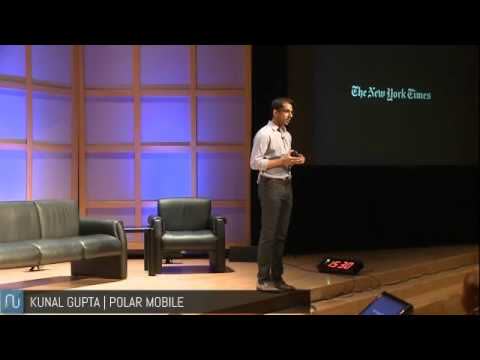
A show about the mobile industry and the people building it.
Canadian technology news for business leaders.
The national voice of Canada’s universities.
No conversations in this format yet.