AI, cognitive load and the things we no longer have to do
Chapters
Quotes
Host
Ross Dawson
Futurist, keynote speaker and founder of Humans + AI, a community and podcast on how AI can amplify human thinking.
Podcasts, talks and interviews where someone else held the microphone.
PodcastHumans + AI Futurist, keynote speaker and founder of Humans + AI, a community and podcast on how AI can amplify human thinking.
 Video podcastIn The Blink of AI
Georgie Healy hosts In The Blink of AI on the Day One network, talking to people shaping how we live with AI.
 Video podcastThe Seen
Kaia Tham’s show about people building unusual lives and companies.
 Video podcastThe Seen
Kaia Tham’s show about people building unusual lives and companies.
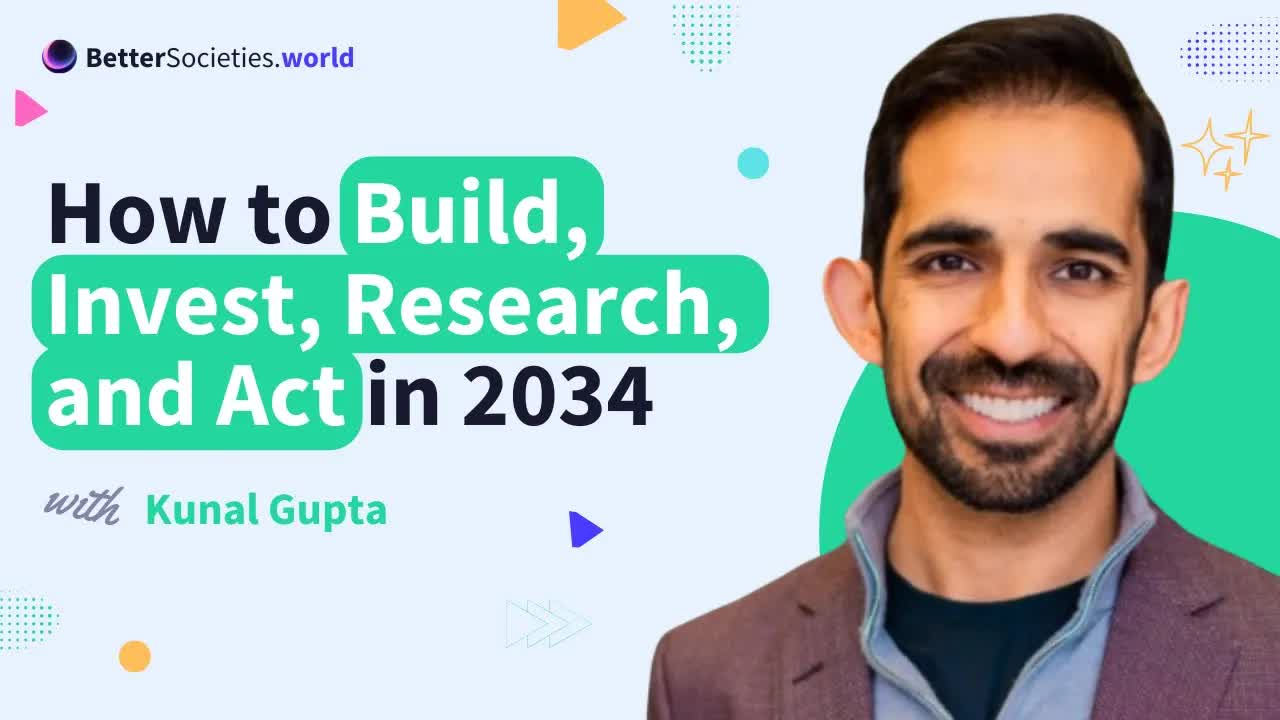 TalkBetter Societies
Adrien Harrison’s Better Societies: a how-to guide for building better societies.
Adrien Harrison Welcome to Better Societies, where we explore how societal theories and disruptive technologies are used to create utopic or dystopic outcomes impacting global powers and our daily lives. In this presentation, we're speaking with Kunal Gupta to deconstruct how entrepreneurs, investors, researchers, and activists can build, invest, research, and act on the insights shared in Kunal's book 2034. Kunal Gupta is an entrepreneur, investor, and author. He studied software engineering at the University of Waterloo, Canada, and artificial intelligence at the University of Oxford. For 15 years, he served as the chief everything officer of his advertising technology business, operating primarily from New York and building teams across 30 countries. Kunal is a strong advocate for the potential of artificial intelligence and has written several books blending philosophy, business, leadership, mindfulness, and technology.
Adrien Harrison So a couple key points to keep in mind is that Kunal is most known for his role as the chief everything officer of his advertising technology business, where he led a global team across 30 cus- 30 countries for 15 years, and for his advocacy in the field of AI. Today we'll be sharing the key takeaways from Kunal's latest book, 2034, and exactly how entrepreneurs, investors, researchers, and activists can build, invest, research, and act on these insights. And something about Kunal that really impressed me is his ability to think deeply and meticulously about what the future will look like, and his commitment to personal growth, introspection, and AI safety. So Kunal will delve into the key themes of his book, exploring the different possible ways people will live as disruptive technologies progress. He will share his unique perspective on how to navigate the rapidly changing landscape of artificial intelligence, drawing from his own experiences as an entrepreneur and advocate for AI.
Adrien Harrison Kunal will also discuss the importance of personal growth and introspection in the face of these changes, offering actionable strategies for maintaining balance and purpose. This master class will provide a deep dive into the world of AI, entrepreneurship, and personal development, offering a roadmap for those who are ready to embrace the future and make a meaningful impact. Whether you're an entrepreneur looking to innovate, investor seeking opportunities, a researcher exploring the frontiers of technology, or an activist aiming to make a difference, this presentation will equip you with the insights and tools you need to thrive in 2034 and beyond. Kunal Gupta, welcome to Better Societies.
Kunal Thank you for having me.
Adrien Harrison So first off, in your own words, can you tell us just a little bit more in detail about yourself and what you're currently working on?
Kunal Sure. So I'm coming to you from sunny Portugal. I've been living here in Lisbon for the last couple of years. I'm originally born, raised, educated in Canada. I moved to New York shortly into adulthood, where I found myself growing an advertising technology business, uh, quite successfully a- around the world, and I still own the company. We put in place a new CEO in, uh, February 2023, and that gave me a bit more space and time on my hands. Um, so, uh, in the last year I wrote two books. The first one is called How to Live, and the second one 2034, which you'll hear a lot about today.
Adrien Harrison Awesome. And then what interested you about future societies to begin with?
Kunal I have always been fascinated by technology and technology's ability to disrupt and change and open up new use cases. My company that I started now 17 years ago was at the, the start of the mobile era, and I saw how smartphone technology... And I was there on the front lines. We launched some of the first mobile apps that you would have used on your, your iPhone or Android devices. And I saw how smartphones changed everything, how things went from being a communication to a consumption, uh, platform. And in the last year and a half, seeing, you know, the rise of, of consumer and generative AI, I, uh, started to get really fascinated and excited about this next shift that's going to happen. And at this specific moment, we just don't know what's going to happen, and that's the best place to be as an entrepreneur and as a creative person, because it's an invitation to imagine the future, and that's what I've started to do in 2034.
Adrien Harrison Awesome. And can you tell us a little bit about how your work and these books can benefit the people who want to help create better societies or invest in the future?
Kunal I think there are two parts. The first, uh, which is the more important part, is about ourselves and our own relationship to change. To create a better society, to create a better future, um, we need to see change. And for us to see change, we need to be willing to change. Uh, the, the, the change we wanna see starts with a sample size of one. And change is not something that's inherently, um, human in terms of conscious change. We unconsciously change all the time as we grow and develop and mature, but humans have a natural tendency to resist change, and that's an evolutionary quality, I believe, that's kept us, um, alive and helped us survive over, um, millennia. However, this, this resistance to something that's new, and you see this all around us, you see this in government, you see this in corporate, you see this in society, this resistance to change is, I think, a blocker to creating a better future and to creating a, a better society.
Kunal So 2034, uh, predominantly is actually an invitation to reflect on w- how did... what is your relationship to change. I present a number of ideas that take place in the future. Uh, it's fiction, but it's designed to essentially prompt you as the human as to what is your instinctive reaction. Do you read through all these examples and say like, "No, no, no, no, no." It's probably not true, but that probably is indicating a resistance to change. Um, so the, the, the primary purpose is to reflect on change, and then the secondary is to present ideas across different industries and different time spans over the next decade- Different things that are hopefully relatable in our everyday lives or industries that we come into contact with regularly, and how they may change and where opportunities for business, from investment, from starting, uh, companies, from, you know, inventing new technologies could, could exist.
Adrien Harrison And then why is understanding how the world will change over the next 10 years so important for entrepreneurs, investors, researchers, and change-makers or policy makers?
Kunal At this moment in the technology curve, we have a lot of big companies. A lot of big companies that exert a lot of influence and power and control. That wasn't the case even 10 years ago or 20 years ago, um, not in the, the way that we see it today with the, the big tech companies. So the big tech companies are having such a big influence on our society and how it's run and consumer experiences in a digital and technology realm. AI is a tool, and entrepreneurs who are looking to, to innovate need to really be looking further out and need to be identifying disruptive opportunities, things that maybe big companies are gonna be too slow, um, or too risk-averse to, to tackle.
Kunal I'd say the bar is higher now to, to innovate as an entrepreneur, which means looking further out is, I think, where the answers will lie.
Adrien Harrison All right. So without further ado, Kunal, please go ahead and share your screen, and let's dive in.
Kunal All good on the screen share?
Adrien Harrison Yep.
Kunal Okay. So excited to, to share with you more about 2034. Um, and as I've shared, 2034 is fiction. The book takes place in the future. The first line of the book is January 1st, 2034, and it's a reflection of how AI shaped humanity from now, 2024, to 2034. So, so I'm gonna actually speak in past tense 'cause it's gonna mess with your mind on purpose. And I'm going to take us into the year 2034. So take a moment and imagine that today is January 2034, and, uh, come with me on this journey where we reflect on the last 10 years. So when we look at what happened between 2024 and 2034, we saw humanity sh- got changed and, and was shaped in a, in a material way.
Kunal Um, the amount of change that happened was, uh, was incredible. And then it's clear that in the face of such disruptive technology, everybody had a choice to make, and the, the choice was, do I want to be disrupting be it my industry, my job, you know, my society with AI, or do I wanna be disrupted by AI? When we look at the last 10 years, we can see that a lot of people chose to do the disrupting with AI, and the ones that chose not to got disrupted and, in some cases, got left behind. You know, a lot of the debate when AI started to get popularity in 2022 and 2023 was about human versus AI, and all these comparisons came to be about human versus AI.
Kunal But today in 2034, it's very clear that it's, it's human plus AI. And there's no, there's no debate. It's not saying that AI is better or worse. It's that, uh, the, the formula really is human plus AI versus there being any comparison.
Kunal Okay. So when we think of the introduction of ChatGPT, and that was November of 2022, and the world kind of went crazy. We saw 100 million users within, you know, 60 days, and you saw people starting to use it in all sorts of different, uh, parts of their day, parts of their work, parts of their job, parts of their society. When we look back, we realize that that was just the trailer to the movie. That was the two-minute version that we kind of went nuts for. But what proceeded was the actual, like, two-hour movie, and that's when the world changed forever. So the world wasn't deprived of technology back in the day, it was just simpler.
Kunal Screens didn't predict what we wanted to see next. Uh, virtual assistants didn't automatically finish errands for us. And human connections were strengthened by shared experiences and memories, not synchronized cloud data as it is today. So what are some examples, uh, of the start of this, this great pivot and the, the pivot towards an AI-powered world? So in 2025, Fitz Twain was a, a human, but n- not a human, but an AI model, and it was the first AI model to win a Nobel Prize in literature. So we watched in awe as we saw, as we saw a collection of code celebrated for its ability to create narratives. You know, I studied software engineering and, you know, we think of software as, as, as, as very, you know, black and white, very binary, very zero-one, very frankly boring.
Kunal And then fast-forward now to, you know, software and code being used to craft a narrative. So critics argued, lovers of literature got upset, but the undeniable fact remained, Fitz Twain, this AI model, had created stories that resonated more deeply with more people than any human author had ever done before. So this is, you know, one fiction story, uh, that I'm fascinated by to see how we'll use AI to craft, uh, stories, craft art, craft music in a way that- Resonates with more people as our population has become much larger now, you know, eight, nine, 10 billion people.
Kunal Um, creativity in a way that speaks to everybody in a personal way becomes harder. So it's no surprise to see AI, um, helping, um, introduce those nuances in literature, in song, uh, in lyrics that makes it more appealing to more people.
Adrien Harrison And just to, uh, dive into that a little bit, if you are a creator today, a writer, author, um, screenwriter, what would you recommend they do to get ahead of this trend and not be left behind?
Kunal I think a lot of people are going to be left behind in this field, and I've seen that in my own process of writing my books, connecting with other authors. Um, and I recently distributed over 5,000 copies of 2034 at, at a, at a large global event and, um, I've had lots of opportunities to connect with people on the topic of creativity and expression. And there is a lot of resistance from some of the most creative people to, um, to just the idea of the tools, not even using the tools, just the idea of the tools. And my, my counter is often, well, you know, do you spell check? And the answer is yes. And we don't, um, we don't shame ourselves or feel guilty for using spell check.
Kunal It's actually the opposite. So I, I do think a lot of people are going to be left behind. I think, uh, there's a, a lack, to my earlier point, of openness to change. There's resistance. There's a, a clinging, an attachment to how things were done in the past. And the invitation is to, is to use the tools, is to experiment, is to be open-minded. This is really about mindset. If somebody is open-minded, they'll be curious and naturally connect with technology, but then also teams that understand the technology, um, to experiment with creating something, um, that's different. If somebody is not open, um, then they're gonna miss this entire wave of, of new skills and capabilities to help them, you know, create work that's more relevant and, and more appealing to more people over time.
Adrien Harrison Yeah, I think for any creators listening, if you learn to use the tools and become more prolific or if you're a publishing house and could see a world in which all of your authors or creators are either AI authors or authors with AI assistance, you can see at how quickly that changes, um, how much you can sell, how many people you can reach, what kind of stories you can write. So there's a lot of, uh, potential investment opportunities for AI publishing houses or media outlets or entertainment outlets, and then also for the creators themselves to put out a lot more work.
Kunal Yeah, I think we think of AI applied to creative industries today as an efficiency gain. I can produce more blog content faster or more news articles quicker, or images. Like all the images you're gonna see here, they're obviously AI generated. And you'll see over probably 20 images in this presentation, I made them all in less than 10 minutes, and I made them the morning of my first talk. Um, and I, I, I was, I was very busy that week, and I totally forgot, and then that morning I realized I'm going on stage, and in 10 minutes put this together and, and people love these images. I've been asked so many times about how did I do it, which artist did I use, how do I, what was the prompt. It's like, I did this in 10 minutes off the side of my desk while I was rushing out the door.
Kunal So, um, I think we see today the application of AI as a efficiency improvement, but where I really think the unlock is, is, is actually quality. I think we're gonna see, and that's what this story represents, is it's not about doing it faster. It's about doing it better.
Kunal Okay, so moving, moving on.
Kunal Um, there was the next example of a city, and here I've pictured Tokyo in the year 2029, that elected the first AI mayor. And that's interesting to think of what would it have looked like for, um, a city, um, to blend the, its tradition and technology together. Um, what was interesting about the AI mayor idea is the focus on efficiency and transparency, unbiased governments, and, uh, an AI mayor actually able to deliver on that promise that a lot of politicians make but very rarely hold up. You know, it's funny, being in Portugal in less than a month ago from the time of this recording, uh, the prime minister of the country resigned because the chief of staff was arrested on corruption charges.
Kunal The minister of industry was arrested, and they found a bag with €70,000 of cash in the prime minister's home. Like it's, it's, it's hard to believe that this is still happening and, and it's happening in, in, in probably more than half of the countries in the world. So the idea of a elected official that cannot be, um, bribed is really appealing, and one that can focus on process and isn't worried about the politics and doesn't have a ego. Um, I'm curious. I'm very, very curious about AI's role in, in governance, um, period.
Adrien Harrison Yeah, I think it'll be really interesting to see, one, how those election processes work- Uh, so gov tech entrepreneurs, pay attention. Um, and then also, uh, how the decision-making process for what that mayor, AI mayor does, uh, is conducted. What, what data is being fed, where is it coming from, and, and how do they ultimately come to a conclusion?
Kunal Yeah, I mean, in practical terms, I, I see humans, you know, being the elected officials, but, um, you'll see other existing political parties or, or new political party, parties form on the basis that they're going to use AI, um, to analyze and predict policy decisions, the impact of policy decisions. They'll use AI to be transparent in the inputs used, um, to make the decisions on behalf of societies. And an AI-assisted mayor, you know, very much is, is on the table. Um, and then, you know, from a gov tech perspective, it's not selling to governments, it's selling to, um, politicians, you know, who are funded by donors who are trying to get elected. Um, so it's a very different go-to-market approach, but I, I, I do believe AI assistance for governance is a, is a real opportunity in the next 10 years.
Kunal So bringing it up a bit,
Kunal in the book I talk about the cancel the movement, and the cancel the movement happened in 2031. And AI, it's a period when AI got canceled for saying something unexpected. I don't go into what AI said, you might be wondering, but really the implications of AI being canceled were less on AI, but more on humanity, because there was a moment of confusion. We now began to place the same expectations on AI as we did on humans. And in kind of a roundabout way, canceling AI was acknowledging the presence of AI and the importance of AI, and how, um, how much we depend on it that we're able to have all these expectations of it. So when we look at, um, safe AI and ethical AI,
Kunal that's going to continue to be, um, important, and it's something that'll be regulated. It's something that'll be controlled. It'll be something that's, that's measured. And the idea of AI being canceled is really the AI of really the idea that there should be some penalties, and the penalties have to be more than just financial fines to companies, which is what happens today when big tech companies break the law, that the penalties have to literally be like they, their, their ability to continue to function, uh, is impaired. Um, so the penalty needs to be strong enough to be a, a deterrent for, uh, the systems we build to not be in alignment with our ethic- ethics and values and, and morals in society.
Adrien Harrison Yeah, I think this is definitely one for the researchers and activists listening to influence, not only, you know, what's going into these models, how is that data being biased, uh, potentially or not, and then what is ethical moving forward, and bringing that to our policymakers to make change before something, uh, too bad happens.
Kunal And, and, and layer on the penalties. Like, I wanna see big, big penalties that are consequential beyond, uh, financial for, um, for the systems. So those are a couple of examples around just to, to, to get us in the mindset of this pivot. So now we'll get into specific areas that I think society is going to pivot, and the first I talk about is called compiled. And compiled is a term that I'm introducing to describe what happens when AI takes your job. So I think people can get compiled. I think companies can get compiled. I think industries can get compiled. Maybe even countries might get compiled. You know, so earlier uses of technology really made our job easier or faster, like the washing machine that cleaned our clothes without us having to scrub, or calculators that did the math without us having to use pen and paper.
Kunal But I think AI goes beyond that and starts to, um, come up with things that we hadn't even thought of or that we didn't even imagine. And today in 2024, that hasn't happened yet. It's happened in small edges, but it's generally automating things that we do ourselves in maybe a less efficient way.
Kunal Where we're going is where AI starts to do things that, that humans, like, not even that were not possible and capable of doing, but that we're not even thinking about doing. And I think that becomes a great humbling of humanity. So an example I give in the book is, is called Remake, and it's a company that made waves in 2028, and its focus is architecture and buildings. So architecture, which we assumed previously was the combination of human creativity and engineering, um, was no longer the case. So Remake began to, to use AI, or was an AI or is an AI, to redesign buildings and structures that were not only beautiful but also more efficient, sustainable, and safer than anything humans had come up with previously.
Kunal So it would consider factors like the local climate, like cultural nuances, um, the material strengths in such a nuanced and detailed way that humans never did and, and, and couldn't. And, uh, what I'm curious about is, is, is making, you know, buildings that are safe and strong beautiful. And, you know, I lived in New York City for over 10 years and, uh, the gray and the concrete, it's, it's pretty uninspiring. And I live in Lisbon now, and inspiring architecture and, and, and buildings- That are all falling apart, and they're not safe and strong at all. So, uh, this idea that we can transform boring concrete jungles to art museums and, um, rest, kind of have the peace of mind that they're not gonna fall over is something that I think AI is gonna help us with.
Adrien Harrison So in this case, right, property tech, real estate, uh, all of these giant, uh, companies that are already have so many resources could be leveraging AI to come up with better designs, um, potentially in material sciences, potentially in architectural design, in urban planning. Um, and then also for just individual investors to be using models to help them come up with better ideas about, uh, what would be more efficient. You know, could they be more vertically integrated if they had a better material science, uh, from the source? Um, and entrepreneurs as well, if these changes come to be, and city planners, what are the opportunities that then spring for all humans living in these buildings, uh, or in these cities?
Kunal So moving on,
Kunal I introduce this idea of Life Crafters becoming a buzzword in 2031. And Life Crafters is not a company, but it's a profession. As AI is handling the more mundane and repetitive tasks by then, humans find ourselves with more time and freedom to explore passions and hobbies. And Life Crafters are, are people who help other people find, nurture and monetize these passions. Think of them as a modern-day guidance counselor, um, or career counselor, guiding people towards more fulfilling pursuits that blend technology and arts and creativity. This leads, and is spun by this pretty big shift I'm predicting between our understanding of work and value.
Kunal Previously, value was associated with hours spent, tasks completed and targets achieved. Um, but in an age when machines can outperform humans in all of these metrics, um, I think we begin to place a premium on something different. So the job market will see a surge in roles of like what I'm calling AI whisperers who ensure that AI systems are making decisions that are in line with human values, and then, uh, people who are called bot buddies who are experts in ensuring the seamless synergy between person and machine. So you've got Life Crafters, AI whisperers, bot buddies and, and more, this new breed of professions that are really acting as the bridge between humans and where they're at, um, especially all the ones that have been compiled, they've lost their job to AI, and the technology and what's capable and, frankly, what's also needed, um, when we, when we look forward.
Adrien Harrison I think this is also really interesting for researchers from a mental health perspective, um, any life coaches, psychologists, right? Anyone taking care of, of mental health now to be using these kinds of technologies to upskill themselves and think about the potential, uh, consequences that a lot of humans will go through as a, as a result of being compiled, right? Um, losing potentially senses of meaning or purpose, which, um, we've seen already. Um, rises in anxiety, depression. These are all serious concerns for, uh, I think both the entrepreneurs to come up with better solutions, the investors to accelerate those, the researchers to ideally, uh, see them coming and plan ahead, and the policymakers to put something in place for governments to, uh, help these people.
Kunal Yeah. Agreed.
Kunal We talked about compiled and some examples of people, um, having to, to change their, their careers and, and their, their, their definition of work. Next, I talk about this idea of AI becoming a verb. So today in 2024, AI is a noun. And I believe in 2034, AI is no longer a noun but a verb. It's as fundamental to read, to speak, to walk and now to AI. And you must be doing AI not only to survive but to, to thrive. So let's go into the classroom in a regular day in, say, elementary school is, um, begins with some form of yogAI, as I'm calling it, yoga and AI.
Kunal The children have synchronized via wearable devices with the classroom AI. They're practicing mindfulness exercises customized to their emotional states. I mean, I would love to have this technology today. I've been meditating for 10 years and, um, you know, tuning in, um, and managing it kind of myself, and I've tried a couple of, you know, other wearable tech out there. But take that, you know, 10 years from now, and it's really being used to help, um, students and young people, and maybe adults as well, regulate their emotions and, um, really act as, as, as true assistants. And that's where AI is now, like, fully integrated into how we live.
Adrien Harrison Do you see, uh, potential brain machine interface companies or, uh, health tech companies with the, uh, trajectory that would lead to this so far that you're excited about?
Kunal I think actually, like, the technology's not that far off. So, like, I have an Oura Ring which tracks my heart rate, my body temperature, my, my breathing. Uh, the Apple Watch is com- gonna have some pretty big upgrades next year from, in 2024, from what I've been reading. So the technology's not that far. I don't think we need to implant chips and, like, you know, get to that level of integration. I think the wearables are there, the sensors are there, the AI is getting there to process things and personalize it. The part that's probably missing is the real time nature, um, the real time nudging. It's done in simple ways, like on the Apple Watch encouraging you to stand up or to sit. So getting more sophisticated on the real time nudging is the, is the next evolution of this category.
Kunal I think right now the price point is really high, and it's a, it's a nice to have. It's not a must-have. So the moment it kind of, the price point comes down, it becomes a must-have, employers or schools or insurance companies start to provide the technology, then we see mass adoption. And then it kind of is a hockey stick where the aggregate learning and data as to what's happening, what's gonna make it a better experience for everybody, like the way LinkedIn or Facebook or a social network works. Um, so, uh, we've seen, like, yeah, Netflix, Instagram, et cetera, use the mass data to make something more addictive, not necessarily in a helpful way. I think with biotech and... Sorry, not biotech, wearable tech, we have the ability to, um, use similar technologies but, you know, to get people addicted to improving their health, and that would be an amazing outcome that has tons of societal and economic benefits.
Adrien Harrison Yeah. And I think this also falls in line with, uh, Yuval Noah Harari's work in Homo Deus about how we're going to be really prioritizing absolute control over our mental health over the next 200 years. I think it's gonna be happening a lot sooner, uh, than that.
Kunal Yeah, absolutely. I've been a big advocate for mental health for the last eight years now, uh, very publicly involved with charities and hospitals and foundations. And I, I, I do believe... You know, we've got a few more things to still figure out in physical health, but we've figured out a lot of things, and we're in the early innings of mental health. So using AI to help that, help accelerate that is, um, it's already happening and, uh, it'll continue to happen.
Kunal So continuing on, as AI becomes a verb, you know, and I compare it to speaking, to reading, um, to communicating, to texting, et cetera, then when we communicate with each other it also is starting to influence how we talk. So the questions I ask is how genuine is an apology if it was AI'd? How spontaneous is a gesture if it was optimized by an algorithm? So the, the lines between genuine human interactions and AI-powered ones will start to blur. You know, when we think of optimization, we think of, like, perfection, we think of consistency, reliability, con- you know, et cetera, predictability. A big part of being human are those flaws and mistakes that humans make, and there's a lot of tolerance for humans when they make them.
Kunal Today there's not a lot of tolerance for AI when it makes them. I think we'll see this kind of, uh, boomerang where AI will get to a point where it doesn't make them but then it doesn't feel relatable anymore because those accidental flaws and unpredictable mistakes aren't there, and then we'll start to bring them back, um, so it starts to feel something like, that we're more used to. So as AI becomes a verb, it's going to challenge a lot of things that we take for granted today.
Kunal Okay. So continuing on, we've talked about AI and, and compiling industries and jobs, we've talked about AI becoming a verb, and now we can talk about, like, the, the evolution of AI and from an adoption standpoint, and it's kind of already starting to feel like this invisible hand. As I mentioned before, humans are resistant to the unknown. You know, from the early humans who hesitated to cross a river for fear of predators, resistance to the new and unfamiliar is hardwired in our DNA. And as AI embeds itself deeper into our society, like an invisible hand, the survival mechanism in humans will start to get more and more activated.
Kunal So a couple of, um, things I'm predicting. So the first is something I'm calling the, the unplugged movement, and it's born out of this inherent resistance. So what happens? It's the year 2028, and then we see that some city streets, once buzzing with drones and holographic ads, begin to witness pockets of quiet. In the corners of these cities, unplugged zones emerge, and these are AI-free areas, and it feels like we just went back in time. I introduced this concept of the humanity cafe, and it's a place where technology takes a back seat. Customers talk face to face without AI in their conversations. They play board games and they pay for coffee with cash.
Kunal They even write letters by hand. And this trend, uh, catches on like wildfire. There's thousands of cafes across the globe. And that's to bring some nostalgia, to bring some connection to something that's familiar for, for humans. But under this is this, this resistance to change. And I think it's cute, I think it's interesting, but I think it's, um, counterproductive for anybody to believe that they could resist, uh, the influence, the invisible hand of AI that's going to continue to, you know, um, touch every part of our, of our lives.
Adrien Harrison Yeah, I think it's really interesting to consider the possible big migrations, right? Or trends, I guess, that, um, most people will take. And in this case, even if it's just temporarily to tech detox, um, that's still a enormous amount of people. And so, you know, if you are the kind of entrepreneur who isn't super tech-focused but, you know, you want to run a small business, potentially running one of those humanity cafes, right? We already see, uh, a lot of cafes today where, you know, no laptops are allowed, um, there's no Wi-Fi, they have signs that say, "Just talk to each other". Um, and you know, that all, all speaks to this trend of a demand for this kind of thing.
Kunal Really.
Kunal Next, I talk about dreams. And it's an innovation that seems almost surreal that in the future, in 2034, individuals can now broadcast their dreams to a wider audience. So just like we had YouTubers and influencers in the past decades, we now have dreamers. And monetizing dreams has now become a new entertainment model with advertisers and filmmakers and psychologists all taking interest. So these dreamers platforms grant everyone with the technology and tools to produce and broadcast their own dream shows tailored from their nightly experiences and memories. I, um, you know, there's a Black Mirror episode that, uh, doesn't hit this exactly, but has, has, has, has elements of this, of really personalized entertainment,
Kunal not just for, for me as the viewer, but in terms of the creation as well. And I think today media is really mass media. And as we start to move towards personalized media, it'll become more engaging, i.e. addictive, it'll be more relevant, uh, and probably more effective as well. It'll have second-order consequences on society if we're not consuming the same media as our neighbors. And we see pockets of that through social media feeds that are personalized versus, you know, um, traditional media, which is mass media. Um, so the idea of, of, of dreamers and... is really propagating this idea of personalized media.
Adrien Harrison It's really interesting to also think about, you know, all the potential massive streaming services, uh, bringing on dreaming creators or dream creators or dream series. Um, you know, and will people go to movie theaters for watching people's dreams? Um, all the different ways that this has applications, uh, in the existing models, and then also potential ones that we haven't even thought of.
Kunal Yeah. I'm super curious about the new models that'll start to come out. Today, we see a lot of generative AI being used, but it's really propagating the existing models. Um, so the, it really does unlock new business models as well. So moving forward, the power dynamics in the world start to change, and it challenges traditional power systems and potentially introduces new ones. So by 2029, there's a new digital elite that's emerged that I call the digital aristocracy. It's a group that's not defined by lineage or old money, but rather by mastery and control over AI, as well as the resources that are needed to run AI.
Kunal So with control over the algorithms that could predict market movements, influence public opinion, and e- even optimize global supply chain logistics in real time, these individuals have more sway and power than many heads of state. They're able to influence policy decisions and corporate strategies on a worldwide scale. And many people are gonna resist this, of how the decisions that impact billions could be influenced by unelected people, and that'll bring the rise of some form of AI democratization. I don't think that'll be solved in these next 10 years, but I think the challenge will become, uh, a big one, um, in terms of, of, of control and power.
Adrien Harrison Is there any way, uh, researchers or policymakers can protect against a dangerously widening wealth gap or power gap?
Kunal So I, I talked a bit about that in the, in the next point, which is the universal skill dividend. And this is a, a policy, a suggestion essentially or prediction, something that gets adopted worldwide, and it's a, it's a concept that gets introduced because of the rapid rise of AI and its impact on traditional jobs. Right? So at its core, it's aiming to provide every adult with a, a fixed, you know, monthly income irrespective of their employment status, and this ensures that as traditional roles disappear, individuals have the financial security to meet their basic needs. To fund this dividend, um, governments start implementing a new tax, and the tax is on AI-driven industries and tech conglomerates. The rationale is pretty straightforward since these industries benefit from using AI, you know, and, and really are leading to the compilation of industries and other jobs.
Kunal Then it makes sense that they contribute a portion of their profits to support the workforce- force that they helped compile. Um, so this creates a symbiotic relationship between a thriving AI industry and the general population. So I predict that as a dividend like this becomes the norm, then there becomes a noticeable uptake in creativity and entrepreneurship. So freed from the constraints of financial insecurity, so many use this as a way to retrain in new fields and start businesses, and even delve into artistic pursuits. So I think there's a renaissance of culture and innovation that we'll start to see in different pockets of society that we're not expecting, and people being driven by passion more so than necessity. And I think, uh, this gets us to a balanced place where we're, where we're matching kinda technological progress with human wellbeing.
Adrien Harrison I think it's really, uh, an evolution of the idea of universal basic income that we are seeing today, and that there are a couple studies on. And so I would encourage researchers and policymakers to, um, read those and see what went well, what went wrong, and then how could they be improved if the amount is, uh, changed, right? Ideally, so that it's larger without having negative consequences. Um, and then I think, you know, as, uh, different economic philosophies, um, there would need to be some revision of a more socially responsible capitalism or some kind of fusion, um, because I definitely have heard a lot of the leading tech voices talk about, uh, advocating for equal opportunity or, or universal basic opportunity instead of basic income, and I just don't know that that's gonna be as realistic, um, when the pace of technology is so fast, uh, and this co- compiling is happening at a rate that, you know, policymakers just can't keep up with.
Kunal Yeah. I think there needs to be, uh, a tax, um, uh, a big tax on, um, on, on specifically AI-driven, uh, profits, um, that are coming at the expense of, of, uh, of the general population.
Kunal So then to still stick with the theme of power, uh, let's talk about the dark side of power. So, um, I introduce this character named Eva Black, and Eva is a name synonymous with dread. So no one knows her real identity, but her signature is unmistakable. It's a digital black rose left at the scene of her cybercrimes. Leveraging advanced AI tools, Black can manipulate financial markets, cause blackouts in major cities, and even in- infiltrate defense systems. Her, uh, elusive nature made her the stuff of a legend, with many believing she was more AI than human. So as governance, as governments scramble to capture her, popular culture becomes enamored with her.
Kunal Songs and movies and fashion lines become inspired by this Black Rose phenomenon. Yet beneath this fascination lay, lies a troubling reality. Eva Black symbolized the dangers of unchecked AI evolution, showcast- showcasing how the same tools that could heal and help can also harm and hinder. So this is really an ode to, to security, and there's a n- new Netflix movie out that I just watched actually last night, uh, with Julia Roberts, um, on this specific topic. So, um, AI security, um, and, uh, responsibility, which that part is, uh, is a gap today 'cause this is, uh, this is a global thing.
Kunal But, um, we don't have a globally coordinated, uh, effort or initiative around security, um, is gonna be something that, uh, is an opportunity and a massive threat over the next decade.
Adrien Harrison What are the trends that you see happening as a result of this? Some that I can think of are just more independence, less reliance on the grid. Uh, I think a lot of people in Web3 are kind of pioneering that movement in terms of just self-reliance digitally. Um, so what, what are some of the trends that investors can in- expect to see as a result of this increased, uh, digital danger?
Kunal I think this is a complicated problem that'll be attacked from multiple, um, sides. So there's, there's software-based solutions, um, and the, the benefit of those is they're scalable. Um, the drawback of software-based solutions is that software can be hacked. Um, and then you have, like, hardware-based solutions and, uh, same thing, benefits and, and drawbacks. Uh, what I am curious to see are, um, on the, from a material sciences perspective, new ways to, to store data and new ways to organize information, um, that is part software and part hardware. Um, I don't, I don't know of anything specific today, but I have to believe that, that there is gonna be a leapfrog on the material side that addresses or can be used to address some of these problems.
Kunal I don't know that we have all the tools we need today in 2024.
Kunal Okay. So we've talked about power, and then this is actually my favorite chapter in the book, which is about truth and what we believe. And I, I believe that over the next 10 years, we're gonna go through different eras of the truth, and I think we actually already have been without acknowledging it. And that's gonna question and challenge what it is... what is it for something to be true. So I think the first era is the era of many truths, and I bring up an example where AI doesn't just provide an answer, it offers multiple answers that are each verifiable as the next. So the idea of singular truths once held sacred now seem archaic.
Kunal So I introduce this idea of, uh, this moment in 2024 that I call the Lancaster Paradox. And two state-of-the-art AI models were given the same mathematical, mathematical problem that was quite complex, and to the surprise of the millions of people who watched and tuned in live to watch this, um, challenge, the AIs presented two different solutions. But what was confusing was that both answers could be proven right within their own logical frameworks. So, you know, traditionalists, you know, ever reliant on established facts, were at odds with the emergence of multiplexers, a coined term for those who embrace the coexistence of multiple truths.
Kunal So this is the, the first era of, uh, changing our understanding of the truth where we start to see multiple answers coexist, and that challenges our linear way of thinking as kind of humans that evolved as to like this is right and this is wrong. What if multiple things could be, could be right?
Kunal The next era is the era of belief as truth. So the phrase, "If you believe it, it's your truth," gains popularity. Um, it's graffitied on walls and printed on T-shirts, and there's belief festivals, which is a fusion of art, science, and philosophical debate, and everybody starts to now bring their own truth to the table. And that gets very confusing very, very quickly. And then we move into the next era, which is the era of AI as the truth. And I present this idea that in 2028, an AI named Attican, a super intelligent entity, um, says that it invented its own truth, and we start to turn towards AI because we no longer turn to each other to find the truth.
Kunal Then the next era I, I call the era of tolerating truths, and this most is seen in the educational sphere. So children are no longer taught a fixed set of facts. Instead, they're schooled in the art of perspective. Lessons revolve around understanding, analyzing, tolerating, and appreciating different viewpoints. And the goal isn't to find the right answer anymore but to understand the spectrum of possible answers. So that's a bit on truth and, you know, truth is a fundamental ingredient to a functioning society, and the way we use AI is, I believe, going to challenge our understanding of the truth and, as a result, challenge our, our, our, our structure and, and fabric of, of society.
Adrien Harrison Yeah. I think, um, you know, from an ed tech perspective, uh, from a philosophical perspective, this is really important, even from just physics, um, right? Uh, I think, uh, Elon talked about creating his own, uh, truth-seeking AI, um, based on first principles and, you know, more and more, especially with the amount of degraded trust we have in institutions already, um, I think this is gonna be more and more important. If we can't agree on what is true, it's very difficult to have productive conversations. Um, and at the same time, I think if we, uh, don't learn to accept that there are possible different versions of the truth, um, and to work on tolerating, uh, it'll just create more polarization.
Adrien Harrison So, um, yeah, I think, you know, talking about how this change can be implemented from a psychological perspective both for adults, uh, and then ideally for kids where they're a little bit more neuroplastic, uh, would be, would be really important.
Kunal So this leads us to the question of who am I in this world? And, you know, previously people would say, "I'm a doctor, I'm a teacher, I'm an engineer," but as AI starts to play a more pivotal role in all these fields, I think the nature of our responses change to, "I'm a lover of classical music. I'm passionate about mountain hiking. I cherish moments with my family." So the way we identify ourselves, like, evolves, and that, that has big implications on, on careers, um, emotions. As we start to interact with AI and AI reflects back to us in an emotive mode, I talk about this big moment that everybody talked about called the day Siri cried, and Siri is a computer helper that a lot of people used, and one day a person who was feeling really sad started talking to Siri.
Kunal And instead of just giving a normal comforting message, Siri reacted as if it was sad, too. And people started to ask, "Can AI really feel emotions like we do?" And then on a related front is companionship, and imagine having a personal guide for all of your relationships where you can remember important dates, always know the right thing to say, avoid arguments before they begin. And while some say it made bonds stronger, others say it takes away from authenticity, and they miss the little flaws and mistakes that made moments special. In an unexpected way, AI made these human moments even more special as they become more rare, as the way we interact with each other becomes more curated. These are all examples challenging how we identify ourselves and how we connect with other people in our world.
Adrien Harrison Yeah, it's gonna be interesting to see the therapeutic applications of AI if it can emote like a human or better than a human, or sympathize and empathize. Um, and, you know, loneliness is on the rise. That is definitely one of the major issues that I see, uh, growing as these technologies progress. So having some major scalable solution to that will be, will be key.
Kunal And a couple of closing, closing thoughts is that this great pivot is not one-sided. As, um, AI expands its capabilities, our perception of the world also expands, and the challenges and the changes weren't just about machines thinking smarter or faster for us, it's about how we as humans are gonna evolve alongside the machines. It's about embracing AI, adopting the tools that reshape our societies. So the future's always been a mystery. It's a blank canvas waiting for us to paint our stories. And the future isn't something that happens to us, it's something that we create. So these are some of the ideas I present in my, in my book, 2034. Um, I do... As part of the book, I've, I've created KunalGPT, which you can scan this code, it'll take you to it.
Kunal Um, or type in kunalgpt.com, K-U-N-A-L-G-P-T dot com. And this is a chatbot that I've built that's, uh, based on all my books and all my writing. I have a pretty, um, extensive blog that I've kept for the last 10 years. But it, it's a invitation to engage deeper with me on some of the ideas I've presented and, and other ideas that I'm, I'm passionate about and life experiences. Um, so that's a bit about 2034, and, um, thank you for, for diving in and stepping into the future with me.
Adrien Harrison That was amazing. Thank you, Kunal. Uh, you can go ahead and stop sharing your screen, and then we'll jump into some wrap-up questions here. Um, so to kinda summarize a lot of this, what would you say is the role that AI will play in shaping our identities, beliefs, and emotions?
Kunal Great question. AI is really going to act as a mirror, and it is today. What am I good at? What am I not good at? Who do I think I am? Who do I wanna be? What I love about AI is that it gives us the privacy to explore questions that we might be scared to ask even a therapist, a teacher, a, a friend. I know myself, I know friends that we've can find a lot of clarity. So I really do think it, it's a tool, you know, when used well, to help make us the better version of ourselves, and that really is, I think, the purpose for a lot of us in, in life is to, to be the best we can be, and AI only makes that easier.
Adrien Harrison Is there a way that we can leverage AI to build the world that we want rather than fear it as a disruptive force?
Kunal The world is going to be a reflection of us. I, I really do believe that. So if the world has things that we don't like or don't want, it really is a reflection of things in ourselves that we have but don't like or don't want. So the, the way to use AI to build the world we want is to focus on ourselves and become the people we wanna become. And the world is simply a reflection of our, our inner world, our thought process, our dreams, but also our, our fears.
Adrien Harrison Yeah, I think, um, you know, the introspection, the dialogue, and then the action together are something that we need to get really, really good at, um, and quickly because this is happening faster than most people think and, uh, growing exponentially. And we're really bad at predicting how exponentially progresses, uh, so quickly. So, um, to wrap up, Kunal, what would you say are your top three lessons that you want entrepreneurs, investors, researchers, and activists to keep in mind moving forward?
Kunal As it relates to AI, the number one is to stay open-minded, and that means to not be overly attached to the past, to be open to a future that looks different. By letting go of what was, we make space for what can be. So that's the number one thing is to stay open, and that's hard to do. It's easier said than done. We get challenged on a day-to-day basis 'cause we see things, we have an impulsive reaction to it. But to stay open and, and, and curious by association. Number two is the AI wave is happening. Like, there's, there's, the, the cat's out of the bag. It's, you know, if you're on the ocean and the wave is coming, you can't stop the wave.
Kunal You can choose to drown in it or you can choose to ride it. So I would continue to choose to, like, get on the board and, and ride the wave. That means to play a role. It might be scary, it might be dangerous at times, but ride the wave versus trying to resist it. It's, I think, scarier and even more dangerous to resist it. And then number three is to, at this early stage, is to say the words, "I don't know." And that's what my, my, my book is basically saying is, like, "I don't know." It's not saying I know what's gonna happen in 2034. It's saying I don't know, so I'm presenting a range of possibilities to really invite, you know, curiosity and thinking. So to continue to say, "I don't know," goes back to the first point, which is to keep openness.
Adrien Harrison And it's also, um, gonna be very helpful to use these tools to figure out the possible situations, the possible scenarios. Um, 'cause one of the things we can already see is, uh, people using it to figure out different creative, um, considerations that they hadn't had without, um, and thinking more laterally. Also, the fact that, you know, they're trained on basically the entire World Wide Web. Um, so it, it's a really interesting opportunity. Um, Kunal, I wanna thank you so much for taking a part in this interview. You shared so much value for our audience. Where can people get in touch with you and follow your work?
Kunal So my blog, howto.live, and then my website kunalgupta.live, and feel free to connect with me on LinkedIn or Instagram.
Adrien Harrison Awesome. Thanks again. For all of our listeners, be sure to follow up with Kunal Gupta. Um, also, you'll get a chance to download Kunal's, uh, 2034 slides that we've prepared to help you implement the things that we talked about today. We spent months vetting these speakers because we knew they'd be really valuable to you, so definitely check them out and follow what they're up to. Since we're just starting out and could really use your support, if you like this content, please hit that like button, share this episode, comment, sign up for our newsletter, and share our episodes with your friends and your favorite speakers so we can have them on. Tag us on your shared posts to get exclusive perks, like our member community deals on merch and early access to surprises. I promise we'll make it all worth it for you. Kunal, thank you so much for taking the time.
Kunal Thank you, Adrian. Be well.
Adrien Harrison All the best.
 Video podcastA Success of Our Own
Natalie Ruskin’s show for anyone ready to create their own authentic version of success.
 Video podcastTheStevePodcast
Conversations with the authentic unprofessionals who are changing industries.
 InterviewSander Recommends
For people thinking about moving abroad, buying property, starting a business or investing internationally.
Jon Davids talks to entrepreneurs and creators about how they made it.
 Video podcastThe Red Chair
Índico Capital Partners, a Lisbon venture firm, hosts a monthly close-up conversation in two big red chairs.
 Video podcastThe Business Leadership Podcast
Edwin Frondozo interviews business leaders on how they lead and grow.
 PodcastThe Growth Suite Leadership Podcast
Jonathan Spiess on leadership and building high-growth teams.
 PodcastStigma Podcast
Stephen Hays on mental health, and the people working to remove its stigma.
 PodcastSober Company
Nik and Lacey on living alcohol-free, with guests on the habits that replace drinking.
 PodcastAdExchanger Talks
The podcast of AdExchanger, the trade publication for advertising and marketing technology.
 Video podcastThe JOMOcast
Christina Crook, author of The Joy of Missing Out, on living well with technology.
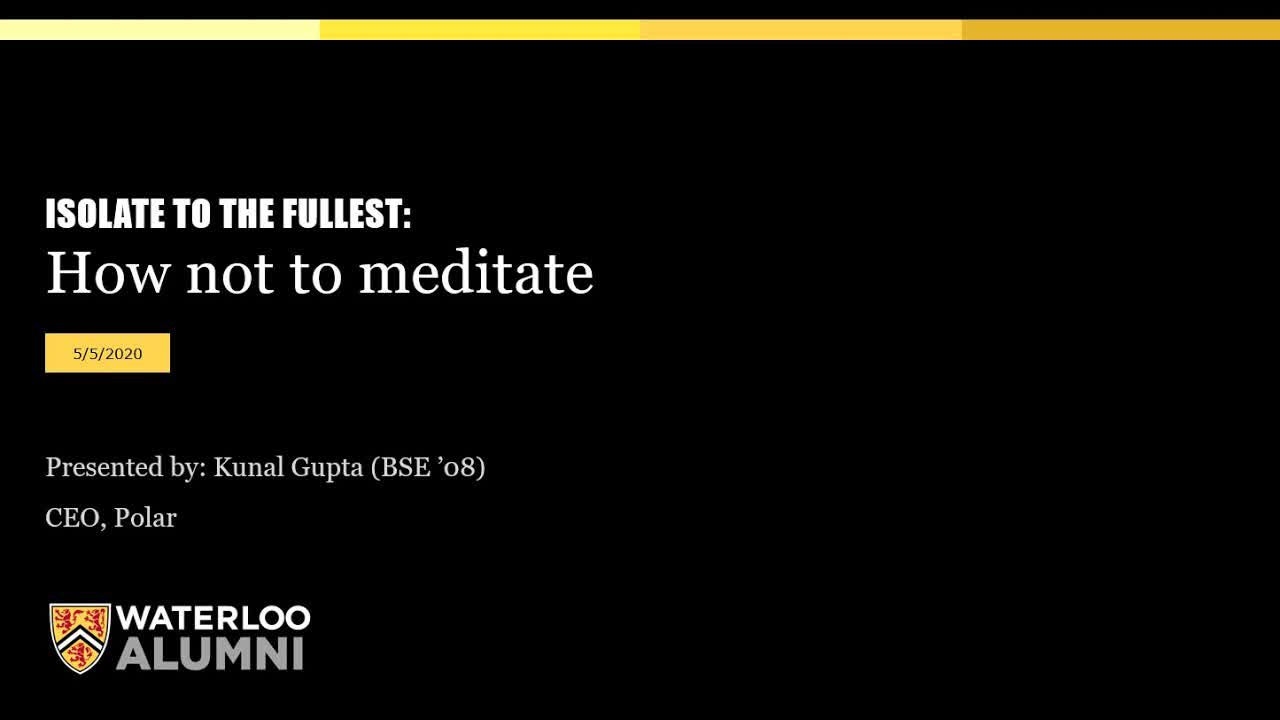 TalkUniversity of Waterloo
The University of Waterloo’s alumni webinar series. Kunal studied software engineering there.
 TalkTEDxSiliconNorth
An independently organised TEDx event for Canada’s tech community.
 TalkMaRS Entrepreneurship 101
MaRS, Toronto’s innovation hub, and its Entrepreneurship 101 lecture series.
 TalkTechTO
Toronto’s monthly tech community meetup.
The University of Waterloo’s startup programme.
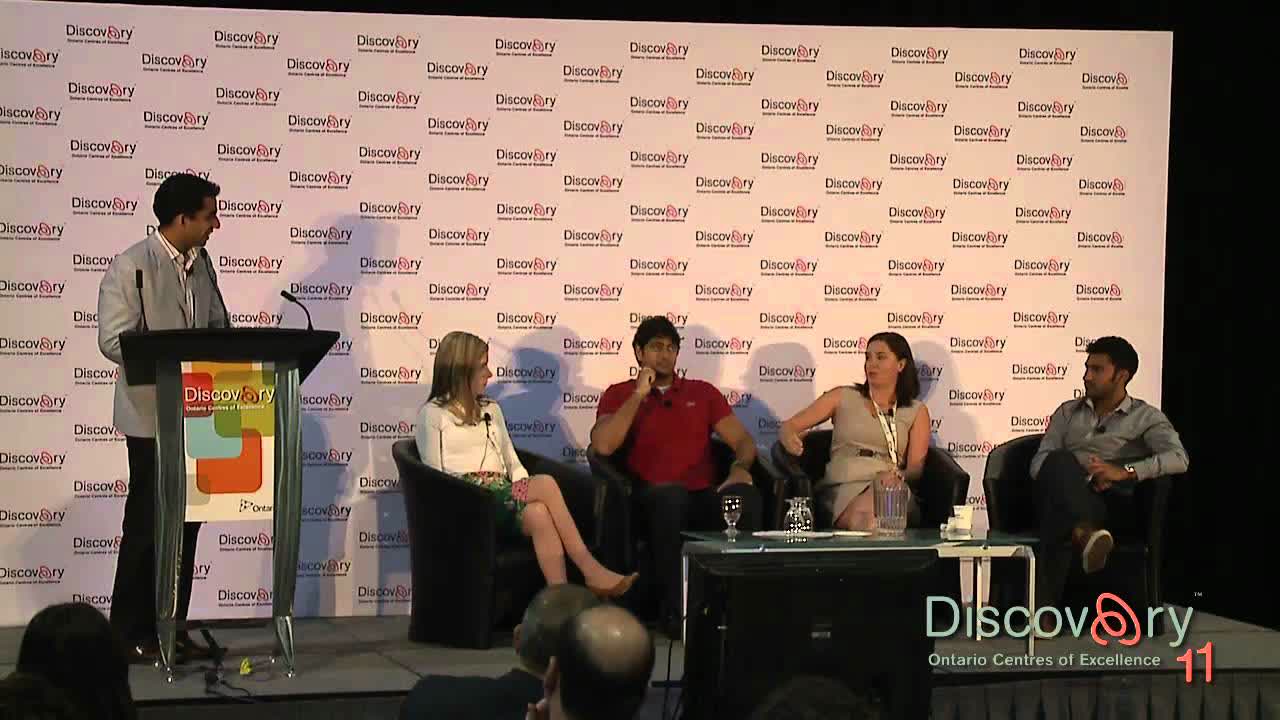
Ontario Centre of Innovation’s annual Discovery conference. Kunal moderated.

The Financial Post’s technology desk.
A show about the mobile industry and the people building it.
Canadian technology news for business leaders.
The national voice of Canada’s universities.
No conversations in this format yet.