AI, cognitive load and the things we no longer have to do

Chapters
Quotes
Host
Ross Dawson
Futurist, keynote speaker and founder of Humans + AI, a community and podcast on how AI can amplify human thinking.
Podcasts, talks and interviews where someone else held the microphone.
PodcastHumans + AI Futurist, keynote speaker and founder of Humans + AI, a community and podcast on how AI can amplify human thinking.
 Video podcastIn The Blink of AI
Georgie Healy hosts In The Blink of AI on the Day One network, talking to people shaping how we live with AI.
 Video podcastThe Seen
Kaia Tham’s show about people building unusual lives and companies.
 Video podcastThe Seen
Kaia Tham’s show about people building unusual lives and companies.
 TalkBetter Societies
Adrien Harrison’s Better Societies: a how-to guide for building better societies.
 Video podcastA Success of Our Own
Natalie Ruskin’s show for anyone ready to create their own authentic version of success.
 Video podcastTheStevePodcast
Conversations with the authentic unprofessionals who are changing industries.
 InterviewSander Recommends
For people thinking about moving abroad, buying property, starting a business or investing internationally.
Jon Davids talks to entrepreneurs and creators about how they made it.
 Video podcastThe Red Chair
Índico Capital Partners, a Lisbon venture firm, hosts a monthly close-up conversation in two big red chairs.
 Video podcastThe Business Leadership Podcast
Edwin Frondozo interviews business leaders on how they lead and grow.
 PodcastThe Growth Suite Leadership Podcast
Jonathan Spiess on leadership and building high-growth teams.
 PodcastStigma Podcast
Stephen Hays on mental health, and the people working to remove its stigma.
 PodcastSober Company
Nik and Lacey on living alcohol-free, with guests on the habits that replace drinking.
 PodcastAdExchanger Talks
The podcast of AdExchanger, the trade publication for advertising and marketing technology.
 Video podcastThe JOMOcast
Christina Crook, author of The Joy of Missing Out, on living well with technology.
 TalkUniversity of Waterloo
The University of Waterloo’s alumni webinar series. Kunal studied software engineering there.
 TalkTEDxSiliconNorth
An independently organised TEDx event for Canada’s tech community.
 TalkMaRS Entrepreneurship 101
MaRS, Toronto’s innovation hub, and its Entrepreneurship 101 lecture series.
 TalkTechTO
Toronto’s monthly tech community meetup.
The University of Waterloo’s startup programme.
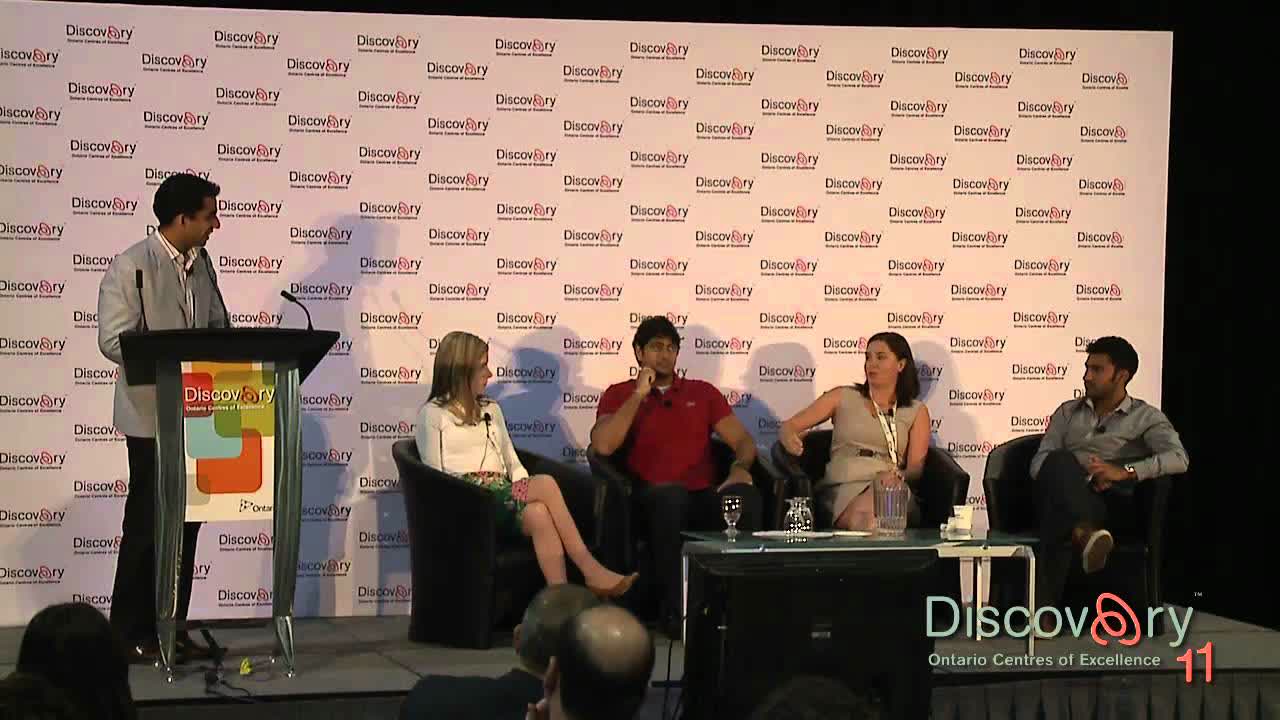
Ontario Centre of Innovation’s annual Discovery conference. Kunal moderated.
The Financial Post’s technology desk.
A show about the mobile industry and the people building it.
Canadian technology news for business leaders.
Brian Jackson I mean, why don't, why don't you just talk about, um, while we're waiting for people to join in here, if they wanna watch, tell me about the, uh, celebrations you're having in the office this week. I, I was seeing that really fancy cake that was decorated f- with your new branding.
Kunal Yeah. Yeah. A, a few weeks ago, we started... We announced it internally with the team and to our investors, and everyone got really excited about it. We set the date of July 29th. So on Monday morning at around 11:00, we got the entire company together, surprised them with this really fancy cake. It was a set of cupcakes with a layer of icing on top of it and our new logo, uh, very similar to the old logo, but dropping the word mobile. And that allows us to, to keep the history, uh, of the company and the traditions that we've built up over the last six years of being in business, and the team's pumped and excited.
Brian Jackson Okay, great. So I'm just tweeting this out again so people will know that we're going here.
Brian Jackson So you're being busy this week with, uh, other media interviews about the product launch?
Kunal Yeah. Yeah. We've, we've had quite a bit of press coverage. It's a, it's a big launch, and we've been talking a lot about native advertising. For the last few months, we've been in the market working with customers, talking about native ads, and it is a very hot topic. It's top of mind for pretty much anybody within media, anybody within marketing. They're trying to understand how to use native advertising for their business. They're trying to understand how to play in the space. Polar coming out with a platform specific for native advertising is a new concept. There are not a lot of companies doing things similar to what we're proposing to do, and the companies in the space are all fairly different, but all targeted towards the same objective of how do you play in the native advertising space as a traditional media company.
Kunal So it's been a busy week. We were in, uh, we were in New York a couple days ago meeting-
Brian Jackson Yeah
Kunal ... with some of the bigger publishers and doing the rounds. We're in New York again next week, um, and the week after that, so we're constantly, constantly on a plane out and about.
Brian Jackson Okay, great. So why don't you tell me about the rebranding? And, uh, you, you were Polar Mobile, of course. Now you're just Polar, so you've abbreviated the company name. Why would you do that?
Kunal Yeah. So Polar as a company, we've been around for over six years now, and when we started our company six years ago, this was at a time when the mobile space was nascent. We barely had smartphones. Applications were nonexistent, and we built up our brand, we built up our customer base in helping big media companies all over the world get onto mobile devices. The last six years, we've learned a lot about media. Uh, we've now worked with over 420 publishers in 12 countries and have helped them take advantage of the rise of the adoption of smartphones and tablets by providing a platform to media companies, like the Toronto Star, uh, and others to get their content onto mobile devices. We started to look late last year at new ways to drive revenue for our customers.
Kunal Mobile advertising today has a lot of challenges. The biggest challenge today is consumers are not adopting it at a rate, and marketers, as a result, are not spending the same budgets that they are spending online. We started to look and explore the concept of native advertising and really content-driven and sponsor-based content, and, uh, we s- we also earlier this week announced MediaVoice, our new native ad platform. To your original question, the reason for the rebranding was driven by the fact that MediaVoice, our new platform, is across every screen. It's not mobile specific. It is coming from a mobile background and history, but is across smartphones, tablets, and desktop. It felt important to lose the word mobile from our brand, keep the word Polar, given our long history, uh, and rich history in working with media companies, and the market is really excited about our new product and the new offering, and the team is excited about the future of the company.
Brian Jackson Yeah, okay. That makes a lot of sense, Kunal. So, uh, y- you're talking about this product, and really that's the main reason for our interview today. So tell me about, uh, native advertising. You're saying you're launching MediaVoice to help advert- to help publishers with native advertising, so I think it's important that we define that.
Kunal Native advertising is a new form of advertising. If you look at the digital advertising landscape, essentially ads on screens, traditionally you've seen a lot of banner ads, banner ads that users are generally trained to ignore. We think the banner is dead. It's not dead. We think it's very, very sick. There's a number of challenges with banner advertising today. Engagement from a user standpoint is low. Effectiveness from a marketer standpoint is challenging, and from a publisher standpoint, the rates are plummeting very fast. Uh, publishers are not making a huge amount of money off of banner-based advertising, and that's traditionally where the budgets are, uh, have been, but in a limited fashion. Then you look at other forms of digital advertising.
Kunal You've got banners. You've got video ads. You've got rich media ads. You've got full-page interstitial ads. These all represent different forms of display advertising. We think native advertising is the next logical evolution of the digital advertising landscape. So what we mean by native advertising is really ads that are, that appear native to the experience, and the experience in two ways. The user experience, and that's really content, uh, as well as the context, and that's where relevancy comes in. So on the first piece If you look at the strategy that Twitter and Facebook and others have taken with their ad products, you'll see something like a promoted tweet on a Twitter stream. So that's an ad that looks and feels like a tweet that's promoted within the stream.
Kunal It's a paid placement. With Facebook, you'll see sponsored pages and sponsored app downloads, sponsored posts and stories. That's once again content that feels native to the Facebook experience. It feels and looks like content, but really it is an advertisement. Online publishers like BuzzFeed and Forbes have taken a similar strategy of content-driven advertising. What's important in all these cases is for the user to clearly know that it is an ad, that it is paid by somebody to be placed in that position. You'll see on any site that's running native ads today some form of demarcation that this is branded content or sponsored content or brought to you by or sponsored by or promoted by. There's some cue visually through color or through text or through a logo to the user that, uh, this is not coming from the editorial team within a publisher, but it's coming from the marketer or the advertiser.
Kunal I think the other aspect of native advertising is relevancy, content that is relevant to the user. So if I'm reading the auto section of the newspaper, I'm most likely to engage with native ads that are relevant to me as somebody who's reading that section, if I'm reading sports, et cetera, et cetera. So native advertising is catching on. The engagement rate is much, much higher than traditional banner advertising from what we've seen so far. The results are very encouraging when you look at how social media giants like Facebook and Twitter are monetizing their traffic using native ads versus traditional banner ads.
Brian Jackson So am I oversimplifying it if I were to say, like, we're moving ads from the ad space to the content space?
Kunal A little bit. I, I would say that what we're doing is taking ads that traditionally were display and turning them into content, and then the way they're getting integrated into the user experience feels native. It feels a part of the experience versus something that feels like it was an afterthought. When you look at a display banner ad that's at the top of the page or at the bottom of the page, it's very clear that it was an afterthought. They thought about the page first and the experience for the user with the content, and then slapped a few ads on the screen. With native, it's a different approach where we think of the ad as part of the experience for the user, part of the value for the user, and it's a different way of thinking about it. Uh, and it is showing through the user experiences you see. It's through site relaunches the major publishers are having where they're thinking of the ads as part of the experience from day one versus after the fact.
Brian Jackson Yeah. So you say part of the value for the user, but do ads really provide value? I mean, people use ad blockers online. They do everything they can to avoid advertising, right? So are you looking to change the way people feel about advertising?
Kunal We're looking to en- enable the industry with this new ad format. Uh, it'd be very... We wouldn't be able to... We're very shortsighted to think that Polar as a standalone company would change the way the entire, uh, industry feels about advertising, the way the users feel about advertising. But I think what we're seeing is a path that could and hopefully will help users see the value in ads, but more importantly, encourage the advertisers and the marketers and agencies to give value to the users. Up until now, advertising has generally been an interruptive experience. TV advertising is the case in point of that. A TV ad interrupts your experience while watching your favorite show. Online display ads, especially interstitial ads or full-screen takeovers, interrupt your experience when you're going from one page to the other.
Kunal Native advertising is not interruptive. It's meant to flow with the experience, and it's completely opt-in. You're not getting an annoying pop-up. You're not getting interrupted. You're getting a bit of information about the content, like a headline or an image or a summary, and then as a user, you're opting in to choose to engage with that content, and the results are showing that users are choosing to engage with native ad content much more than traditional ads.
Brian Jackson Okay. Thanks for explaining that. And, um, tell me about how you graduated this Media Everywhere, uh, to be... or you graduated this from your product that exists already, Media Everywhere. It started as a feature there, and now it's its own product, MediaVoice. So can you explain why it graduated to its own product?
Kunal Absolutely. At, as Polar, we provide two platforms. Media Everywhere is our core platform. It's used by publishers around the world to launch mobile apps and sites. What it is is an HTML5-based platform that makes it easy for a publisher to get their content across all the different mobile products and devices through both applications and websites. We started to look at native advertising as a feature on Media Everywhere, and we had launched that a few months ago with some of our customers. The customer feedback was so positive and the market interest in our native ad functionality that we decided to roll it out as a standalone platform called MediaVoice, and our MediaVoice platform really aimed at solving the problem for publishers of how do you deliver and scale native ads across all of your properties to support multiple clients and advertisers?
Kunal If you look at how big publishers are doing native advertising today, they're generally hacking together existing systems, be it the content management system as the primary tool. That introduces a lot of workflow and operational challenges for a large publisher to build a scalable business off native advertising, and that's really where our prob- our platform is solving problems for the market. It's helping them drive new revenue off this new ad format, which they're desperately looking for.
Brian Jackson Okay, thanks.
Brian Jackson So tell me about how customers actually use MediaVoice. What is the user experience like?
Kunal Our customers are publishers. Publishers, some of the publishers we announced in our release earlier this week include The Globe and Mail, the Toronto Star, Postmedia, Fight Network, and, and others. The way that these publishers use our platform is it is all self-serve. They have the ability to, uh, use their internal workflow, their internal teams, their internal infrastructure to serve native ads. Our platform sits on top of existing ad infrastructure like DoubleClick provided by Google, which is a common display ad server used by a large portion of publishers in the market. Um, so we've integrated seamlessly with the existing tools that they use. From a process standpoint, fairly simple. We've got a front-end plugin that a publisher will integrate onto their website, and that allows them to define where they want the native ads to show up.
Kunal And we've got a back-end interface that is essentially a CMS for the advertiser, a content management system for the advertiser. That's where the publisher or eventually the marketers input their sponsored content, sponsored stories, sponsored video, sponsored photo galleries, essentially the native ad content. That spits out ad code and ad tags that are integrated with the existing ad servers like DoubleClick. Part of all of this are the analytics and the reporting to understand how the users are actually engaging with the ads, what they're clicking on, what they're not clicking on, how long they're spending, what they're sharing, where traffic is coming from. There's a whole suite of analytics presented in a reporting dashboard, uh, that is self-serve, that is real-time as well for publishers.
Kunal These are some of the parts, the component of how publishers use it today. There's a whole lot more coming very soon. Our team is hard at work working based on publisher feedback, based on market feedback, based on our own thoughts and vision of where we think the market is going to continually invest in our platform.
Brian Jackson So to make sure I understand this, there's a few different components. There's the, uh, web self-serve platform that allows publishers to decide where the ads will go, and then there's, um, the advertisers', uh, the place for the advertisers to put in the content that will show up in those boxes.
Kunal Yeah, and the third piece are, are the reports and the analytics to understand how the ads are performing. And in between all of this is the publisher's existing advert- ad server or ad infrastructure. So we've integrated seamlessly with the tools that they already use.
Brian Jackson But is that something that advertisers want to do? Will they be willing to log on to different publishers like CMSs and upload their content?
Kunal Well, if you look at how it's being done today, advertisers are generally using ad agencies, media agencies, or creative agencies to allocate their ad spend and execute their ad campaigns. Publishers today have existing relationships with the agencies, and in some cases, they ad clients directly. So the existing processes already exist, and campaigns already exist. The way the campaign is executing is what's changing here, where it's a content-driven campaign versus a banner ad-driven campaign. And that's the key thing here is that, you know, you, you can't change a lot about an industry in a short period of time. We're really only changing one thing. We're changing the format of the ad. The way it's delivered, the way it's served, the way it's created, the revenue relationship, uh, the tools are all the same.
Kunal And that's why we're getting so much excitement from the market about what we're doing, is we're really making it simple and easy to create this new ad format and drive new revenue from it.
Brian Jackson Okay. So, um, what is the business model here? How do, um, companies pay for this product?
Kunal Our customers license our platform in a subscription model from us, and the subscription is tied to volume as any ad server model is. So we've modeled our business model off of how customers, once again, are used to paying for ad platforms. It is based on traffic. It is a software as a service, um, license fee, and it is exactly how they're used to paying for other platforms, such as a video ad platform, a display ad platform, a rich media ad platform.
Brian Jackson So is that pricing based on volume of advertising that I'm serving?
Kunal It is. It is.
Brian Jackson Okay, and, um, of course, you know, we hear about challenges in the, uh, media industry when it c- comes to advertising revenue, like, uh, con- continuing from the, uh, print days when advertising budgets seem to be much higher than they are in, um, the digital world. How will, uh, your platform address that?
Kunal We're not gonna solve all of the industry's challenges, but there is a major opportunity-
Brian Jackson Well, come on. Can't you manage it just to solve all the problems?
Kunal Yeah. Well, we're, so we're not gonna solve all, all the problems, but the, the opportunity that we're helping our customer seize, uh, is the native ad opportunity. The fact that users are tired of engaging with display ads, they're frankly not engaging with display ads, and the data is there to show that. What they are looking for is more engaging experiences. We think native ads, content-based ads, sponsored content is that opportunity, except there are a lot of challenges to be able to deliver content-based ads and sponsored ads at scale. So that scalability challenge is the problem that we're trying to solve, and this is gonna drive new revenue. How much of a publisher's revenue 12 months from now or 24 months from now is not, is gonna be from native ads?
Kunal We don't know, um, but we think it's gonna be much higher than it is today, and it's gonna be a fuel or a catalyst for them to, you know, drive up their revenue. I think all publishers have seen their print revenue decline generally over the last five years. The newspaper verticals declined faster than the other verticals. Broadcasters have stayed generally stagnant, if not increasing marginally, but digital revenue across the board has gone up quite a bit in the last five years. Mobile revenue still has not grown very much. Uh, a huge challenge for publishers in digital is actually on mobile. How do you make money from mobile devices? What we've traditionally done is taken an online display ad and shrunk that down to a mobile screen.
Kunal So you've got an ad that's the size of your finger that you're accidentally touching because it's a touch screen device. What we're looking to do with native advertising and content-based ads are scale once again. So if I'm a major advertiser and I'm writing a sponsored content item that's appearing on a couple of different websites, that ad, which is really a story, can appear on a desktop, on a tablet, on a smartphone without me having to recreate it a bunch of times. Traditional advertising involved the recreation of the creative or the images for every single screen. That's no longer the case with native ads, making it more efficient and ideally more attractive for advertisers to use this as a way to get their message out there, as a way to engage with users, as a way to add value to users.
Speaker Okay, and I have one more question for you, which, um, are you planning to create a cross-publisher advertising network with this platform?
Brian Jackson Sorry. Are, are you planning to create a cross-publisher advertising network with this platform?
Kunal I'm not able to comment specifically on that right now, but we are looking at how do we help our publishers drive revenue? The primary way they're gonna drive revenue is through their sales teams going to their existing clients, the existing agencies, and driving new revenue with a new ad product. We think there will be opportunities for them, just like there are in every other ad vertical, to introduce, uh, additional ad inventory and ad fill. We're still figuring out exactly what role we wanna play in helping that. We're working very closely with our publishers to understand from their perspective what they'd like to see from us, as well as starting to spend time with agencies and marketers as well to understand how they want to allocate budget, how they wanna spend their dollars in an efficient way across a number of publishers.
Brian Jackson Okay. Now thanks for answering all of my questions. I'm just kind of checking my Twitter to see if anyone else is asking questions.
Brian Jackson And, uh, maybe do the same just in case
Brian Jackson Okay, I have one, I have one question here now.
Brian Jackson Kunal?
Kunal I didn't catch that, Brian. Do you mind repeating?
Speaker I just said, Brian, do you mind repeating?
Brian Jackson Okay, so I have one question here. How can publishers strike a better balance between native advertising and editorial integrity?
Kunal That's a great question.
Brian Jackson So I guess, you know, to flesh that out a bit.
Kunal Yeah.
Brian Jackson I guess they're saying if you're, if you're gonna be presenting ads more like content, how do you be sure that clear to the user, you know, what, what they're getting exactly, that somebody's in fact paid for this, uh, content to be presented to them?
Kunal That's a great question, and it's something that the industry-
Brian Jackson Sorry, can't hear you.
Kunal Can you hear me now?
Speaker Yes.
Kunal Hey, Brian, can you hear me now?
Speaker Yes, I can. Yes.
Kunal Okay. So the industry is going to have to figure this out. I think the first movers in the industry have set a good example by making it very clear to their users what is a sponsored content item and what is editorial. So you'll see most native ads, uh, with some form of distinction that says sponsored content or brought to you by. You'll see the shaping may be different, the color of the font may be different, the styling will be different. There'll be a logo from the advertiser there potentially. It'll say the word native ad beside it or sponsored ad. So there are, uh, there is a good precedence out there today of making it very clear to the user, uh, what is a sponsored placement.
Kunal I think where we may see some challenges looking forward is the degree to which sponsors are involved in the creation of the content. You may have a case where a big name advertiser is creating the content themselves and then distributing it across publisher sites. You may have another use case where a third party, like an agency, is involved to create the content or a PR firm potentially. You could have another case where the publisher themselves are creating the content on behalf of the advertiser, and then you could have another case where the advertiser is sponsoring existing content the publisher has already created. There are... These are just a few examples of different ways a native ad could appear on a publisher site, and then what the publisher and editorial, you know, direction is to distinguish what gets called a native ad or a sponsored story versus what doesn't is gonna be important.
Kunal At the end of the day, users are looking for high quality content, advertisers are looking for more meaningful ways to engage with their consumers, and publishers are looking for new revenue channels. As long as those three aspects are kept in check and in some ways holding each other accountable, I think we'll end up at a happy medium, which I'd say we are at today.
Brian Jackson Okay. That's great, Kunal. Thanks so much for your time today and answering all of my questions and doing this, uh, the interview in this format with the Google Hangout. Uh, appreciate that.
Kunal Thanks for having me. Talk to you soon, Brian.
Brian Jackson Cheers.
Kunal Bye now.
The national voice of Canada’s universities.
No conversations in this format yet.